Bhupender Yadav meets UNFCCC chief Stiell at COP31 sidelines
Synopsis
Union Environment Minister Bhupender Yadav met UNFCCC Executive Secretary Simon Stiell on the sidelines of COP31 in Antalya, reaffirming India's push for climate finance, just transition, adaptation, and simpler negotiations as the summit battles to deliver a credible financial architecture for developing nations.
Key Takeaways
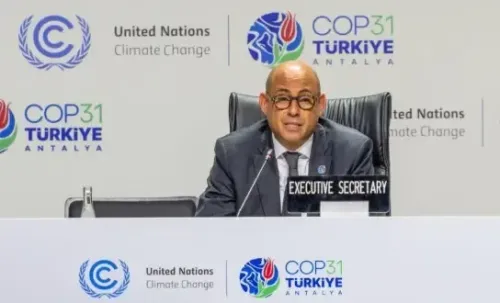
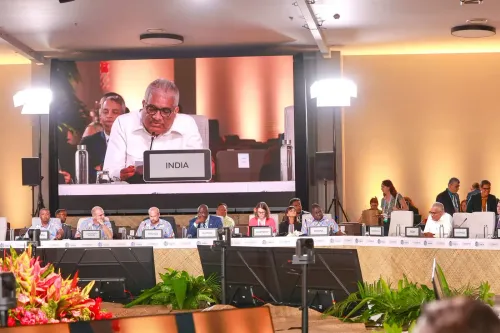
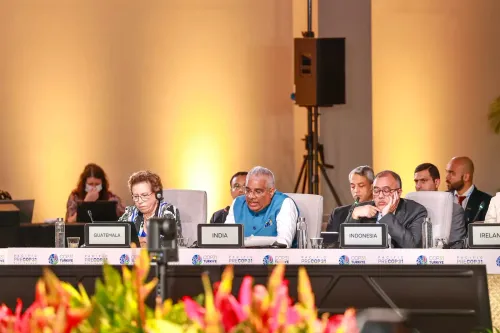
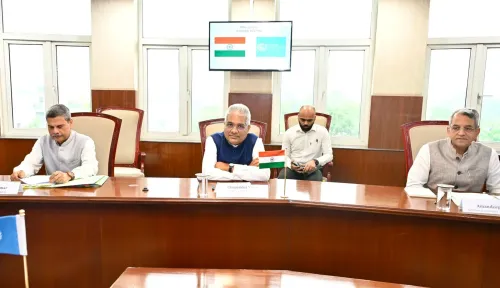
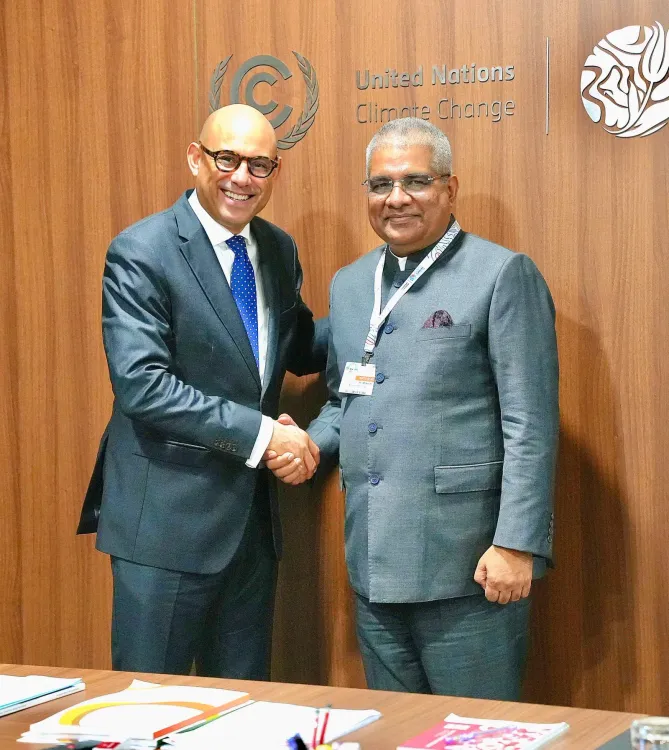
Union Environment Minister Bhupender Yadav held a bilateral meeting with UNFCCC Executive Secretary Simon Stiell on the sidelines of COP31 in Antalya, Turkiye .
Discussions centred on four priorities: means of implementation, just transition, adaptation, and climate finance — India's core negotiating pillars.
Yadav reaffirmed India's commitment to 'constructive engagement' with the UNFCCC and extending 'all required support.' India updated its NDCs in 2022 , targeting 50% non-fossil fuel electricity by 2030 and net-zero by 2070 .
The New Collective Quantified Goal (NCQG) on climate finance and adaptation fund replenishment remain key unresolved items at COP31.
India coordinates closely with the G77+China bloc, pushing developed nations to close the gap between climate finance pledges and actual disbursements.
On the margins of COP31 in Antalya, Turkiye, Union Environment Minister Bhupender Yadav sat down with Simon Stiell, the UNFCCC Executive Secretary, pressing India's case on the issues that have defined its climate diplomacy for years — finance, fairness, and the pace of transition.
Yadav described the meeting as focused on 'simplifying the negotiations process with emphasis on means of implementation, just transition, adaptation, and climate finance' — four pillars that form the backbone of India's negotiating posture inside the UN climate architecture. The minister confirmed that India remains 'committed to engaging with UNFCCC constructively, extending all required support.'
Why these four words carry weight in Antalya
Each term Yadav named is a carefully loaded phrase in climate diplomacy. 'Means of implementation' is shorthand for demanding that developed nations deliver on pledged funding and technology transfer — not just set targets. 'Just transition' insists that developing economies cannot be asked to abandon fossil fuels without credible economic alternatives and financial cushions. 'Adaptation' pushes back against a negotiations culture that has long favoured mitigation metrics over the lived reality of floods, droughts, and displacement.
And 'climate finance' is the sharpest edge of all. The search for a New Collective Quantified Goal (NCQG) — a successor to the long-unmet $100 billion per year promise — is one of the defining fights of the current COP cycle. India, coordinating closely within the G77+China bloc, has consistently argued that the gap between pledges and disbursements is not a rounding error but a structural betrayal of the Paris Agreement's equity principle.
India's negotiating arc from Paris to COP31
India's presence at the UNFCCC table has grown more assertive, not less, over the past decade. At COP26 in Glasgow in 2021, Prime Minister Narendra Modi unveiled the Panchamrit strategy — five commitments including 500 GW of non-fossil energy capacity and net-zero by 2070. India updated its Nationally Determined Contributions (NDCs) in 2022, locking in a target of 50% non-fossil fuel electricity by 2030. Those domestic anchors give Yadav credibility at the table when he asks developed nations to match ambition with money.
Bilateral meetings between Indian ministers and UNFCCC leadership on the sidelines of COPs are a consistent feature of India's multilateral playbook — a channel for frank conversation beyond the formal plenary scripts. Simon Stiell, who took charge of the UNFCCC in 2022, has made bridging the finance gap and restoring trust between the Global North and South a central theme of his tenure.
The agenda that will define COP31's outcome
With adaptation fund replenishment and the NCQG still unresolved, the pressure on COP31 to deliver a credible financial architecture is acute. Yadav's signal — that India wants simpler negotiations, not more process — reflects a frustration shared by many developing-country delegations: that procedural complexity has historically been used to defer hard financial commitments.
India's constructive engagement posture, reaffirmed in Antalya, keeps New Delhi inside the multilateral tent while maintaining maximum pressure on the finance and technology obligations that it argues are the price of genuine climate ambition from the Global South.
The question now is whether the finance architecture COP31 produces is specific enough — in numbers, timelines, and delivery mechanisms — to match the urgency India is signalling at the top table.
Point of View
' New Delhi is flagging that procedural delays in finance delivery are politically unsustainable. This posture — domestically ambitious, internationally assertive — has been India's consistent formula since Paris, and it carries added weight now that India's renewable energy scale-up gives its demands moral credibility. The real test is whether the NCQG outcome at COP31 produces binding disbursement timelines, or once again trades specificity for consensus language.
NationPress
16 Nov 2026
Frequently Asked Questions
What did Bhupender Yadav discuss with Simon Stiell at COP31?
Yadav met UNFCCC Executive Secretary Simon Stiell on the sidelines of COP31 in Antalya, Turkiye. Their talks focused on simplifying the negotiations process, with emphasis on means of implementation, just transition, adaptation, and climate finance.
Where is COP31 being held?
COP31 is being held in Antalya, Turkiye, according to Union Environment Minister Bhupender Yadav's post on 16 November 2026 .
What is India's position on climate finance at COP31?
India is pushing for developed nations to fulfil their financial and technology-transfer obligations to developing countries. It advocates for a credible New Collective Quantified Goal (NCQG) to replace the long-unmet $100 billion annual climate finance promise.
What are India's climate commitments under its NDCs?
India updated its Nationally Determined Contributions in 2022, committing to 50% non-fossil fuel electricity capacity by 2030 and achieving net-zero emissions by 2070, as part of the Panchamrit strategy announced at COP26.
Who is Simon Stiell and what is his role at UNFCCC?
Simon Stiell has served as the Executive Secretary of the UNFCCC since 2022. He oversees global climate negotiations and has prioritised closing the trust and finance gap between developed and developing nations.