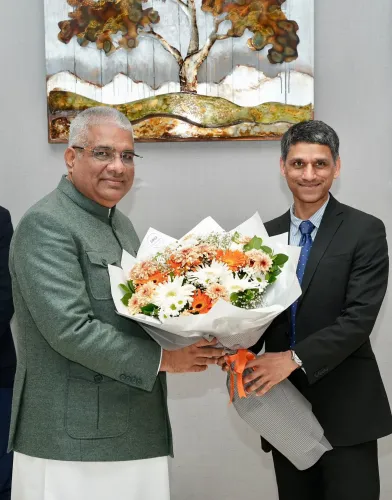
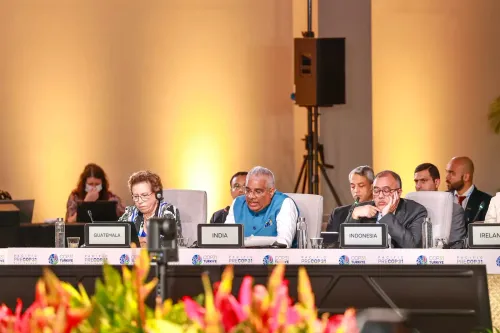
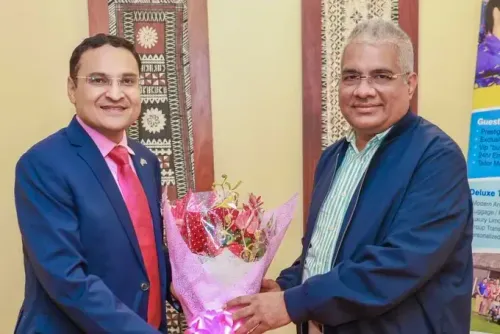
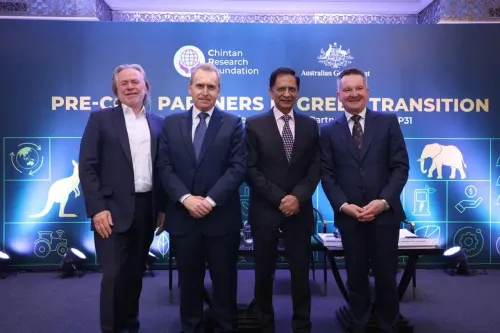
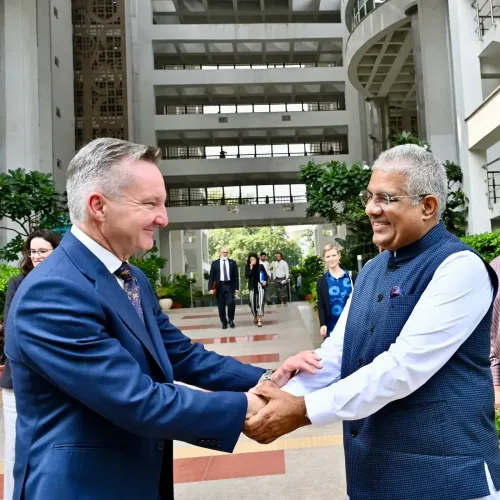
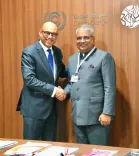
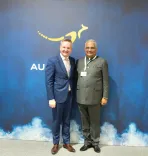
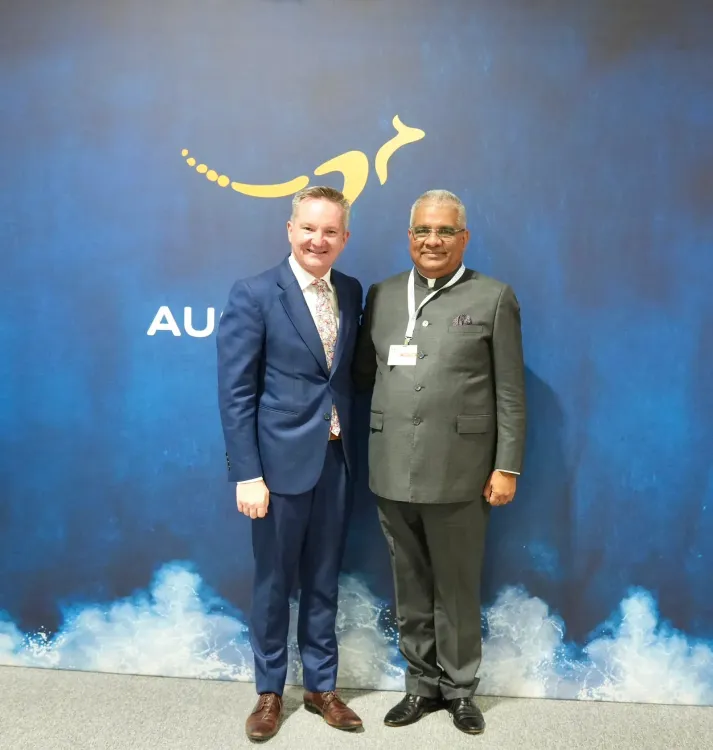
Bhupender Yadav meets COP31 Negotiations President Chris Bowen in Antalya
Synopsis
Union Environment Minister Bhupender Yadav met COP31 Negotiations President Chris Bowen in Antalya on November 16, 2026, holding detailed talks on mitigation, adaptation and climate finance, and pledging India's constructive support to the Presidency.
Key Takeaways
Bhupender Yadav met Chris Bowen , COP31 President for Negotiations, on the sidelines of COP31 in Antalya on November 16, 2026 .
Discussions covered the three core pillars of UNFCCC talks: mitigation , adaptation , and climate finance .
Yadav formally assured India's 'constructive role' in support of the COP31 Presidency's push for positive solutions.
India's negotiating posture is anchored in equity — pressing developed nations for scaled-up financial transfers while showcasing its own clean-energy commitments.
India has pledged net-zero emissions by 2070 (announced at COP26, Glasgow, 2021 ) and co-founded the International Solar Alliance in 2015 .
Final decisions on climate finance and adaptation text remain the key outcomes to watch from COP31.
On the sidelines of COP31 in Antalya, Union Environment Minister Bhupender Yadav sat down with Chris Bowen, the COP31 President for Negotiations, on Monday, November 16, 2026 — a bilateral exchange that covered the full spectrum of what makes or breaks a global climate deal: mitigation ambition, adaptation support, and the perennially contested question of climate finance.
What the Yadav-Bowen meeting put on the table
Yadav described the exchange as a 'detailed discussion on the ongoing negotiations,' spanning three pillars that have defined — and divided — UNFCCC talks for decades. Mitigation concerns how fast nations cut emissions. Adaptation asks who pays to protect the vulnerable from impacts already locked in. Climate finance is the fault line between the developed and developing world: who owes what, by when, and in what form. All three were on the agenda in Antalya on November 16.
Yadav explicitly 'assured India's support and its constructive role to the Presidency in the ongoing negotiations towards positive solutions' — diplomatic language that signals New Delhi is not looking to deadlock the talks, but to shape their direction from within.
India's negotiating posture at COP31
India arrives at COP31 carrying a long-established position: equity must sit at the heart of any global climate framework. Developed nations, the argument goes, industrialised first and therefore bear the primary burden of both deep cuts and financial transfers. That stance has shaped India's interventions across successive COPs since the Paris Agreement era.
The country has also demonstrated its own ambition — a net-zero emissions target by 2070, declared at COP26 in Glasgow in 2021, and an early mover role in renewable energy cooperation through the International Solar Alliance, launched in 2015. The dual track — asserting rights as a developing nation while showcasing clean-energy leadership — is precisely the balancing act Yadav's ministry has navigated.
Why the Bowen meeting matters for the final text
Bilateral meetings between a Presidency official and a major economy's negotiator are rarely casual. They are where red lines get quietly communicated, where deal-breakers are flagged before they detonate in plenary, and where language that can hold a coalition together gets tested. India is not a small voice in this room — it represents over a billion people, is among the world's largest emitters in absolute terms, and leads the bloc of developing nations demanding that historical emitters fund the transition.
The final decisions on climate finance and adaptation text remain the most watched outcomes of COP31. What was said in that room in Antalya today will, in some measure, echo through the closing gavel.
Point of View
India's ability to hold that dual identity — assertive developing-country voice and credible clean-energy transition leader — will determine how much of its ask survives the final plenary.
NationPress
16 Nov 2026
Frequently Asked Questions
Where is COP31 being held?
COP31 is being held in Antalya, Turkey. The 31st session of the Conference of the Parties to the UNFCCC brings together governments to negotiate global climate action.
Who is Chris Bowen and what is his role at COP31?
Chris Bowen is an Australian politician who serves as COP31 President for Negotiations, overseeing the multilateral negotiation process at the conference.
What did Bhupender Yadav discuss with Chris Bowen at COP31?
Bhupender Yadav held detailed talks with Chris Bowen covering mitigation, adaptation and climate finance — the three central pillars of the ongoing COP31 negotiations — and assured India's constructive support to the Presidency.
What is India's climate finance position at UNFCCC talks?
India consistently argues that developed nations, as historical emitters, must provide scaled-up and accessible climate finance to developing countries to support both clean transitions and adaptation to climate impacts.
What is India's net-zero target and when was it announced?
India announced its net-zero emissions target by 2070 at COP26 in Glasgow in 2021. The country has also committed to significant renewable energy expansion and co-founded the International Solar Alliance in 2015.