CM Pinarayi Slams SC Bail Order in Bilkis Bano Case
Synopsis
Kerala Chief Minister Pinarayi Vijayan condemned the Supreme Court's decision to suspend sentences and grant bail to two Bilkis Bano case convicts, calling it 'deeply disturbing' and pledging full CPI(M) legal assistance to the survivor in her continuing fight for justice.
Key Takeaways
Kerala CM Pinarayi Vijayan called the Supreme Court bail order for two Bilkis Bano case convicts 'deeply disturbing' on 18 November 2026 .
The Communist Party of India (Marxist) has pledged 'all possible legal assistance' to Bilkis Bano.
Vijayan alleged that intimidation by the Sangh Parivar had forced Bilkis Bano to flee Gujarat .
All eleven convicts had their remissions set aside by the Supreme Court after the Gujarat government granted them remission in 2022 .
The latest bail order for two convicts reopens the legal battle; fresh appeals or curative petitions are now being watched.
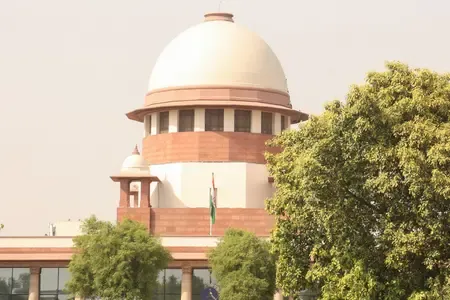
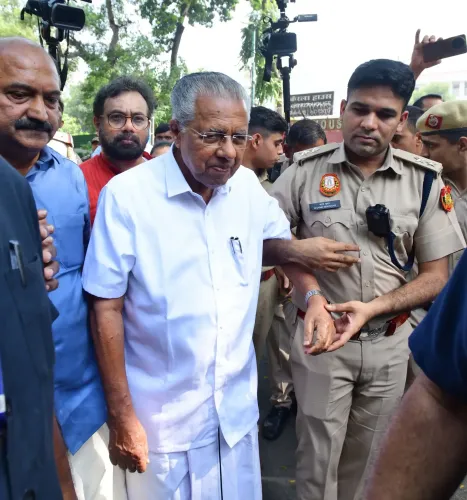
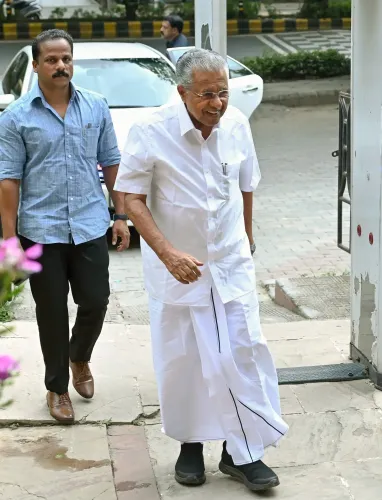
A Supreme Court decision to suspend sentences and grant bail to two convicts in the Bilkis Bano case has drawn sharp condemnation from Kerala Chief Minister Pinarayi Vijayan, who called the development 'deeply disturbing' and pledged full legal backing for the survivor's continued fight for justice.
Posting on Wednesday, 18 November 2026, Vijayan announced that the Communist Party of India (Marxist) would extend 'all possible legal assistance' to Bilkis Bano, warning that her quest for justice must 'never be defeated'. He also alleged that intimidation by the Sangh Parivar had already compelled her to flee Gujarat.
A case that has haunted Gujarat for over two decades
Bilkis Bano was gang-raped and members of her family were killed during the 2002 Gujarat riots — one of the most scarring episodes of communal violence in independent India. Because the trial could not be held fairly within the state, it was transferred outside Gujarat, eventually resulting in convictions of eleven perpetrators.
The case returned to national headlines in 2022 when the Gujarat government granted remission to all eleven convicts under its remission policy, triggering a firestorm of legal challenges and political outrage. The Supreme Court of India subsequently set aside those remissions, ordering the convicts back to prison. The latest bail order for two of those convicts now reopens wounds that many believed the apex court had begun to heal.
CPI(M)'s consistent line — and the stakes for Bilkis
Vijayan's statement is squarely in keeping with CPI(M)'s sustained political and legal opposition to every development that has eased consequences for the 2002 riot convicts. The party has framed each such outcome as evidence of a broader pattern of majoritarianism corroding minority communities' access to justice — a critique it has levelled at both the Gujarat administration and the central government over successive years.
The offer of legal assistance carries real weight: a well-resourced party machine able to retain senior counsel and fund appeals can materially affect how far a survivor can pursue justice through India's often expensive higher courts. Whether Bilkis Bano accepts the support or pursues independent legal representation, the signal from Thiruvananthapuram is that she will not be left to fight alone.
What comes next in court
The immediate legal question is whether the bail granted to the two convicts will be challenged through a fresh appeal or a curative petition before the Supreme Court. Any such filing could seek suspension of the bail order while the matter is heard. The timeline of further hearings will determine whether the convicts remain free in the interim — a prospect Vijayan and his party have made clear they regard as unconscionable.
India's apex court has already shown, in setting aside the 2022 remissions, that it is willing to take a hard look at how state governments exercise discretionary powers over riot-era convicts. The question now is whether that scrutiny extends, with equal force, to bail decisions.
Justice delayed is a story India has told too many times. Whether Bilkis Bano's case becomes an exception to that rule may depend on what happens in the coming weeks inside the Supreme Court's hallowed chambers.
Point of View
CPI(M) attempts to convert rhetorical opposition into tangible action. The move also reinforces the party's long-standing framing of post-2002 judicial outcomes as a litmus test for the rule of law under BJP-ruled governments. Critically, the pledge arrives at a moment when the Supreme Court's own consistency is under scrutiny: having struck down the Gujarat remissions in a landmark ruling, any perception that the court is now softening its stance on the same convicts could hand opposition parties a powerful narrative. For Vijayan personally, it anchors his national profile to a cause that resonates well beyond Kerala's borders.
NationPress
18 Nov 2026
Frequently Asked Questions
What is the Bilkis Bano case?
Bilkis Bano was gang-raped and members of her family were killed during the 2002 Gujarat riots. The trial was transferred outside Gujarat and resulted in the conviction of eleven perpetrators. In 2022, the Gujarat government granted remission to all eleven, but the Supreme Court later set those remissions aside.
Why did the Supreme Court grant bail to two Bilkis Bano case convicts?
The specific grounds for the bail order are yet to be detailed in public proceedings. Kerala CM Pinarayi Vijayan has described the decision to suspend sentences and grant bail as 'deeply disturbing', and legal observers are watching for a fresh challenge to the order.
What legal help has CPI(M) offered Bilkis Bano?
CPI(M) leader and Kerala Chief Minister Pinarayi Vijayan announced on 18 November 2026 that the party would extend 'all possible legal assistance' to Bilkis Bano as she continues her fight for justice in the Supreme Court.
What happened to the Gujarat government's 2022 remission order for the convicts?
The Supreme Court of India set aside the Gujarat government's 2022 remission order for all eleven convicts, ruling it was improperly granted and ordering the convicts to return to prison.
Why did Bilkis Bano leave Gujarat according to Pinarayi Vijayan?
Vijayan alleged in his post that a 'climate of fear and intimidation unleashed by the Sangh Parivar' had forced Bilkis Bano to flee Gujarat in search of safety. The claim reflects the broader political criticism CPI(M) has consistently directed at BJP-affiliated organisations in connection with the 2002 violence.