SC verdict on Pinarayi Vijayan: BJP says neither CPI(M) nor Congress can claim victory
Synopsis
The Supreme Court's 7-day stay in the CMRL-Exalogic case has satisfied no one politically — BJP's K. Surendran says neither the CPI(M) nor Congress can claim victory since no FIR was quashed, while Congress argues the order vindicates the state government's cautious approach. The real battle now shifts to the Kerala High Court Division Bench.
Key Takeaways
The Supreme Court on 21 October 2026 stayed the Vigilance and Anti-Corruption Bureau investigation in the CMRL-Exalogic case for seven days .
Former Kerala CM Pinarayi Vijayan , daughter Veena T , and son-in-law P.A.
Mohammed Riyas were permitted to appeal the single judge's 9 October FIR order before a Kerala High Court Division Bench .
BJP National Secretary K.
Surendran said the court neither quashed any FIR nor granted special concessions to the accused.
Congress leader Ramesh Chennithala argued the order vindicated the state government's decision to first conduct a preliminary enquiry before registering an FIR.
The Supreme Court clarified its order was confined to the petitioners' right to appeal and did not touch the merits of the case.
The case involves alleged payments by Cochin Minerals and Rutile Limited (CMRL) to Exalogic Solutions , a defunct firm reportedly linked to Veena T.
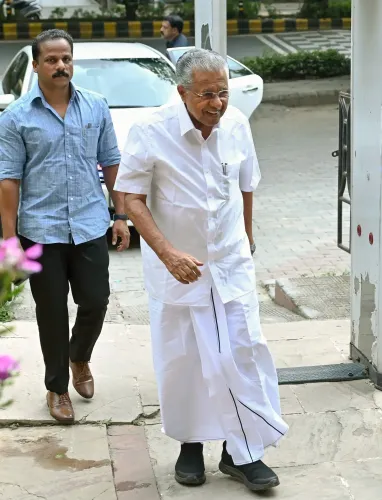
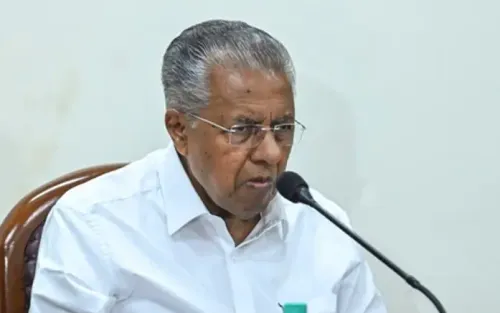
The Supreme Court's interim order in the CMRL-Exalogic case on 21 October 2026 has drawn sharply divergent political readings, with Bharatiya Janata Party (BJP) National Secretary K. Surendran asserting that neither the Communist Party of India (Marxist) (CPI(M)) nor the Congress has any ground to claim vindication. The court permitted former Kerala Chief Minister Pinarayi Vijayan, his daughter Veena T, and son-in-law P.A. Mohammed Riyas to appeal the single judge's directive before a Kerala High Court Division Bench, staying the Vigilance investigation for seven days.
What the Supreme Court Actually Ordered
The apex court set aside the Division Bench's earlier refusal to grant the petitioners leave to appeal, allowing them to challenge the 9 October single-judge order that had directed the Vigilance and Anti-Corruption Bureau (VACB) to register a First Information Report (FIR) on the basis of information furnished by the Enforcement Directorate (ED). The court explicitly clarified that its observations were confined to the petitioners' right to appeal and did not address the merits of the underlying case. The stay on further investigation remains in effect for seven days to allow the Division Bench to consider the appeal and any plea for interim relief.
BJP: No Reason for Either Side to Celebrate
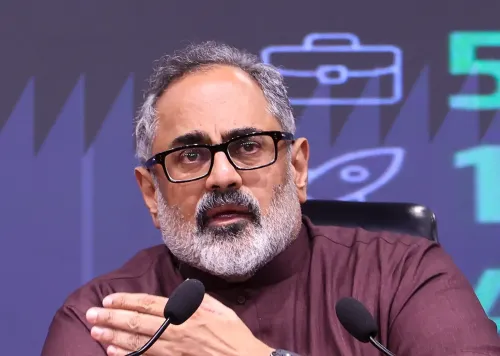
Reacting to the order, BJP National Secretary K. Surendran in Thiruvananthapuram said the court had neither quashed the FIRs against Vijayan and his family nor granted them any special concession. 'The court has merely allowed one week for the accused to present their arguments. That is all,' Surendran said. He further noted that the Supreme Court's pointed question to the state government — asking why it had not registered an FIR earlier — reinforced the BJP's position that the government had sought to delay or derail proceedings. 'The law must take its own course and those who had committed offences would have to face the law,' he added.
Congress Claims the Order Vindicates State Government's Approach
Congress leader and former Home Minister Ramesh Chennithala offered a contrasting reading. He maintained that the Supreme Court's decision vindicated the state government's initial decision to order a preliminary enquiry rather than directly registering an FIR upon receiving the ED's communication. Chennithala argued that the government and the Home Department had acted correctly by examining the ED's correspondence carefully before proceeding. He noted that the single judge's 9 October direction — compelling registration of an FIR without a preliminary enquiry — had effectively overridden that approach, and that the Supreme Court's intervention demonstrated the legal validity of the government's original stance. The one-week stay, he emphasised, was a procedural measure to ensure the accused could present their case before the Division Bench, nothing more.
Background: The CMRL-Exalogic Allegations
The case centres on alleged payments made by Cochin Minerals and Rutile Limited (CMRL) to Exalogic Solutions, a now-defunct company reportedly associated with Veena T, Vijayan's daughter. The allegations are being contested by the petitioners. The matter has political significance given Vijayan's profile as a former Chief Minister, and it has drawn scrutiny from multiple investigative agencies. This is the first substantive Supreme Court intervention in the case, and the Division Bench's upcoming deliberations are expected to shape the direction of the investigation.
What Happens Next
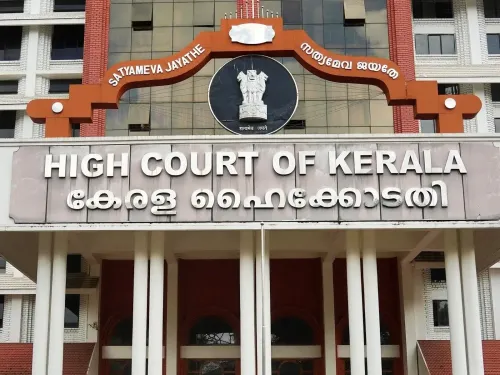
The Kerala High Court Division Bench will now hear the appeal and any request for interim relief within the seven-day window set by the Supreme Court. Legal observers note that the Division Bench's decision on whether to grant a longer stay or allow the investigation to proceed will be the next critical juncture. The BJP has signalled it will continue to press for an unimpeded investigation, while Congress appears to be positioning the Supreme Court's order as an endorsement of procedural caution rather than a setback.
Point of View
In legal terms, entirely procedural — the Supreme Court has merely restored the right to appeal and imposed a short investigative pause. The more telling detail is the apex court's reported question to the state government on why it delayed registering the FIR: that line of judicial scrutiny, if pursued, is far more consequential than the seven-day stay. Kerala's political class has a habit of reading interim orders as final verdicts, and this case is no exception. The real signal will come from the Division Bench — and from whether the Supreme Court revisits the government's conduct if the appeal drags.
NationPress
21 Oct 2026
Frequently Asked Questions
What did the Supreme Court order in the Pinarayi Vijayan CMRL-Exalogic case?
The Supreme Court on 21 October 2026 set aside the Kerala High Court Division Bench's earlier refusal to grant leave to appeal and allowed Pinarayi Vijayan, Veena T, and P.A. Mohammed Riyas to challenge the single judge's 9 October directive registering an FIR. It stayed the Vigilance and Anti-Corruption Bureau investigation for seven days and clarified that its order did not address the merits of the case.
What is the CMRL-Exalogic case about?
The case involves allegations that Cochin Minerals and Rutile Limited (CMRL) made payments to Exalogic Solutions, a now-defunct company reportedly associated with Veena T, the daughter of former Kerala Chief Minister Pinarayi Vijayan. The allegations are contested by the petitioners, and investigative agencies including the Enforcement Directorate had supplied information that led to the FIR directive.
Why does the BJP say neither the CPI(M) nor Congress can claim victory?
BJP National Secretary K. Surendran argued that the Supreme Court neither quashed any FIR against the accused nor granted them any special relief — it merely allowed one week for them to present their arguments before the Division Bench. He also noted that the court's question to the state government about the delay in registering the FIR actually strengthened the case against the accused.
What is Congress leader Ramesh Chennithala's position on the SC order?
Chennithala maintained the order vindicates the state government's original decision to conduct a preliminary enquiry before registering the FIR, rather than acting directly on the ED's communication. He argued the government's approach was legally valid and that the single judge had erred in directing an FIR without a preliminary enquiry.
What happens next in the case?
The Kerala High Court Division Bench will hear Vijayan and the other petitioners' appeal within the seven-day window granted by the Supreme Court. The Division Bench will also consider any plea for interim relief. Its decision on whether to extend the stay on the Vigilance investigation will be the next critical development in the case.