SC gives Vijayan, family 7-day relief in CMRL-Exalogic bribery case
Synopsis
The Supreme Court has paused the VACB probe into the CMRL-Exalogic bribery case for seven days, giving former Kerala CM Pinarayi Vijayan and his family — including daughter T. Veena and son-in-law P.A. Mohammed Riyas — a window to challenge the FIR direction before the Kerala HC's Division Bench. The ED alleges ₹3.28 crore was paid to Veena's company as a political bribe; the apex court's ruling on locus standi now keeps that fight alive.
Key Takeaways
The Supreme Court on 21 October 2026 set aside a Kerala HC order and granted former CM Pinarayi Vijayan , daughter T.
Veena , and son-in-law P.A.
Mohammed Riyas seven days to appeal to the Kerala HC Division Bench.
The VACB investigation into the vigilance FIR is stayed for seven days to allow the petitioners to seek interim relief.
The ED alleges that Exalogic Solutions , founded by Veena, received ₹3.28 crore from CMRL for services not rendered, amounting to a bribe to Vijayan.
Vijayan is named the first accused and Veena the second accused among seven persons in the case.
The apex court upheld the petitioners' locus standi , rejecting the ED's argument that they had no right to challenge the single judge's order.
The SC clarified its observations are limited to locus standi and will not prejudice the merits of the appeals before the Division Bench.
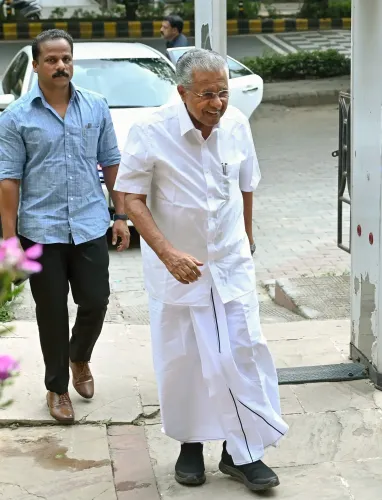
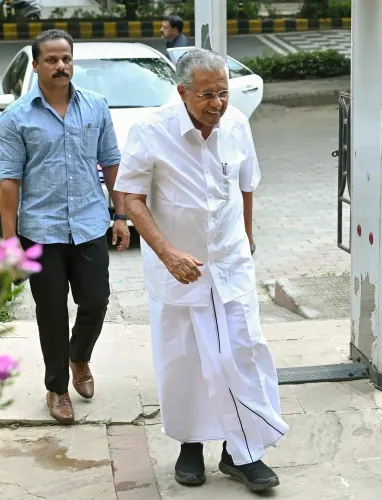
The Supreme Court on Wednesday, 21 October 2026, set aside a Kerala High Court order that had declined to entertain appeals filed by former Kerala Chief Minister Pinarayi Vijayan, his daughter T. Veena, son-in-law and former minister P.A. Mohammed Riyas, and other accused in the CMRL-Exalogic alleged pay-off case. The apex court granted the petitioners seven days to approach the High Court's Division Bench and simultaneously stayed the investigation into the vigilance FIR for the same period.
What the Supreme Court Ordered
A bench of Justices Joymalya Bagchi and V. Mohana directed that the probe by the Kerala Vigilance and Anti-Corruption Bureau (VACB) shall remain stayed for seven days to allow the petitioners to file their appeals and seek interim relief before the appropriate appellate forum. The court was categorical that its stay was limited to facilitating the filing of appeals and would not prevent the Division Bench from independently deciding any interim-relief application.
Orally, Justice Bagchi observed: 'We are not against any investigation. We will maintain the FIR but no investigation until and unless the issues are decided by the appellate court.'
Why the Court Upheld Locus Standi
The apex court rejected arguments by the Enforcement Directorate (ED) and the original writ petitioner that Vijayan and the others had no right to challenge the single judge's directions. The bench found that the petitioners had made out a prima facie case establishing their locus standi to pursue the appeals, noting that the single judge had specifically recorded a finding that material furnished by the ED disclosed a cognizable offence, making registration of an FIR obligatory.
The court further observed that the single judge had gone beyond merely directing registration of the FIR — it had additionally ordered commencement of the investigation and submission of a final report, which required compliance with conditions under the special law. Since these findings could affect the petitioners in their separate proceedings challenging the FIR, they could not be denied an opportunity to contest them before the appellate forum.
Notably, the apex court underscored: 'This is not a case where, on the receipt of communication under Section 66(2) PMLA, the state government had registered an FIR on its own. On the contrary, the registration of FIR and commencement of investigation were pursuant to the order passed by the Constitutional Court.'
Background: The CMRL-Exalogic Allegations
The case concerns alleged payments made by Cochin Minerals and Rutile Limited (CMRL) to Exalogic Solutions Pvt Ltd, a company founded by T. Veena, during the first Vijayan-led government in Kerala. The ED has alleged that Exalogic received ₹3.28 crore from CMRL for services that were reportedly never rendered, and claimed the payments were made due to political influence, effectively amounting to a bribe to the former chief minister.
Pinarayi Vijayan has been named as the first accused and T. Veena as the second accused, among seven persons named in the case. The proceedings were triggered by an October 9 order of a single judge of the Kerala High Court directing registration of an FIR under the Prevention of Corruption Act on the basis of material communicated by the ED.
How the Case Reached the Supreme Court
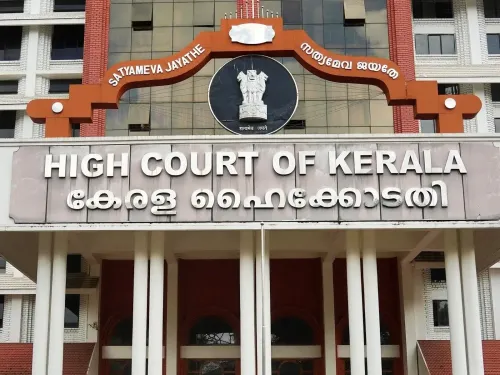
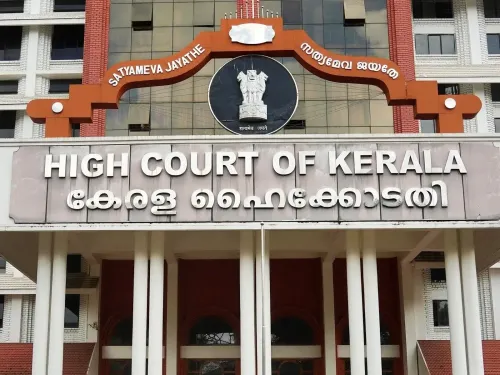
After the single judge's order, Vigilance Director Manoj Abraham directed the formation of a probe team, with Deputy Inspector General of Police Thomson Jose supervising the investigation. Vijayan, Veena, Riyas, and others then moved the Kerala High Court's Division Bench, which declined to stay the single judge's directions and reserved its decision on whether they could even maintain appeals against an order passed in proceedings to which they were not parties. That refusal prompted the petitioners to escalate to the Supreme Court.
What Happens Next
The petitioners must now approach the Kerala High Court's Division Bench within the seven-day window granted by the Supreme Court. The apex court has clarified that its observations are confined solely to the question of locus standi and will not prejudice the merits of their appeals. The Division Bench will independently decide any applications for interim relief in accordance with law, and the VACB investigation remains on hold until that process unfolds.
Point of View
The court has effectively halted a probe that was already underway under VACB supervision. What is striking is that the FIR itself was not the result of executive action but of a constitutional court's directive — a fact the apex court found weighty enough to grant standing. The broader question is whether the Kerala High Court's Division Bench, now tasked with hearing the appeals, will put a longer stay on the investigation or let it proceed. For the ED, which has consistently pushed the corruption angle, a prolonged appellate pause risks letting a politically sensitive probe stall ahead of any electoral context. The locus standi ruling, while limited in scope, hands Vijayan a meaningful procedural shield at a critical juncture.
NationPress
21 Oct 2026
Frequently Asked Questions
What is the CMRL-Exalogic case involving Pinarayi Vijayan?
The case involves alleged payments of ₹3.28 crore made by Cochin Minerals and Rutile Limited (CMRL) to Exalogic Solutions Pvt Ltd , a company founded by Vijayan's daughter T. Veena, during the first Vijayan-led government in Kerala. The ED has alleged the payments were made for services never rendered and amounted to a bribe to the former chief minister.
What did the Supreme Court order on 21 October 2026?
The Supreme Court set aside a Kerala High Court order that had refused to entertain Vijayan's appeals, and granted the petitioners seven days to approach the HC's Division Bench. It also stayed the VACB investigation for that period and upheld the petitioners' right to challenge the single judge's FIR direction.
Why did the Supreme Court say Vijayan had locus standi to appeal?
The apex court found that the single judge had gone beyond directing FIR registration — it had also ordered commencement of the investigation and submission of a final report. Since those findings could affect the petitioners in their separate proceedings challenging the FIR, the court held they had a prima facie right to contest the order before the appellate forum.
Who are the accused in the CMRL-Exalogic case?
Former Kerala Chief Minister Pinarayi Vijayan is named the first accused and his daughter T. Veena the second accused, among a total of seven persons named in the case. Son-in-law and former minister P.A. Mohammed Riyas is also among those who moved the Supreme Court.
What happens next in the CMRL-Exalogic case?
Vijayan, Veena, and the other petitioners must approach the Kerala High Court's Division Bench within the seven-day window granted by the Supreme Court. The Division Bench will independently decide any interim-relief applications, and the VACB investigation remains stayed until then.