Kerala HC reserves verdict on FIR plea against Pinarayi Vijayan in CMRL-Exalogic case
Synopsis
The Kerala High Court has reserved its verdict on whether state police must register an FIR against Opposition Leader Pinarayi Vijayan, his daughter Veena Vijayan, and son-in-law Mohammed Riyas in the CMRL-Exalogic financial transactions case — a ruling that could reshape Kerala's most politically charged corruption dispute.
Key Takeaways
Kerala High Court reserved its verdict on 29 September on a plea seeking an FIR against Pinarayi Vijayan , Veena Vijayan , and Mohammed Riyas in the CMRL-Exalogic case .
The plea was filed by advocate K.M.
Shahjahan under the Prevention of Corruption Act , based on ED -furnished material.
The Kerala state government opposed the plea, arguing a preliminary inquiry must precede any FIR registration.
The ED produced a letter sent to the Director General of Police recommending a case against Vijayan and Riyas, along with statements from its inquiry.
Badharudeen observed that the ED qualifies as an investigating agency, countering the government's argument.
An SIT has already been formed by the Satheesan government based on the ED's letter to the State Police chief.
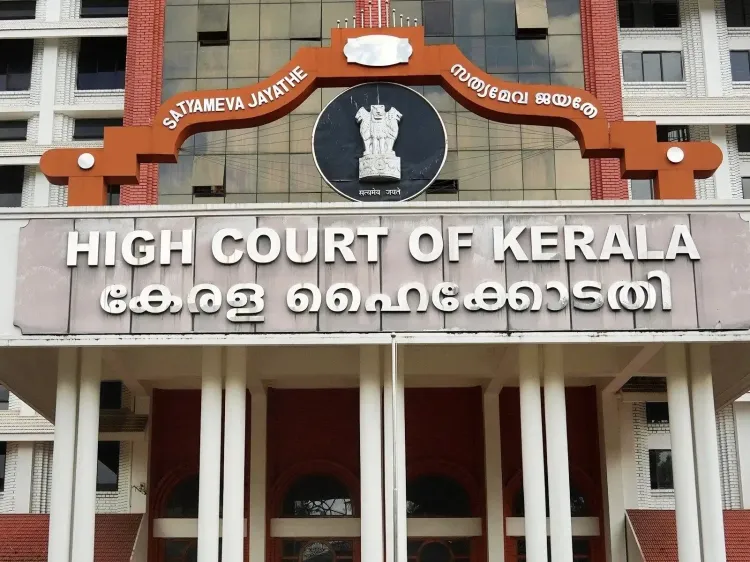
The Kerala High Court on Tuesday, 29 September reserved its verdict on a petition seeking the registration of an FIR against Leader of Opposition Pinarayi Vijayan, his daughter Veena Vijayan, and son-in-law Mohammed Riyas — a former State Minister and sitting Communist Party of India (Marxist) [CPI(M)] legislator — in the CMRL-Exalogic case. The ruling will determine whether Kerala's state police must register a case without first conducting a preliminary inquiry.
What the Case Is About
The case centres on alleged financial transactions between Cochin Minerals and Rutile Ltd (CMRL) and Exalogic Solutions, a company associated with Veena Vijayan. The Enforcement Directorate (ED) gathered the material in question during its own investigation into these alleged transactions.
Advocate K.M. Shahjahan filed the plea, seeking registration of a case under the Prevention of Corruption Act based on information furnished by the ED to the state police.
Arguments Heard by Justice Badharudeen
Justice A. Badharudeen reserved the verdict after hearing detailed arguments from both sides. The Kerala state government opposed the plea, contending that an FIR cannot be registered without a preliminary inquiry into the allegations. The Advocate General further argued that the primary material the ED relied upon was a diary, and that an FIR cannot be registered solely on the basis of such a document.
The government also maintained that the petition itself was not maintainable and that a preliminary inquiry was a necessary precondition before any case could be lodged.
ED's Stand Before the Court
The ED produced before the court a letter it had sent to the Director General of Police recommending the registration of a case against Vijayan and Riyas. The agency submitted additional material, including statements recorded during its inquiry.
When the court asked whether these statements had been shared with the government, the ED acknowledged that complete copies had not been handed over. The agency maintained, however, that the information in its letter was sufficient to register a case, and indicated it was prepared to provide copies of the statements if the police required them.
The court, notably, observed that the ED qualifies as an investigating agency — pushing back against the government's argument that the ED's role is limited to collecting information and acting within its own jurisdiction.
SIT Already in Place
An Special Investigation Team (SIT) has already been constituted by the Satheesan government on the basis of the ED's letter to the State Police chief. The High Court's forthcoming ruling will clarify whether the state police are obligated to register an FIR independently of any preliminary inquiry, adding a significant legal dimension to the ongoing political controversy.
What Comes Next
With the verdict now reserved, all eyes are on Justice Badharudeen's ruling, which could compel the Kerala police to act on the ED's recommendation or affirm the state government's position that a preliminary inquiry must precede any FIR. The outcome carries major implications for Pinarayi Vijayan, one of Kerala's most prominent political figures, and for the broader accountability debate surrounding the CMRL-Exalogic transactions.
Point of View
And a court-directed FIR would be an extraordinary development in Kerala politics. What is striking is the court's pushback on the state government's framing of the ED as a non-investigating agency — a position that, if accepted, would have insulated state police from acting on central agency referrals. The SIT's prior formation also complicates the narrative: if an SIT exists, the threshold question of whether an FIR is necessary at all becomes even sharper. Mainstream coverage has focused on the political names; the more consequential story is the precedent this verdict sets for ED-state police coordination across India.
NationPress
29 Sept 2026
Frequently Asked Questions
What is the CMRL-Exalogic case?
The CMRL-Exalogic case involves allegations of financial transactions between Cochin Minerals and Rutile Ltd (CMRL) and Exalogic Solutions, a company linked to Veena Vijayan, daughter of Kerala's Leader of Opposition Pinarayi Vijayan. The Enforcement Directorate investigated these alleged transactions and sent a letter to the Kerala Director General of Police recommending registration of a case.
Who has filed the plea before the Kerala High Court?
Advocate K.M. Shahjahan filed the plea before the Kerala High Court, seeking registration of an FIR under the Prevention of Corruption Act against Pinarayi Vijayan, Veena Vijayan, and Mohammed Riyas, based on material furnished by the Enforcement Directorate.
Why did the Kerala government oppose the FIR plea?
The Kerala state government argued that an FIR cannot be registered without a preliminary inquiry into the allegations. The Advocate General also contended that the ED's primary evidence — a diary — is insufficient on its own to justify registering a case, and that the petition was not maintainable.
What is the significance of the court's observation about the ED?
Justice A. Badharudeen observed that the ED qualifies as an investigating agency, directly countering the state government's argument that the ED's role is limited to information-gathering. This observation could influence the final verdict on whether the police must act on the ED's recommendation.
Has any investigation body been formed in this case already?
Yes. An SIT has already been constituted by the Satheesan government based on the ED's letter to the State Police chief. The Kerala High Court's reserved verdict will clarify whether a formal FIR must also be registered, independent of the SIT's mandate.