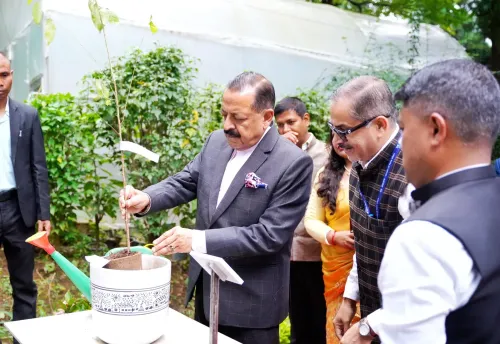
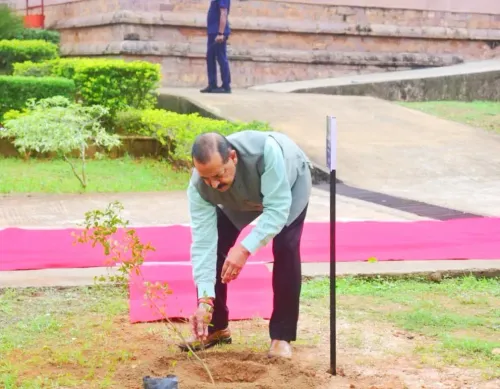
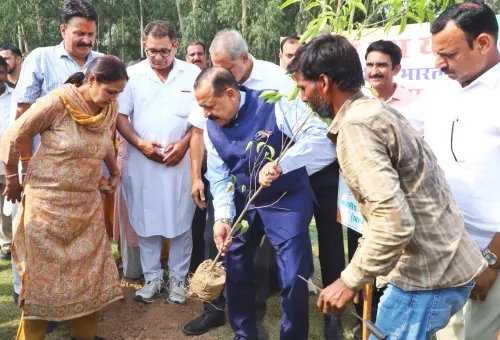
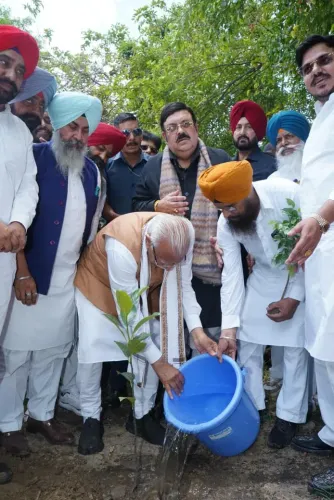
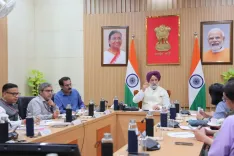
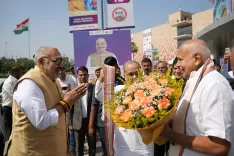
Dr. Jitendra Singh plants sapling in mother's name at Udhampur Anganwadi
Synopsis
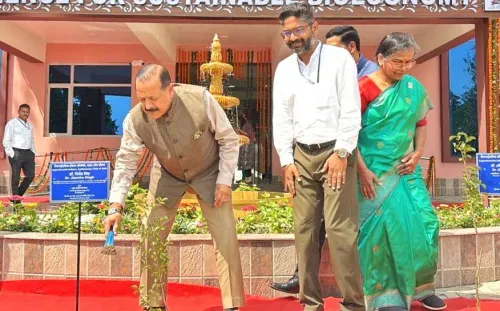
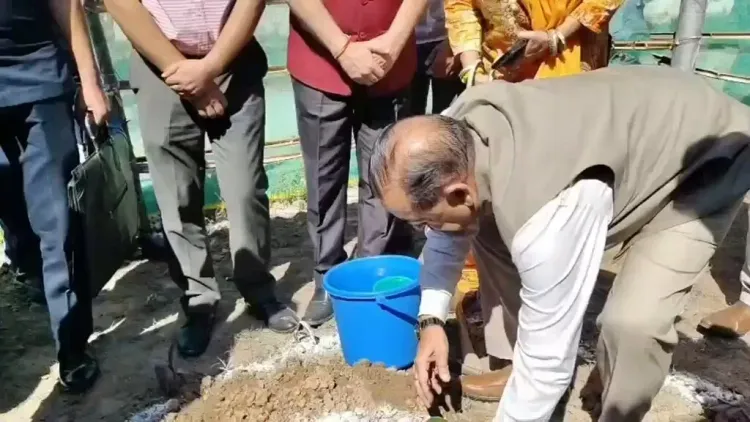
Union Minister Dr. Jitendra Singh planted a sapling in his mother's name at an Anganwadi centre in Tikri, Udhampur, under PM Modi's 'Ek Ped Maa Ke Naam' and 'Seva Sankalp Abhiyan' campaigns, appealing to citizens to join the nationwide tree plantation drive.
Key Takeaways
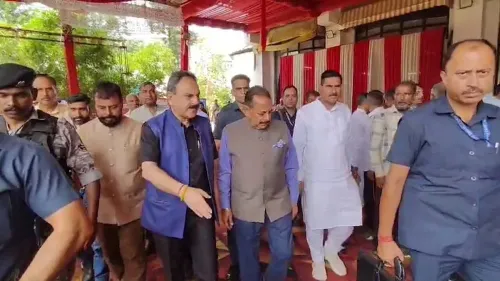
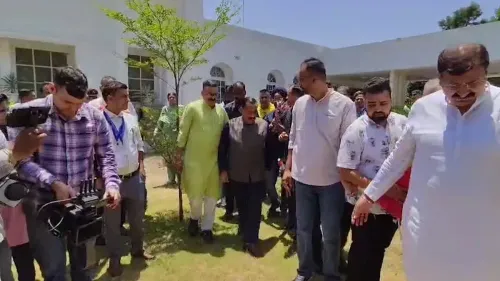
Jitendra Singh participated in a tree plantation drive on 29 September 2026 at an Anganwadi centre in Tikri, Udhampur , Jammu and Kashmir.
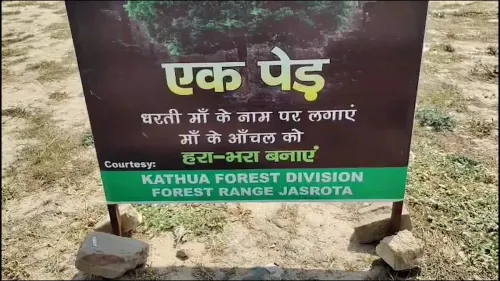
The sapling was planted in his mother's name under PM Narendra Modi 's Ek Ped Maa Ke Naam ('One Tree in Mother's Name') campaign.
The event was also held under the Seva Sankalp Abhiyan , a government service-pledge programme.
Anganwadi centres — rural child-care hubs under the Integrated Child Development Services scheme — serve as community venues for the campaign's grassroots outreach.
Singh publicly appealed to citizens to join the Ek Ped Maa Ke Naam campaign, emphasising mass participation as the campaign's goal.
A government minister, a sapling, and a mother's name — at an Anganwadi centre in Tikri, Udhampur, Union Science and Technology Minister Dr. Jitendra Singh turned a national campaign into a personal act of tribute on Tuesday, 29 September 2026.
What happened at Tikri's Anganwadi centre
Dr. Singh participated in a tree plantation drive under two converging initiatives — Prime Minister Narendra Modi's Ek Ped Maa Ke Naam ('One Tree in Mother's Name') campaign and the Seva Sankalp Abhiyan (Service Pledge Programme). He planted a sapling dedicated to his own mother, framing the act as both a civic duty and a filial gesture. Posting on X, he wrote that he 'had the good fortune' of planting a sapling in his mother's name and appealed to everyone to join the campaign.
The choice of venue matters. Anganwadi centres — rural child-care hubs run under the Integrated Child Development Services scheme — serve as a ready-made network of community touchpoints across India's villages. Routing afforestation drives through these centres links environmental goals with existing social infrastructure, reaching women and families who are already regular participants in government welfare programmes.
The campaign behind the sapling
Ek Ped Maa Ke Naam is a nationally promoted plantation campaign that asks citizens to dedicate a tree to their mothers, blending environmental messaging with an emotional, familial appeal. It is one of the Modi government's signature methods of mobilising public participation: make a civic act personal, and the uptake tends to follow. The Seva Sankalp Abhiyan runs alongside it as a broader service-pledge framework, under which ministers and public figures participate in community-facing events across their constituencies.
Udhampur, in the Jammu division of Jammu and Kashmir, is Dr. Singh's parliamentary constituency — making his presence at a local Anganwadi centre a deliberate signal that the campaign is being taken to the grassroots, not just announced from a podium in Delhi.
A pattern of field-level mobilisation
Ministerial participation in plantation drives at local centres is a well-established playbook for publicising centrally sponsored environmental schemes. The visual of a senior minister planting a sapling in his mother's name — at a village child-care centre, not a manicured government lawn — is designed to make the campaign feel accessible and replicable by ordinary citizens. Dr. Singh's public appeal to 'everyone to join' the drive reinforces that the target is mass participation, not a one-off ceremony.
Whether that participation translates into measurable afforestation gains will depend on sapling survival rates and sustained community follow-through — the harder, less photographed half of any plantation campaign.
Point of View
Dr. Singh reinforces the campaign's positioning as a grassroots, community-embedded effort rather than a top-down directive. This approach sits within a broader pattern of the government leveraging existing social-sector infrastructure for environmental messaging. The real policy test, however, lies in post-plantation monitoring: whether sapling survival data is tracked and publicly reported will determine if the campaign produces lasting ecological impact or remains largely symbolic.
NationPress
29 Sept 2026
Frequently Asked Questions
What is the Ek Ped Maa Ke Naam campaign?
'Ek Ped Maa Ke Naam' is a national tree plantation campaign launched by Prime Minister Narendra Modi that encourages citizens to plant a sapling and dedicate it to their mothers, combining environmental goals with a personal, familial appeal.
What is the Seva Sankalp Abhiyan?
The Seva Sankalp Abhiyan is a government service-pledge programme under which ministers and public figures participate in community-facing events, including tree plantation drives, across the country.
Where did Dr. Jitendra Singh plant the sapling?
Dr. Jitendra Singh planted the sapling at an Anganwadi centre in Tikri village, Udhampur district, Jammu and Kashmir — his parliamentary constituency.
Why are Anganwadi centres used for tree plantation drives?
Anganwadi centres are rural child-care hubs with an established community presence under the Integrated Child Development Services scheme, making them effective venues for reaching local families and women during government campaigns.
Who initiated the Ek Ped Maa Ke Naam campaign?
The campaign was initiated by Prime Minister Narendra Modi as part of the Indian government's broader afforestation and environmental awareness efforts.