Khattar Plants Sapling Under 'Ek Ped Maa Ke Naam' Drive
Synopsis
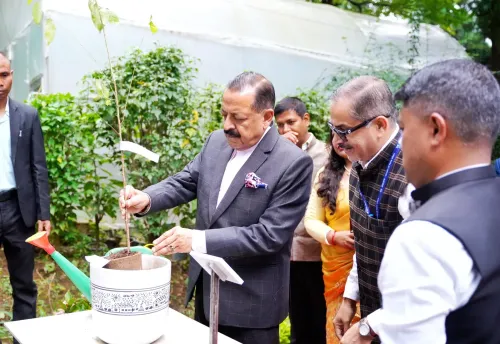
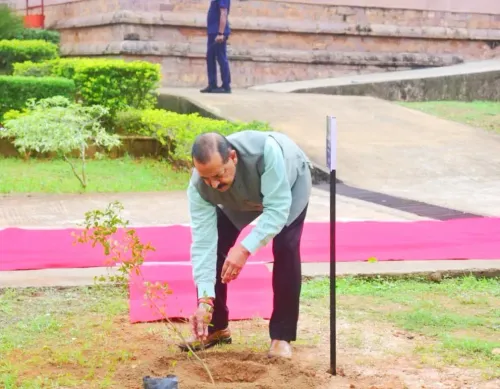
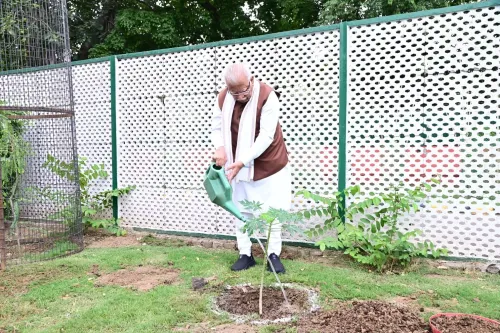
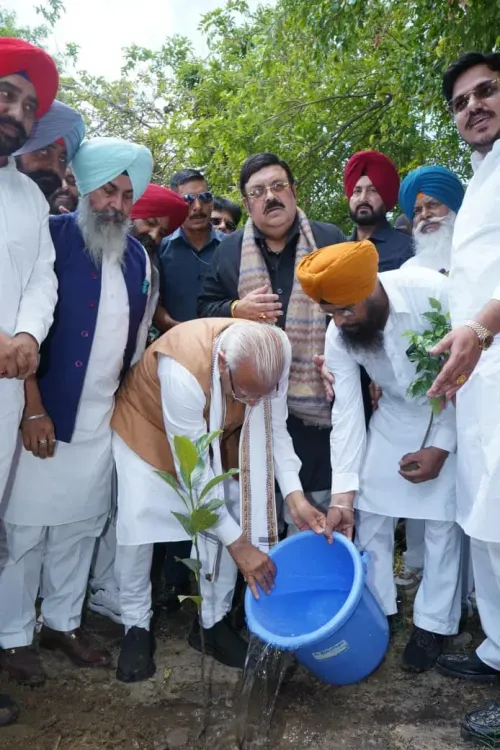
Union Power Minister Manohar Lal Khattar joined local families on 13 June 2026 to plant a sapling under the 'Ek Ped Maa Ke Naam' campaign, framing nature conservation as a cultural duty rooted in Indian values and tradition.
Key Takeaways
Manohar Lal Khattar , Union Minister of Power and Housing & Urban Affairs, participated in a tree plantation drive on 13 June 2026 .
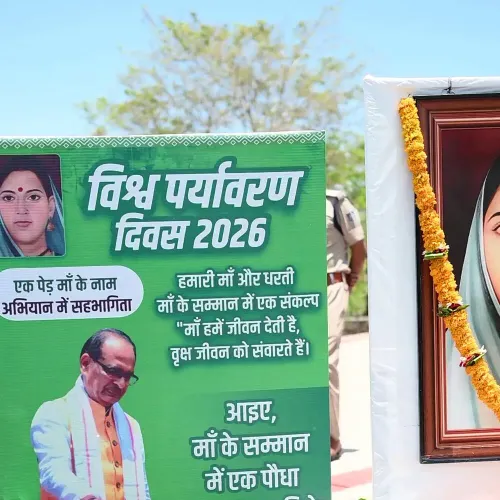
The event was held under the Ek Ped Maa Ke Naam (One Tree in Mother's Name) campaign, launched nationally by PM Modi in 2024 .
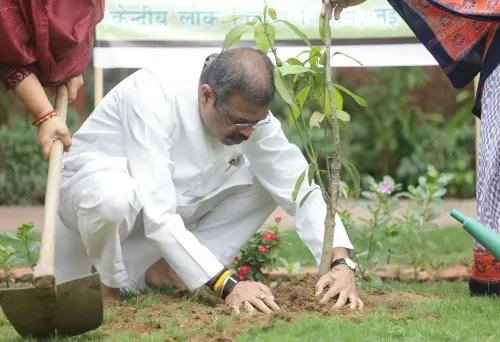
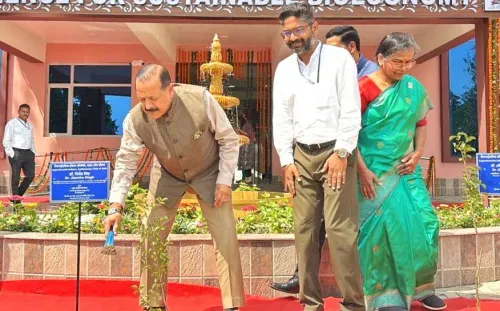
Khattar planted the sapling alongside local area families , in keeping with the campaign's community participation model.
The minister stated that nature conservation is 'an inseparable part of our culture and values,' framing it as a civilisational duty.
India's afforestation drives are linked to its commitments under the Paris Agreement NDCs and the Bonn Challenge .
Sapling survival rates and plantation targets are expected to face parliamentary scrutiny during the upcoming monsoon session .
Union Power Minister Manohar Lal Khattar participated in a tree plantation event on Saturday, 13 June 2026, planting a sapling alongside local families as part of the 'Ek Ped Maa Ke Naam' (One Tree in Mother's Name) campaign. The minister shared the moment on X, underscoring the cultural and civilisational significance of environmental stewardship.
Posting in Hindi, Khattar wrote: 'इस अवसर पर क्षेत्र के परिवारजनों के साथ 'एक पेड़ माँ के नाम' अभियान के अंतर्गत पौधा रोपा।' — 'On this occasion, planted a sapling under the 'Ek Ped Maa Ke Naam' campaign along with families of the area.' He added that the conservation and promotion of nature is 'not merely a responsibility, but an inseparable part of our culture and values, which we must uphold in every circumstance.'
Context
The Ek Ped Maa Ke Naam campaign was launched nationally in 2024 by Prime Minister Narendra Modi, tying the act of planting trees to the emotional and cultural bond with one's mother. The initiative was designed to move afforestation beyond regulatory obligation and embed it in everyday civic life. By invoking maternal symbolism, the campaign has drawn widespread public participation across states.
Khattar's participation, alongside local area families, reflects the campaign's community-first design — encouraging collective action rather than top-down plantation drives. The minister's framing of tree planting as a cultural 'sanskar' (value) rather than a policy duty echoes the campaign's original messaging.
Policy Backdrop
India's afforestation history stretches back to the Van Mahotsav festival, launched in 1950, which set the precedent for mass tree-planting events tied to national sentiment. Subsequent decades saw periodic state-level campaigns, but public engagement remained uneven. The present campaign marks a shift towards integrating cultural identity with environmental action.
At the international level, India has committed to expanding its forest and tree cover as part of its Nationally Determined Contributions (NDCs) under the Paris Agreement, as well as under the Bonn Challenge on forest landscape restoration. Mass participation campaigns such as this one are cited as instruments to help meet those targets. Parliamentary scrutiny of sapling survival rates and plantation outcomes is expected during upcoming monsoon session discussions.
Stakeholders and Impact
The immediate beneficiaries of such drives are urban and peri-urban residents who gain green cover, improved air quality, and shaded public spaces. Local families participating alongside a senior Union Minister also receive visibility for the campaign, potentially amplifying community uptake. Environmental groups have long argued that the success of plantation drives hinges on post-planting care and survival audits, not just the number of saplings planted.
For the BJP and the central government, the campaign serves a dual purpose — advancing India's climate commitments while reinforcing a narrative that connects governance to Indian cultural values. Senior ministers visibly participating in the drive signals continued political priority for the initiative into its second year.
What's Next
With the monsoon season approaching — traditionally the preferred window for large-scale plantation — the Ek Ped Maa Ke Naam campaign is likely to see intensified activity across states in the coming weeks. State governments and district administrations are expected to organise mass plantation events, with ministers and public representatives leading by example. The key policy question going forward is whether robust monitoring mechanisms will be put in place to track sapling survival, a metric that has historically been weak in government-led afforestation programmes.
Point of View
However, remains institutional: whether community-driven plantation events translate into measurable, verified increases in green cover or remain largely symbolic.
NationPress
19 Sept 2026
Frequently Asked Questions
What is the Ek Ped Maa Ke Naam campaign?
The 'Ek Ped Maa Ke Naam' (One Tree in Mother's Name) campaign is a national tree plantation initiative launched by Prime Minister Narendra Modi in 2024, encouraging citizens to plant a tree as a tribute to their mothers and as an act of environmental stewardship.
Why did Manohar Lal Khattar plant a tree on 13 June 2026?
Khattar participated in a tree plantation event on 13 June 2026 as part of the ongoing 'Ek Ped Maa Ke Naam' campaign, joining local families and emphasising that nature conservation is rooted in Indian cultural values.
What is Manohar Lal Khattar's current role?
Manohar Lal Khattar is currently the Union Minister of Power and Housing & Urban Affairs in the Government of India, and is a senior BJP leader and former Chief Minister of Haryana.
How does the Ek Ped Maa Ke Naam campaign relate to India's climate goals?
The campaign supports India's international commitments on forest cover expansion under the Paris Agreement's Nationally Determined Contributions and the Bonn Challenge on forest landscape restoration, using public participation to help meet afforestation targets.
What is Van Mahotsav and how does it compare to Ek Ped Maa Ke Naam?
Van Mahotsav is India's oldest mass tree-planting festival, launched in 1950, which set the tradition of linking afforestation to national sentiment. 'Ek Ped Maa Ke Naam' builds on this legacy by adding a personal cultural symbol — the mother — to deepen public engagement.