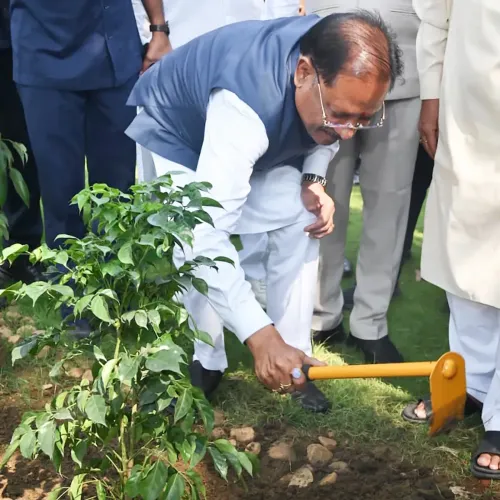
Khattar plants sapling on World Environment Day
Synopsis
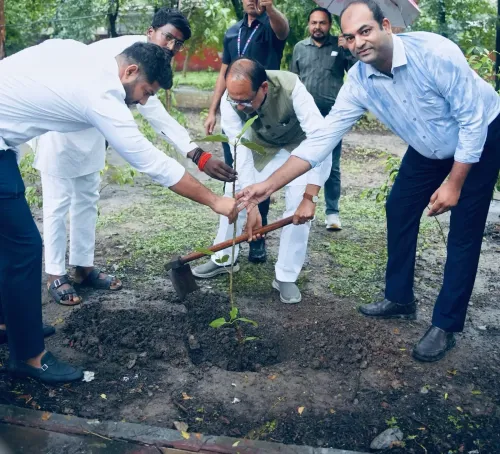
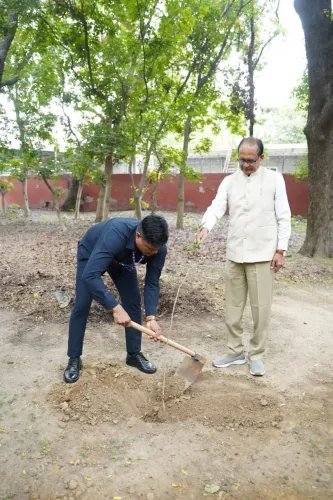
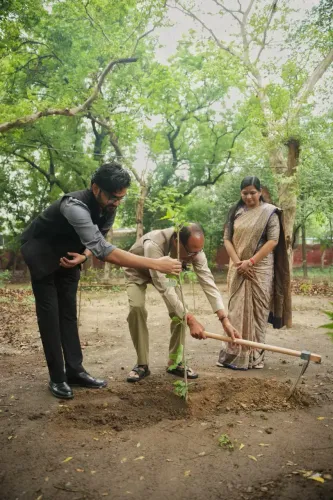
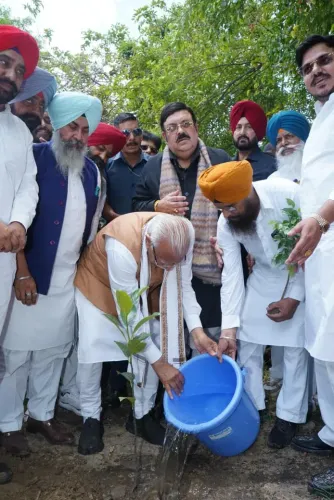
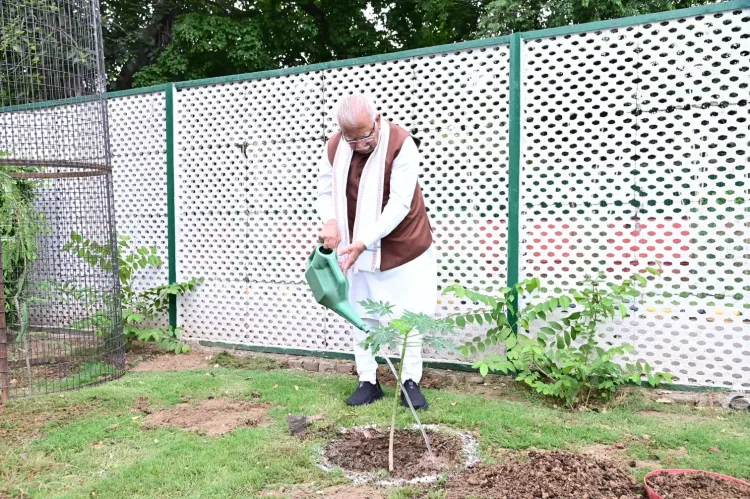
Union Power Minister Manohar Lal Khattar planted a sapling at his residence on World Environment Day 2026, calling tree-planting a cultural duty and urging all citizens to contribute to a greener, healthier planet.
Key Takeaways
Manohar Lal Khattar planted a sapling at his official residence on 5 June 2026 to mark World Environment Day.
He described nature conservation as inseparable from India's cultural values, not merely a statutory obligation.
India has pledged to create an additional 2.5–3 billion tonnes of CO₂-equivalent carbon sink through forest cover expansion by 2030 under its Paris Agreement NDC.
The Green India Mission , launched under the National Action Plan on Climate Change, underpins the government's long-term afforestation strategy.
Khattar's call to citizens aligns with a broader pattern of senior ministers using World Environment Day to amplify public participation in afforestation drives.
Union Power Minister Manohar Lal Khattar marked World Environment Day on 5 June 2026 by planting a sapling at his official residence, calling on all citizens to contribute to a greener planet. The minister used the occasion to frame tree-planting not merely as an environmental duty but as an expression of India's cultural heritage.
Context
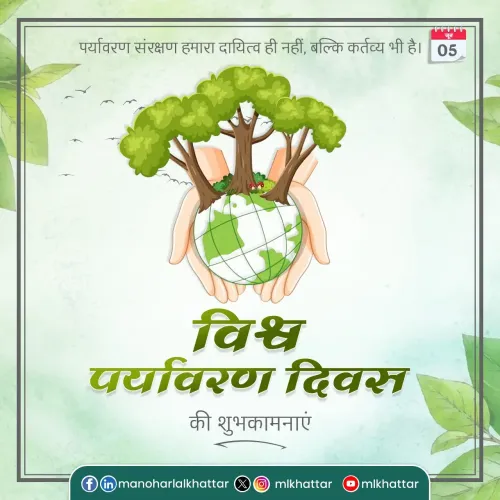
In his post, Khattar wrote: 'विश्व पर्यावरण दिवस के शुभ अवसर पर आज निवास स्थान पर पौधा रोपा' — 'On the auspicious occasion of World Environment Day, I planted a sapling at my residence today.' He added that trees protect the environment and that 'a healthy environment is the very foundation of human life.'
The minister also appealed directly to citizens: 'Let us all, on World Environment Day, make our invaluable contribution by planting saplings to make the earth beautiful and prosperous.' He described nature conservation as 'हमारी संस्कृति और संस्कारों का अभिन्न हिस्सा' — 'an inseparable part of our culture and values.'
Policy Backdrop
India's afforestation commitments have deep statutory roots. The National Action Plan on Climate Change (2008) established eight national missions, including the Green India Mission, which targets a significant increase in forest and tree cover alongside climate adaptation measures.
Under India's Nationally Determined Contribution (NDC) to the Paris Agreement, the country has pledged to create an additional 2.5–3 billion tonnes of CO₂-equivalent carbon sink through expanded forest cover by 2030. Tree-planting drives by senior officials serve as visible signals of the government's alignment with these long-term targets.
Stakeholders and Impact
Indian ministers routinely mark World Environment Day with symbolic tree-planting ceremonies, a practice that reinforces public awareness even as it underscores official commitment to afforestation goals. Khattar's dual portfolio — Power and Housing and Urban Affairs — places him at the intersection of energy transition and urban green-space policy, lending additional weight to his environmental messaging.
Conservation advocates and urban planners note that ministerial participation in such observances can amplify grassroots participation in state and central afforestation schemes. The call to citizens to plant saplings echoes the broader push to distribute responsibility for environmental stewardship across households and communities.
What's Next
Attention will now turn to whether World Environment Day 2026 prompts concrete policy announcements — such as updates to afforestation scheme budgets or new urban greening targets under the Smart Cities Mission. The Forest Survey of India's periodic reports on tree-cover trends will be a key metric against which such symbolic gestures are eventually measured. Sustained follow-through in parliamentary allocations and urban development guidelines will determine whether the day's messaging translates into durable environmental gains.
Point of View
Positioning conservation as rooted in Indian tradition rather than imported green ideology. Coming from a minister who oversees both power infrastructure and urban development — two sectors with significant environmental footprints — the gesture invites scrutiny of whether rhetorical commitment is matched by policy decisions in his portfolio. The appeal to citizens also subtly distributes responsibility, a recurring feature of government environmental communication that can dilute accountability for structural change. Ultimately, the post's significance lies less in the sapling planted and more in whether it precedes concrete budget or regulatory moves in the run-up to parliamentary sessions.
NationPress
21 Oct 2026
Frequently Asked Questions
Why did Manohar Lal Khattar plant a tree on 5 June 2026?
Khattar planted a sapling at his residence to mark World Environment Day, observed globally on 5 June each year, and to publicly encourage citizens to participate in afforestation efforts.
What is India's tree-planting target under the Paris Agreement?
India has committed to creating an additional 2.5–3 billion tonnes of CO₂-equivalent carbon sink through expanded forest and tree cover by 2030 as part of its Nationally Determined Contribution.
What is the Green India Mission?
The Green India Mission is one of eight national missions under India's National Action Plan on Climate Change, aimed at increasing forest and tree cover and strengthening climate adaptation.
What ministries does Manohar Lal Khattar currently head?
Manohar Lal Khattar is the Union Minister of Power and Housing and Urban Affairs, and is a senior BJP leader and former Chief Minister of Haryana.
How does World Environment Day connect to Indian government policy?
World Environment Day is used by Indian ministers and departments to signal commitment to afforestation and climate goals, aligning symbolic public acts with statutory targets under national and international environmental frameworks.