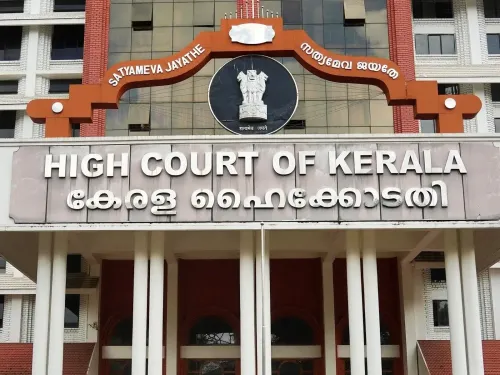
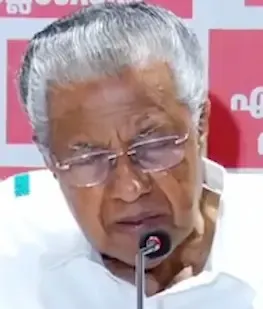
Kerala HC denies stay on vigilance FIR order against Pinarayi Vijayan in CMRL case
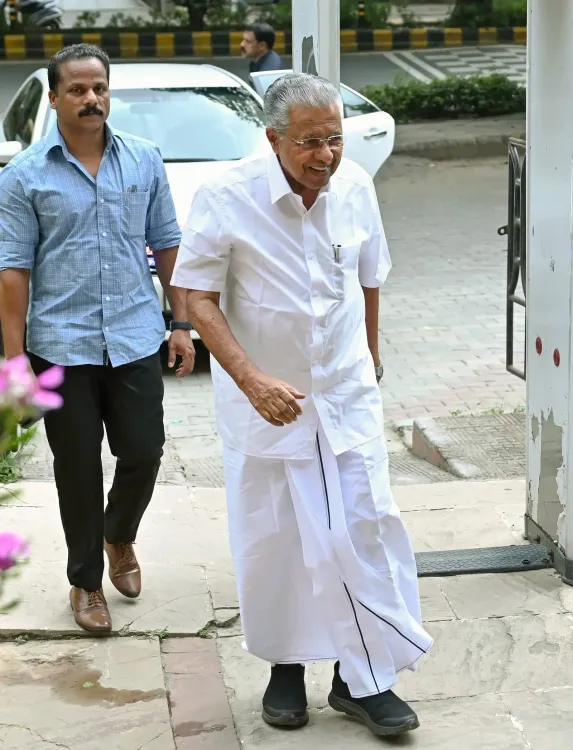
Synopsis
Kerala's High Court has refused to stay the order directing a vigilance FIR against former Chief Minister Pinarayi Vijayan and his family in the CMRL-Exalogic alleged pay-off case — leaving a legally significant direction intact while the division bench reserves its verdict on whether the appellants can even challenge it.
Key Takeaways
A Kerala High Court division bench on 13 October 2026 refused to stay a single judge's order directing registration of a VACB FIR against Pinarayi Vijayan and others.
The single judge's 9 October order also quashed the state government's move to constitute an SIT for a preliminary inquiry.
Appellants include Vijayan's daughter Veena Thaikkandiyil and son-in-law, former minister Mohammed Riyas .
The case involves alleged financial irregularities between Cochin Minerals and Rutile Limited (CMRL) and Exalogic Solutions Pvt Ltd , founded by Veena.
The division bench has reserved its verdict on whether appellants — who were not parties to the original petition — can even pursue their appeals.
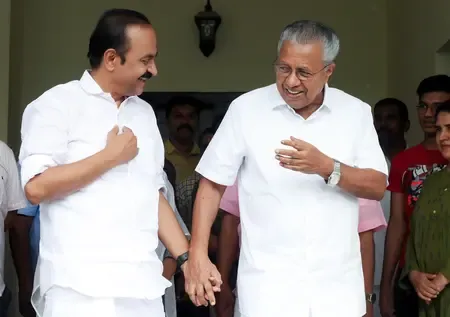
Former Kerala Chief Minister and CPI(M) veteran Pinarayi Vijayan, along with co-appellants including his daughter Veena Thaikkandiyil and son-in-law Mohammed Riyas, a former minister, failed on Tuesday, 13 October 2026 to secure interim relief from the Kerala High Court against a single judge's order directing the registration of a vigilance FIR in the CMRL-Exalogic alleged pay-off case. The court's refusal leaves the earlier direction in force, marking a significant legal setback for the former chief minister.
What the Division Bench Decided
A division bench of Justice K. Natarajan and Justice Johnson John declined to stay the 9 October single-judge order while reserving its verdict on whether the appellants could challenge the ruling at all. The single judge had directed the Vigilance and Anti-Corruption Bureau (VACB) to register an FIR incorporating offences under the Prevention of Corruption Act against Vijayan, his family members, and others. Additionally, the single judge had quashed the state government's decision to constitute a Special Investigation Team (SIT) to conduct a preliminary inquiry into information supplied by the Enforcement Directorate (ED).
Arguments Raised by the Appellants
Senior advocates K. Gopalakrishna Kurup, S. Sreekumar, and T.A. Shaji, appearing for the appellants, raised procedural objections, arguing that they were not heard before the single judge passed a direction directly affecting them. They also sought the court's permission to appeal, noting they were not parties to the original writ petition filed by advocate K.M. Shajahan. The appellants questioned the maintainability of Shajahan's petition, contending it should have been treated as a public interest litigation and placed before a division bench. They further defended the state's approach of conducting a preliminary inquiry before registering an FIR, arguing authorities were entitled to ascertain whether a cognisable offence had been committed.
State and ED Positions
Advocate General K. Jaju Babu backed the state's stance, maintaining that a preliminary inquiry was permissible when there was genuine doubt over the commission of a cognisable offence. Additional Solicitor General P. Sreekumar, appearing for the ED, countered that an accused person had no right to be heard at the stage of deciding whether to register an FIR. Petitioner Shajahan argued he was entitled to seek action over alleged corruption involving public money, noting that offences under the Prevention of Corruption Act carry a public interest dimension.
The CMRL-Exalogic Allegations
The case centres on alleged irregularities in financial transactions between Cochin Minerals and Rutile Limited (CMRL) and Exalogic Solutions Pvt Ltd, a company reportedly founded by Veena Thaikkandiyil. The ED had shared information about these transactions with state authorities, triggering the chain of legal proceedings. This comes amid broader scrutiny of alleged financial dealings involving the former chief minister's family, a matter that has been politically contentious in Kerala for several months.
What Happens Next
The division bench is yet to decide whether the appellants can formally pursue their appeals, with that ruling now awaited. Until further orders, the single judge's direction to register a VACB FIR remains operative. The case is expected to face further legal challenges, and the High Court's final stance on the appellants' right to appeal will be closely watched across Kerala's political and legal circles.
Point of View
Setting a legally uncomfortable precedent for Kerala's ruling establishment. The simultaneous quashing of the SIT route signals judicial scepticism of what critics see as a state mechanism to delay or dilute corruption inquiries. What is notably absent from the appellants' arguments is any substantive defence on the merits; the entire strategy rests on procedure. That is a telling posture for a case involving public money and a former chief minister's immediate family.
NationPress
13 Oct 2026
Frequently Asked Questions
What is the CMRL-Exalogic case involving Pinarayi Vijayan?
The case concerns alleged financial irregularities in transactions between Cochin Minerals and Rutile Limited (CMRL) and Exalogic Solutions Pvt Ltd, a company reportedly founded by Vijayan's daughter Veena Thaikkandiyil. The Enforcement Directorate shared information about these transactions with Kerala state authorities, leading to court proceedings over whether a vigilance FIR should be registered.
What did the Kerala High Court decide on 13 October 2026?
A division bench of the Kerala High Court refused to stay the 9 October single-judge order directing the VACB to register an FIR under the Prevention of Corruption Act against Pinarayi Vijayan, his daughter, son-in-law Mohammed Riyas, and others. The bench also reserved its verdict on whether the appellants, who were not parties to the original petition, could formally challenge the ruling.
Why did the single judge quash the SIT order?
The single judge quashed the state government's decision to constitute a Special Investigation Team for a preliminary inquiry into ED-supplied information, effectively ruling that the state was not entitled to use that route before registering an FIR. The appellants have challenged this as procedurally improper.
Who filed the original petition that led to the FIR order?
Advocate K.M. Shajahan filed the original writ petition. Vijayan's legal team argued that Shajahan was a third party and that his petition should have been treated as a public interest litigation heard by a division bench, raising questions about the case's maintainability.
What happens next in the case?
The division bench is yet to rule on whether Vijayan and the other appellants can formally pursue their appeals, since they were not parties to the original petition. Until that decision and any further orders, the single judge's direction to register a VACB FIR remains operative.