Tejashwi Yadav: People take to streets when institutions lose credibility
Synopsis
RJD leader and Bihar Leader of Opposition Tejashwi Yadav declared on October 13, 2026 that when constitutional institutions lose credibility, citizens restore democracy by taking to the streets — a pointed message amid ongoing Bihar political contestation.
Key Takeaways
Tejashwi Yadav posted on October 13, 2026 that street mobilisation by citizens is democracy's response to failing institutions.
The post was in Hindi and accompanied by a video, suggesting it was tied to a specific event or gathering.
Tejashwi is the Leader of the Opposition in the Bihar Legislative Assembly and a senior Rashtriya Janata Dal leader.
The statement echoes a recurring argument in Indian opposition politics linking institutional erosion to the legitimacy of public protest.
India has a long tradition — from the JP Movement onward — of treating street protest as a democratic corrective when institutions are seen as compromised.
The broader Bihar political context makes the message a potential mobilisation signal for the RJD base ahead of any further political developments.
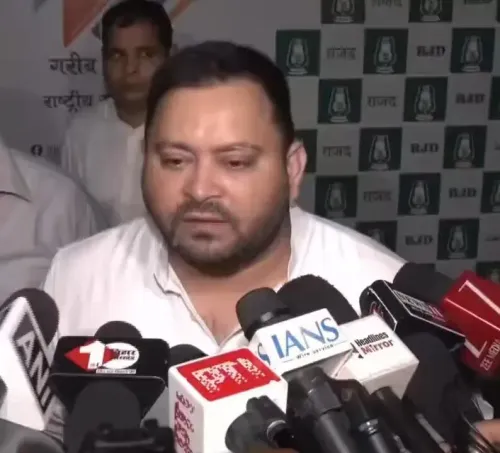
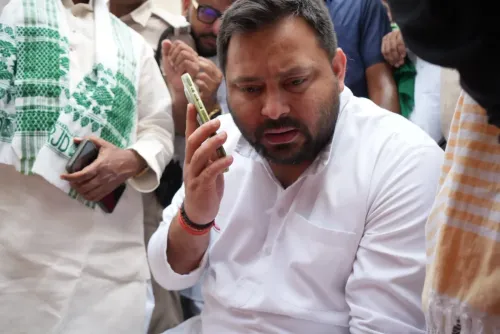
When constitutional institutions lose the public's trust, it is the streets — not the corridors of power — that keep democracy alive. That is the sharp, unambiguous message RJD leader Tejashwi Yadav sent on Tuesday, October 13, 2026, in a pointed post on X that cut straight to one of Indian politics' most enduring fault lines.
Posting in Hindi, Tejashwi wrote: 'संवैधानिक संस्थाएं जब अपनी साख खोती है तब जनता सड़कों पर उतर कर लोकतंत्र को ज़िंदा करती है' — 'When constitutional institutions lose their credibility, the people take to the streets and keep democracy alive.' Seven words in. The argument is complete.A recurring charge in Indian opposition politics
Tejashwi Yadav, Leader of the Opposition in the Bihar Legislative Assembly and former Deputy Chief Minister of the state, has consistently positioned himself as a voice for accountability in Bihar and beyond. The statement fits a pattern visible across India's opposition landscape: when ruling dispensations are accused of undermining independent institutions — courts, election commissions, investigative agencies — opposition leaders frame public protest not as disorder, but as democracy's last resort. The argument has a long pedigree in Indian political history. From the JP Movement of 1974-75, which drew millions onto the streets against perceived authoritarian governance, to more recent mass mobilisations, India's democratic tradition has repeatedly treated street protest as a legitimate — sometimes essential — corrective when institutional channels are seen as compromised.Why Bihar makes this message sharper
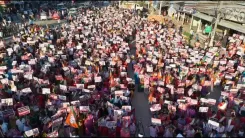
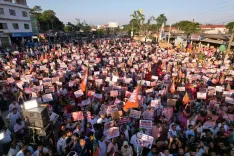
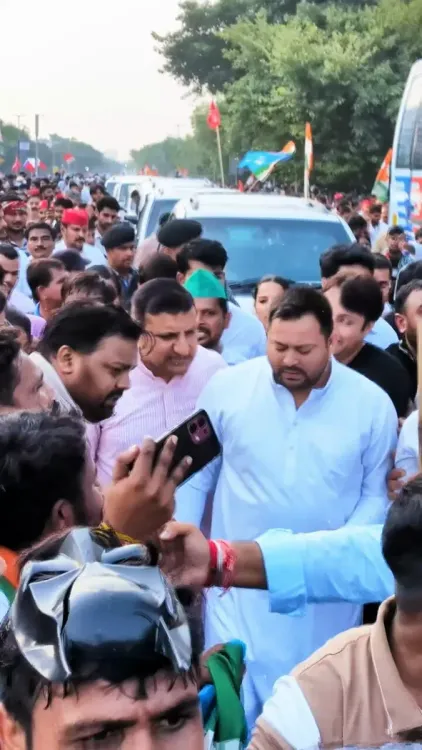
Bihar's political theatre rarely lacks drama, and Tejashwi's post lands in a state where institutional credibility has been a live, contested issue for years. The Rashtriya Janata Dal's core electoral argument has long rested on the claim that governance structures in Bihar serve entrenched interests rather than ordinary citizens. A post like this — brief, declarative, attached to a video — is also a mobilisation signal, reminding the party's base that their presence on the ground is not just political activity but a democratic duty. The accompanying video in the post could not be independently described here, but its inclusion suggests the statement was anchored to a specific event or gathering, lending the words immediate visual weight beyond the aphorism alone.The bigger question this post asks
Tejashwi's formulation poses an implicit challenge to any ruling establishment: if your institutions were working, people would not need the streets. It is a rhetorical framework that governments everywhere struggle to rebut, because the very act of dismissing street protest as illegitimate tends to confirm the original charge. How Bihar's ruling alliance responds — and whether this post precedes a broader political campaign or remains a standalone salvo — will determine how far this moment travels.Point of View
Which has consistently argued that Bihar's power structures are unaccountable, this framing transforms public mobilisation from a political tactic into a civic obligation. The statement also reflects a wider pan-India opposition strategy of challenging not just specific government decisions but the perceived neutrality of the institutions that oversee them — courts, regulators, and election bodies included. If Tejashwi follows this post with organised ground action, the message will have served its purpose; if it stands alone, it reads as a marker being placed for a future confrontation.
NationPress
13 Oct 2026
Frequently Asked Questions
What did Tejashwi Yadav say about constitutional institutions?
Tejashwi Yadav posted on October 13, 2026 that when constitutional institutions lose their credibility, the people take to the streets and keep democracy alive — arguing that public protest is a legitimate democratic response to institutional failure.
Why is Tejashwi Yadav's statement significant for Bihar politics?
As Leader of the Opposition in the Bihar Legislative Assembly, Tejashwi's statement signals that the RJD may be building a campaign around institutional accountability, potentially mobilising its base ahead of further political developments in the state.
Who is Tejashwi Yadav?
Tejashwi Yadav is a senior Rashtriya Janata Dal leader, the Leader of the Opposition in the Bihar Legislative Assembly, and a former Deputy Chief Minister of Bihar.
Does India have a history of street protest defending democracy?
Yes. India's democratic tradition includes major instances of mass mobilisation — most notably the JP Movement of 1974-75 — where citizens took to the streets in response to perceived threats to constitutional governance.
What is the RJD's core political argument about Bihar's institutions?
The Rashtriya Janata Dal has long argued that governance structures in Bihar serve entrenched interests rather than ordinary citizens, and that independent institutions must be held accountable — a theme Tejashwi's October 13 post reinforces.