Tejashwi Yadav warns of inflation, job losses under Modi govt
Synopsis
RJD leader Tejashwi Yadav warned on 24 May 2026 that Modi government policies would unleash inflation, private-sector job losses, reverse migration, and economic collapse, accusing the BJP of winning elections through machinery while ignoring ordinary citizens.
Key Takeaways
RJD leader Tejashwi Yadav posted on X on 24 May 2026 attacking the Modi government's economic policies.
He warned of severe inflation , private-sector job losses, and collapse of small industries in the near future.
Yadav specifically flagged reverse migration of workers as an imminent consequence of current central policies.
He accused the BJP of winning elections through 'system and machinery' while being indifferent to common citizens.
Bihar , a major labour-exporting state, is especially exposed to the economic pressures Yadav described.
The post is part of a sustained RJD strategy of linking central governance to livelihood distress ahead of future elections.
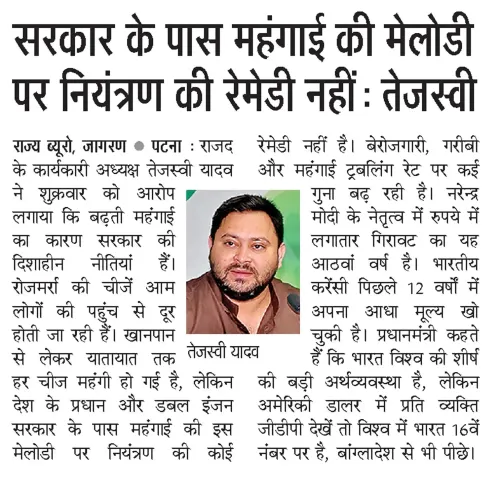
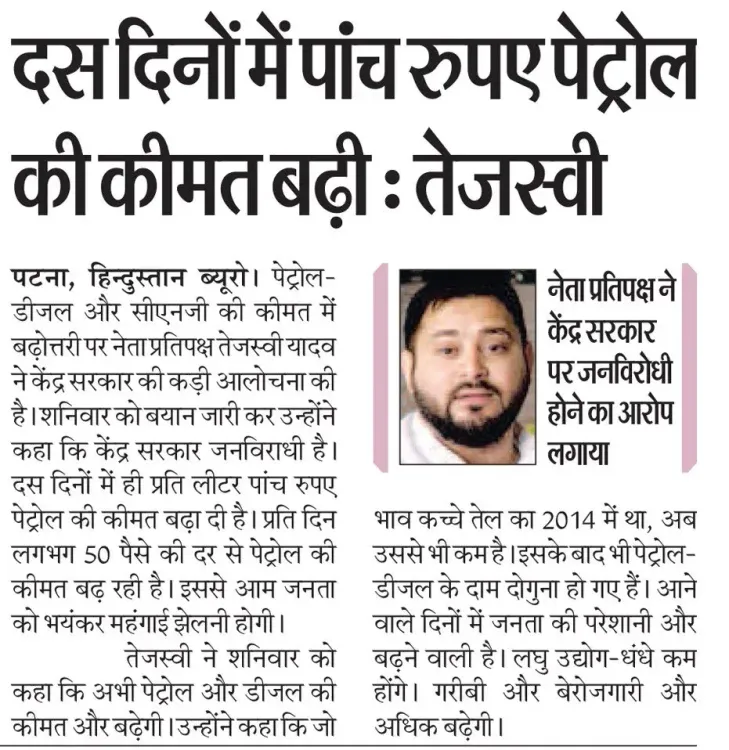
RJD leader and Bihar Leader of the Opposition Tejashwi Yadav on Sunday, 24 May 2026, launched a sharp attack on the Modi government, warning that its anti-people policies and pro-corporate decisions would soon trigger runaway inflation, private-sector job losses, reverse migration of workers, collapse of small businesses, and a broader economic downturn.
Context
Posting on X, Yadav wrote in Hindi: 'मोदी सरकार की जनविरोधी नीतियों और पूंजीपरस्त निर्णयों के चलते आगामी दिनों में जनता को भयंकर महंगाई झेलनी पड़ेगी' — ('Due to the Modi government's anti-people policies and pro-capitalist decisions, the public will soon have to endure terrible inflation'). He added that private-sector jobs would disappear, migrant workers would return home, small industries would shrink, poverty and unemployment would rise, and the economy would be 'ruined.'
Yadav concluded with a pointed political charge: that the BJP, which wins elections through 'system and machinery' (tantra aur yantra), has no genuine concern for the common citizen.
Policy Backdrop
Bihar is one of India's largest labour-exporting states, making its workforce acutely sensitive to shifts in national employment and economic conditions. The RJD has long anchored its political identity in the welfare of migrant workers, small traders, and the rural poor — constituencies it argues have been repeatedly hurt by central policy choices.
Opposition parties have linked central economic decisions — including the 2016 demonetisation and the July 2017 GST rollout — to disruption in the informal sector and compliance burdens on micro and small enterprises. Periodic national labour surveys in the years that followed documented elevated unemployment, which opposition leaders cited as evidence of growth that did not generate adequate jobs.
Stakeholders and Impact
The communities Yadav named — migrant labourers, private-sector employees, and small-business owners — form the backbone of Bihar's economy and a significant share of the state's electorate. Reverse migration, whenever it occurs at scale, strains rural resources, suppresses household incomes, and amplifies local unemployment figures.
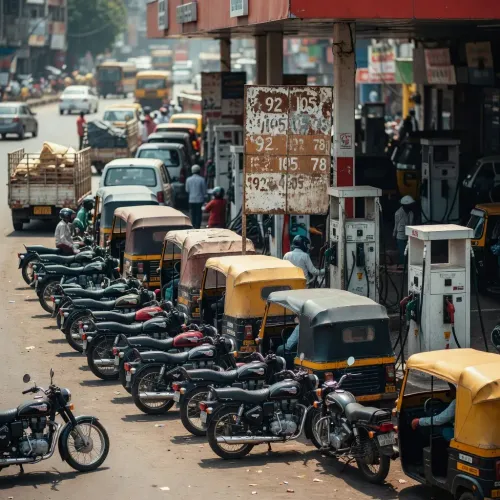
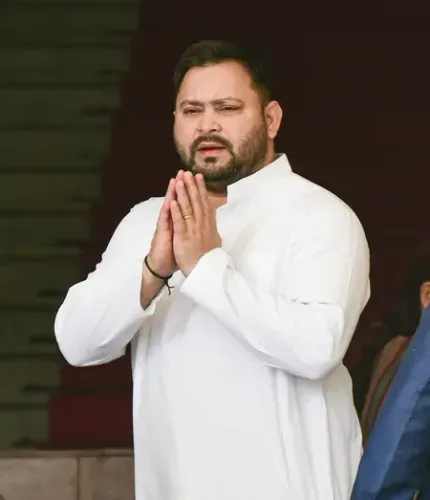
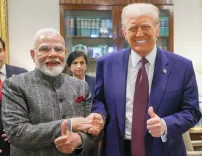
Small and micro enterprises, which operate on thin margins and depend heavily on domestic demand, are particularly vulnerable to inflationary input costs and any tightening of credit. Yadav's post, accompanied by 4 images, appeared designed to visualise these economic pressures for a mass audience.
What's Next
Upcoming releases of official inflation indices and Periodic Labour Force Survey data will be closely watched by both the government and opposition as a factual benchmark for these competing narratives. Any special session of the Bihar Legislative Assembly focused on economic affairs could provide Yadav a formal platform to press these charges against the NDA.
The RJD's sustained focus on livelihood issues signals that economic governance will remain a central fault line in Bihar politics in the months ahead, particularly as parties position themselves ahead of future electoral cycles.
Point of View
Unemployment, reverse migration, and small-business decline into a single post, he is building a pre-emptive narrative that can be activated the moment official data shows any deterioration. The 'tantra aur yantra' line is a deliberate escalation, moving beyond policy critique to a legitimacy challenge against BJP's electoral mandate. This signals that the RJD intends to make economic accountability — not just caste arithmetic — a defining axis of Bihar's political contest going forward.
NationPress
8 Oct 2026
Frequently Asked Questions
What did Tejashwi Yadav say about the Modi government's economic policies?
Tejashwi Yadav warned on 24 May 2026 that the Modi government's anti-people and pro-corporate policies would soon cause severe inflation, private-sector job losses, reverse migration of workers, decline of small businesses, and a broader economic collapse.
Why is Bihar particularly affected by reverse migration of workers?
Bihar is one of India's largest labour-exporting states, meaning millions of its residents work in other states. Any national economic slowdown or job losses in the private sector disproportionately pushes these workers back to Bihar, straining local employment and rural incomes.
What is RJD's criticism of the BJP on economic issues?
The RJD, led by Tejashwi Yadav, has consistently argued that BJP-led central government policies — including demonetisation and GST — have harmed the informal sector, small businesses, and migrant workers while benefiting large corporates.
What did Tejashwi Yadav mean by 'tantra aur yantra' in his post?
The Hindi phrase 'tantra aur yantra' translates to 'system and machinery,' implying that the BJP relies on administrative and institutional levers to win elections rather than genuine public support, and therefore feels no obligation to address ordinary citizens' concerns.
How does inflation affect small businesses and migrant workers in Bihar?
Rising inflation increases input costs for small and micro enterprises that already operate on thin margins, while migrant workers face reduced real wages and purchasing power, making both groups especially vulnerable to prolonged price pressures.