Tejashwi Yadav Slams Modi Govt Over Fresh Fuel Price Hike
Synopsis
RJD leader Tejashwi Yadav accused the Modi government of hiking CNG, petrol, and diesel prices by roughly Rs 5 over 10 days, warning of inflation, private-sector job losses, reverse migration, and a contraction of small industries, while alleging the NDA prioritises divisive politics over economic governance.
Key Takeaways
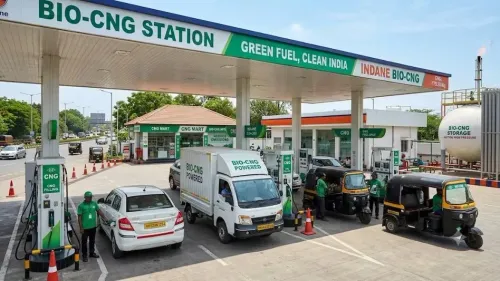
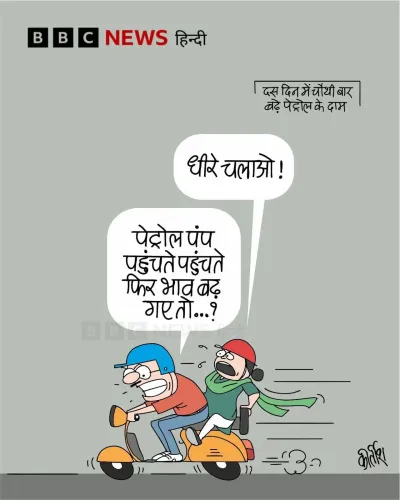
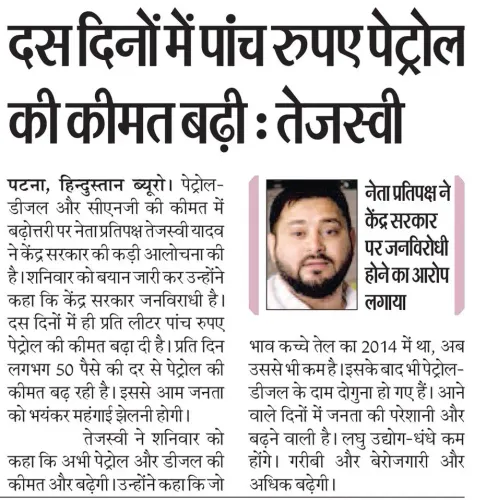
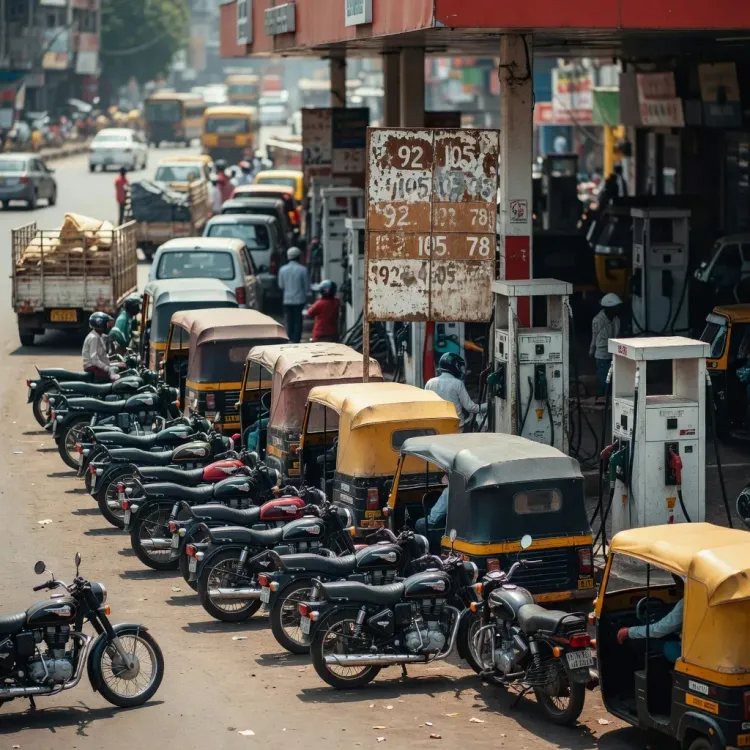
Tejashwi Yadav alleged the NDA government raised CNG, petrol, and diesel prices on May 23, 2026 , continuing a trend of roughly Rs 5 in hikes over 10 days (50 paise per day).
He argued that domestic petrol-diesel prices have roughly doubled since 2014 even though global crude prices are now lower than they were then.
Yadav warned the hikes would cause severe inflation, private-sector job losses, reverse migration of workers, and a contraction of small industries .
He accused the NDA of benefiting private companies through fuel pricing regardless of whether international crude is cheap or expensive.
The RJD leader charged the government with focusing on divisive issues and headline management instead of jobs, agriculture, education, health, and the economy.
The critique comes ahead of Bihar assembly elections , where fuel prices and economic distress are expected to be key opposition campaign themes.
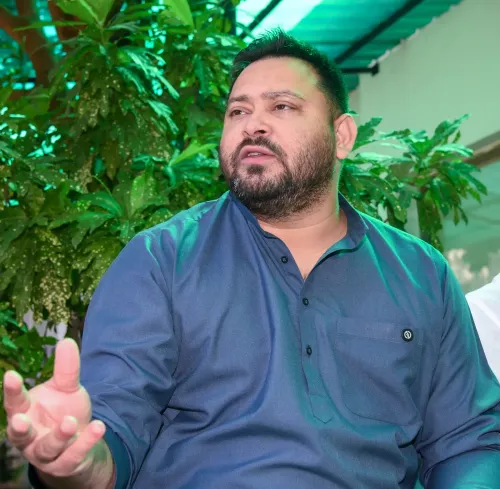
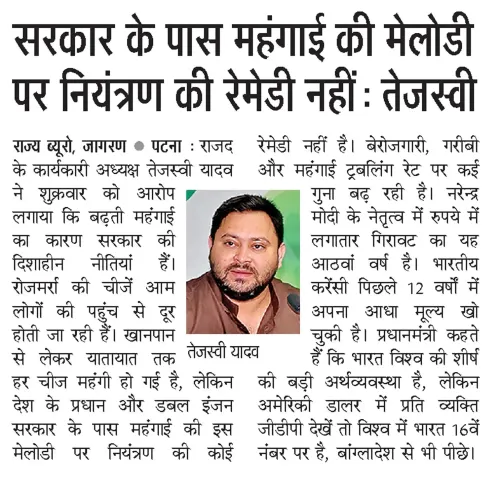
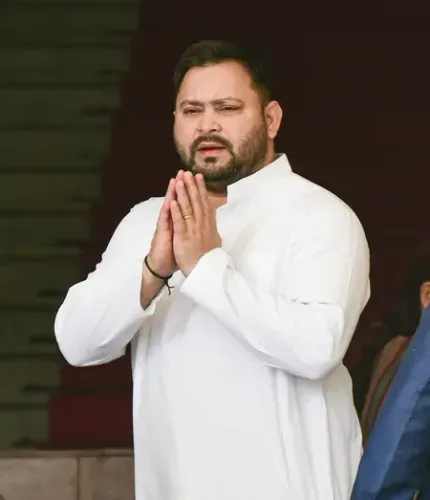
RJD leader Tejashwi Yadav launched a sharp attack on the Modi-led NDA government on Saturday, May 23, 2026, accusing it of raising CNG, petrol, and diesel prices again and warning of severe economic consequences for ordinary citizens, migrant workers, and small businesses.
Context
Posting in Hindi on X, Yadav alleged that the central government had raised fuel prices by lagbhag 5 rupaye (approximately Rs 5) over the preceding 10 days — amounting to 50 paise per day — and warned that further hikes were still to come. He characterised the NDA as a janvirodhī pūnjīparast ('anti-people, pro-capitalist') administration that funnels benefits to private companies regardless of whether crude oil is cheap or expensive.
Yadav drew a pointed comparison with 2014, the year the NDA first came to power, arguing that while global crude prices are now lower than they were then, domestic petrol and diesel prices have roughly doubled. He predicted that the hikes would trigger severe inflation, job losses in the private sector, reverse migration of workers, a contraction of small industries, and rising poverty and unemployment.
Policy Backdrop
Indian retail fuel prices are built from international crude costs layered with central excise duties, state VAT, and dealer margins. The NDA government deregulated diesel prices in 2014 and introduced a daily dynamic pricing mechanism in 2017, linking pump rates more directly to global benchmarks — though central tax adjustments have repeatedly been used to manage both revenue and inflation.
Opposition parties, including the Rashtriya Janata Dal (RJD), have consistently contrasted current pump prices with 2014 levels when global crude was trading higher, arguing that consumers have not benefited proportionately from periods of low international prices. This critique has surfaced in multiple state election cycles since 2014, and Yadav's post follows the same well-established line of attack.
Stakeholders and Impact
Yadav specifically named migrant workers, small industries, and the rural poor as those who would bear the heaviest burden of sustained fuel-price increases. Higher fuel costs feed directly into transport and logistics expenses, raising the cost of goods and squeezing margins for micro, small, and medium enterprises (MSMEs) that are already sensitive to input-cost pressures.
The Leader of the Opposition in the Bihar Legislative Assembly also turned the post into a broader political indictment, accusing the ruling dispensation of prioritising 'nafrat ka karobaar, bhashanbazi, reels aur entertainment' ('the business of hatred, rhetoric, reels, and entertainment') over substantive governance on jobs, agriculture, education, health, and the economy. He alleged the government's real focus remained on 'Hindu-Muslim, mandir-masjid, gaay-gobar' and renaming places rather than economic management.
What's Next
With Bihar assembly elections on the horizon, fuel prices and economic distress are expected to remain central campaign themes for the INDIA alliance, of which the RJD is a key member. Any move by the central government — through a GST Council decision or a revision of central excise duties — to moderate fuel prices could blunt the opposition's narrative. Conversely, further hikes would amplify the kind of public anger Yadav is seeking to channel. The RJD's ability to translate economic grievance into electoral mobilisation in Bihar will be closely watched in the months ahead.
Point of View
Daily-felt grievance — fuel prices — and then widen the frame to encompass jobs, migration, and rural distress. The 2014-benchmark comparison is a durable rhetorical device that opposition parties have deployed across multiple election cycles, and its staying power lies in the fact that the arithmetic of excise duties versus crude costs is genuinely difficult for the government to defend in simple terms. By folding in charges of 'headline management' and communal distraction, Yadav is also trying to pre-empt any counter-narrative pivot by the ruling side. With Bihar elections approaching, this post signals that the RJD intends to make economic pain — not identity politics — the dominant register of its campaign.
NationPress
7 Oct 2026
Frequently Asked Questions
Why did Tejashwi Yadav criticise the Modi government on fuel prices?
Tejashwi Yadav alleged that the NDA government raised CNG, petrol, and diesel prices on May 23, 2026, continuing a run of hikes totalling roughly Rs 5 over 10 days, and accused it of prioritising private company profits over public welfare.
How much have petrol and diesel prices risen according to Tejashwi Yadav?
Yadav claimed prices rose by approximately Rs 5 over the preceding 10 days — about 50 paise per day — and warned that further increases were still to come.
How are petrol and diesel prices determined in India?
Indian retail fuel prices are calculated by adding central excise duties, state VAT, and dealer margins to the international crude oil cost. The government introduced dynamic daily pricing in 2017 to link pump rates more closely to global benchmarks.
What economic consequences did Tejashwi Yadav predict from the fuel price hike?
He predicted severe inflation, job losses in the private sector, reverse migration of workers to their home states, a contraction of small industries, and rising poverty and unemployment.
What is Tejashwi Yadav's political position and party?
Tejashwi Yadav is the Leader of the Opposition in the Bihar Legislative Assembly and a senior leader of the Rashtriya Janata Dal (RJD), which is part of the INDIA opposition alliance. He previously served as Deputy Chief Minister of Bihar.