CM Revanth Reddy Launches Balamrutham Plant in Hyderabad
Synopsis
Chief Minister Revanth Reddy on 7 July 2026 inaugurated a new Balamrutham supplementary nutrition plant at IDA Nacharam, Hyderabad, under the Telangana Food Corporation, targeting fortified food supply for poor children up to age six and pregnant women, while outlining broad education and women's welfare commitments.
Key Takeaways
CM Revanth Reddy launched a new Balamrutham production plant at IDA Nacharam, Hyderabad on 7 July 2026 under the Telangana Food Corporation .
The plant will provide fortified nutritional food to poor children from birth to age six and to expectant mothers.
The original Balamrutham centre, inaugurated by former PM Indira Gandhi in Mahbubnagar , has expanded to 21 acres and supplies multiple states.
The Telangana government has introduced nursery-to-UKG classes and a three-meal-a-day scheme in government schools from nursery through Class 12 .
The government announced a plan to build one lakh houses for the urban poor in Hyderabad and outlined women-centric schemes including free RTC travel, 200 units free electricity, and Indiramma housing.
Minister Seethakka and other public representatives and officials attended the inauguration.
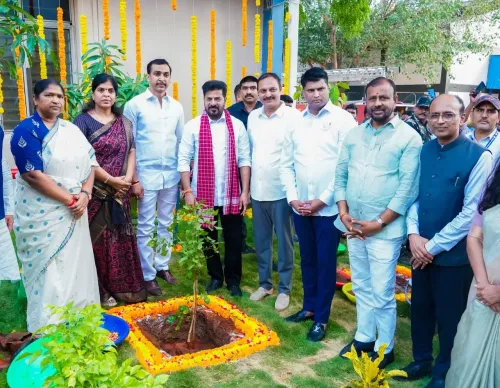
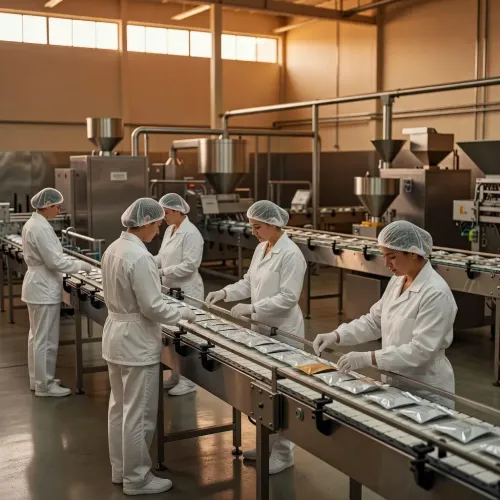
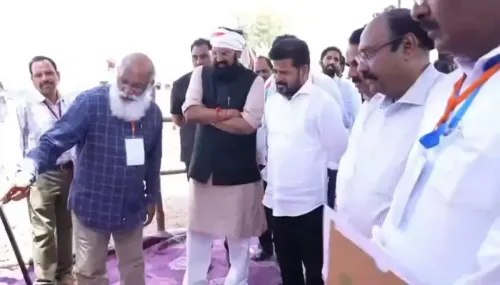
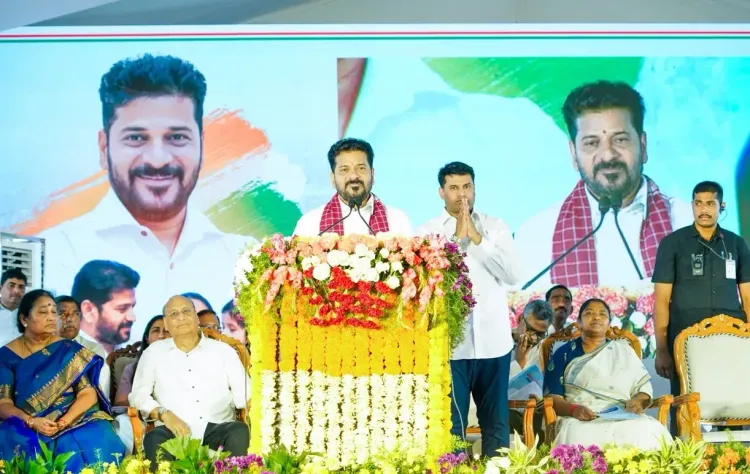
The Chief Minister's Office of Telangana announced on Tuesday, 7 July 2026 that Chief Minister Revanth Reddy inaugurated a new Balamrutham supplementary nutrition production plant at the IDA Nacharam area of Hyderabad, under the aegis of the Telangana Food Corporation. The plant is designed to provide fortified nutritional food to poor children from birth up to the age of six years, as well as to expectant mothers.
Context
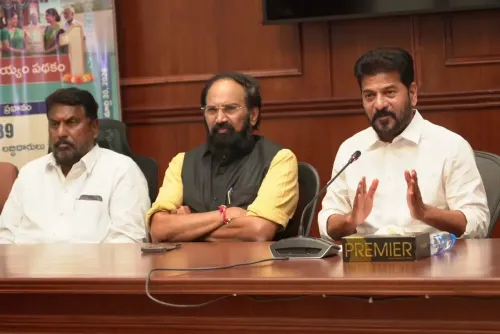
Speaking at the inauguration, CM Revanth Reddy stated, 'Talli garbham daalchinappati nundi bidda ki aaru samvatsarala varaku balavardhakamayna poshakaaharam peda pillalaki ivvalane ee nootana Balamrutham utpatti kendrani prarambhincham' — meaning the new production centre was launched with the specific intent of providing nutritious food to poor children from the mother's pregnancy until the child turns six. He also planted a sapling at the facility premises. Minister Seethakka and several public representatives and officials attended the event.
Revanth Reddy noted that the original Balamrutham centre was inaugurated in Mahbubnagar by former Prime Minister Indira Gandhi and has since expanded to a large facility spread across 21 acres, now capable of supplying nutritional products to Telangana, Andhra Pradesh, and several other states.
Policy Backdrop
Balamrutham is a supplementary nutrition scheme operating under India's Integrated Child Development Services (ICDS) framework, which has been the country's flagship early childhood care and nutrition programme since 1975. The new plant at Nacharam represents an expansion of existing production capacity rather than an entirely new programme, reflecting the Telangana government's approach of scaling proven infrastructure.
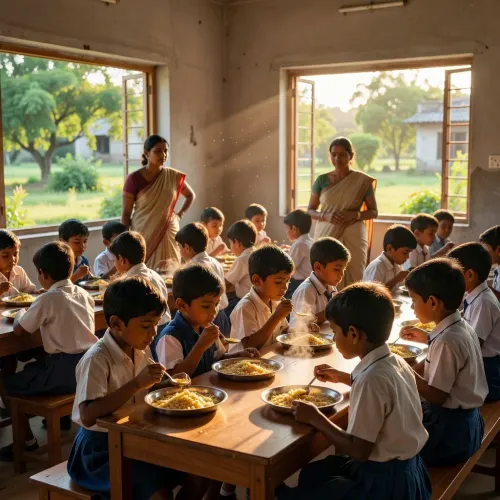
On education, the CM highlighted that the government has introduced nursery, LKG, and UKG classes in government schools — a facility that previously did not exist in the public system — and launched a scheme providing breakfast, lunch, and evening snacks to students from nursery through Class 12 in government schools. He described the state's education outlay as an investment in the future rather than expenditure.
Stakeholders and Impact
The primary beneficiaries of the new plant are poor children under six and pregnant women accessing Anganwadi centres across Telangana and neighbouring states. Government school students from migrant and low-income families stand to benefit from the expanded meal programme, which aims to reduce dependence on costly private schools.
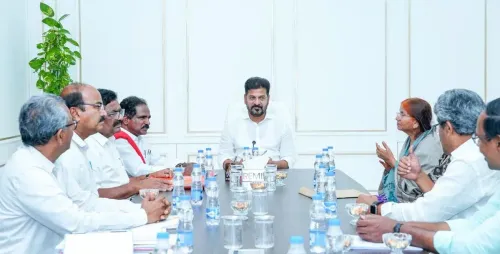
CM Revanth Reddy also outlined a range of women-centric welfare schemes being delivered under the Congress government, including free travel on RTC buses, free electricity up to 200 units, Indiramma housing, loans to women's self-help groups, solar plant installations of 1,000 megawatts capacity, petrol bunk allotments, 1,000 buses on lease to RTC, Indira Mahila Shakti Kendras on 3.5 acres near Shilparamam, and women's canteens in government offices. He also announced a decision to build one lakh houses for the urban poor in Hyderabad, where land prices have become prohibitive.
What's Next
The government is expected to channel the new plant's output to additional Anganwadi centres, widening the nutritional safety net across the state. Attention will now turn to the utilisation of the state's education budget and the progress of the proposed one-lakh-homes project for urban poor families in Hyderabad. The Telangana Food Corporation's expanded capacity could also deepen inter-state nutrition supply arrangements, strengthening the state's role as a regional production hub for fortified foods.
Point of View
Reinforcing its ideological continuity with the national party's welfare tradition. By bundling child nutrition with women's empowerment schemes and education spending in a single address, CM Revanth Reddy is constructing a broad welfare narrative ahead of future electoral cycles. The emphasis on scaling existing facilities rather than announcing new programmes suggests a pragmatic approach to delivery, though the ambition of the targets cited — from school meals to urban housing — will require sustained administrative follow-through. Southern states have long led India on nutrition and education welfare metrics, and Telangana's moves here fit a regional pattern of competitive social policy.
NationPress
8 Jul 2026
Frequently Asked Questions
What is Balamrutham and who does it benefit?
Balamrutham is a supplementary nutrition scheme under the ICDS framework that provides fortified food to poor children from birth up to age six and to pregnant and lactating women through Anganwadi centres in Telangana and neighbouring states.
Where is the new Balamrutham plant located?
The new Balamrutham production plant is located in the IDA Nacharam area of Hyderabad , Telangana, and operates under the Telangana Food Corporation .
Who inaugurated the Balamrutham plant in Hyderabad in 2026?
Telangana Chief Minister Revanth Reddy inaugurated the new Balamrutham plant on 7 July 2026 , accompanied by Minister Seethakka and other officials.
What welfare schemes did CM Revanth Reddy announce for women in Telangana?
CM Revanth Reddy outlined schemes including free RTC bus travel, free electricity up to 200 units , Indiramma housing, loans to women's self-help groups, 1,000 MW solar plants, petrol bunk allotments, 1,000 RTC buses on lease, Indira Mahila Shakti Kendras near Shilparamam, and women's canteens in government offices.
What is the history of the Balamrutham programme in Telangana?
The original Balamrutham production centre was inaugurated by former Prime Minister Indira Gandhi in Mahbubnagar and has since expanded to a 21-acre facility capable of supplying fortified nutrition to Telangana, Andhra Pradesh, and several other states.