CM Bhupendra Patel Hails Historic Narmada Award Settlement
Synopsis
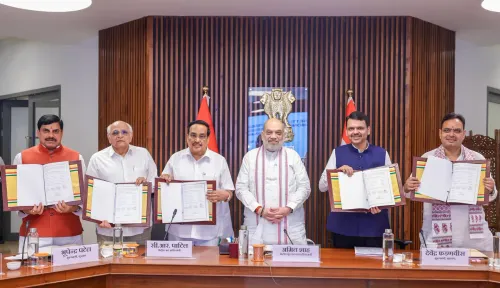
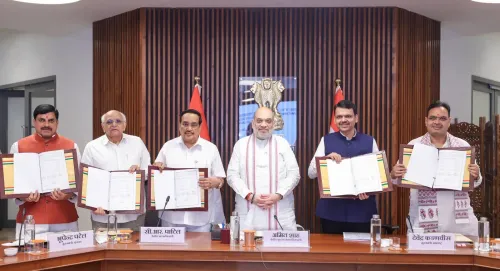
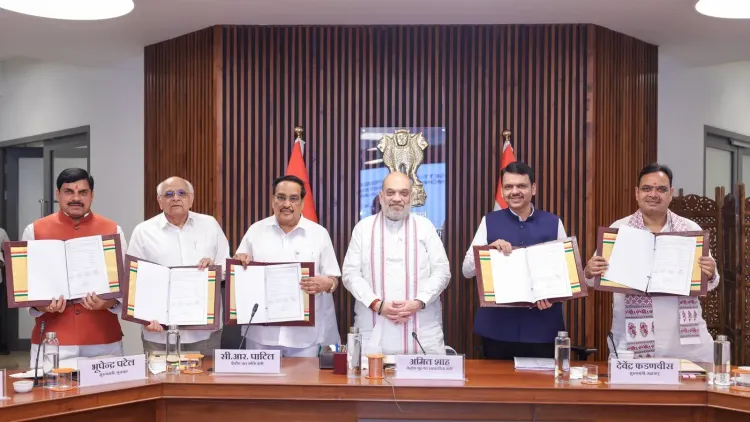
A decades-old inter-state payment dispute linked to the 1979 Narmada Water Disputes Tribunal Award has been resolved through a one-time settlement among Gujarat, Maharashtra, Madhya Pradesh and Rajasthan, brokered in New Delhi under PM Modi's leadership and chaired by Home Minister Amit Shah on 7 July 2026.
Key Takeaways
A one-time settlement was reached on 7 July 2026 in New Delhi to resolve decades-old Narmada Award payment disputes among four states.
The meeting was chaired by Union Home Minister Amit Shah , with Jal Shakti Minister C.
Patil present, under the leadership of PM Narendra Modi .
The four riparian states involved are Gujarat, Maharashtra, Madhya Pradesh and Rajasthan .
The Narmada Water Disputes Tribunal Award dates to 1979 ; the Narmada Control Authority was constituted in 1980 to oversee implementation.
Gujarat CM Bhupendra Patel described the deal as a model of 'cooperative federalism' that will strengthen water security and future inter-state cooperation.
The Narmada Control Authority is expected to formalise settlement terms, with state budget provisions likely to follow.
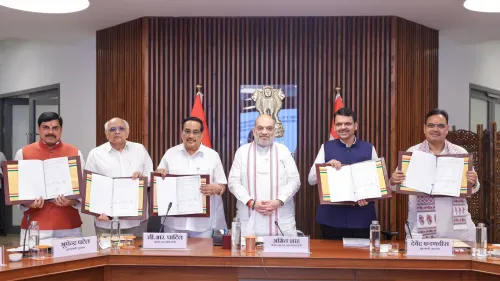
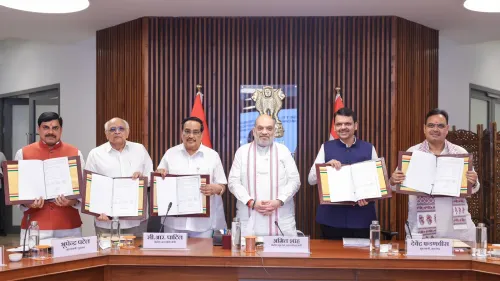
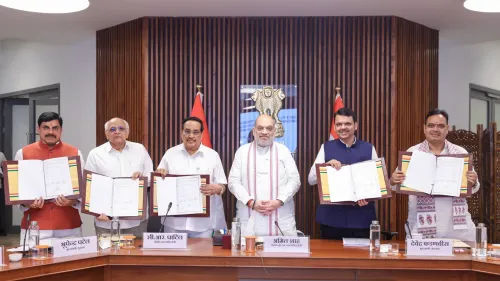
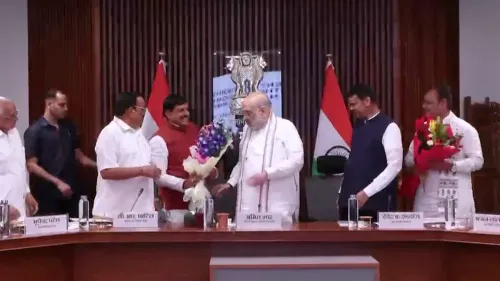
Gujarat Chief Minister Bhupendra Patel on Tuesday, 7 July 2026, welcomed a landmark one-time settlement of decades-old pending payment disputes linked to the Narmada Water Disputes Tribunal Award, reached at a high-level meeting in New Delhi. The agreement, brokered under the leadership of Prime Minister Narendra Modi and chaired by Union Home and Cooperation Minister Amit Shah, brings together the four riparian states — Gujarat, Maharashtra, Madhya Pradesh and Rajasthan — to resolve longstanding inter-state financial obligations.
Posting on X, Chief Minister Patel described the development as 'ऐतिहासिक सहमति' ('a historic agreement'), calling it 'a strong example of cooperative federalism, mutual trust and the spirit of national interest.' He expressed gratitude to Prime Minister Modi, Home Minister Shah, Union Jal Shakti Minister C. R. Patil, and the chief ministers of the three other states — Devendra Fadnavis of Maharashtra, Dr. Mohan Yadav of Madhya Pradesh, and Bhajanlal Sharma of Rajasthan — for reaching the consensus.
Context
The Narmada Water Disputes Tribunal, constituted in 1969, delivered its final award in 1979, apportioning the waters of the Narmada river among the four states and establishing related cost-sharing obligations. The Narmada Control Authority, set up in 1980, was tasked with overseeing implementation and coordinating inter-state compliance. Despite these institutional frameworks, payment-related disputes have persisted for several decades, creating friction among the states and slowing the full realisation of project benefits.
The Sardar Sarovar Project — the centrepiece of Narmada development — has been at the heart of benefit-sharing and financial coordination challenges among the four states. Resolving the payment backlog clears a major administrative and legal overhang that has shadowed the project's legacy.
Policy Backdrop
The settlement is consistent with the Union government's broader approach of using structured, high-level interventions to resolve legacy inter-state river disputes within a cooperative federalism framework. Similar mechanisms have been applied to disputes in other river basins to reduce litigation, avoid prolonged arbitration, and accelerate delivery of irrigation and drinking-water benefits to farmers and communities.
Union Home Minister Amit Shah, who also holds the Cooperation portfolio, chaired the meeting — a signal of the political weight assigned to the resolution. The presence of Jal Shakti Minister C. R. Patil ensured technical and sectoral oversight, reinforcing the whole-of-government character of the exercise.
Stakeholders and Impact
The four states together account for a large share of the Narmada basin's command area, with millions of riparian farmers dependent on the river for irrigation. Clearing the pending dues is expected to ease inter-state financial tensions and unlock smoother cooperation on future water releases, maintenance schedules, and infrastructure upgrades tied to the Narmada system.
State irrigation and finance departments in all four states will need to operationalise the settlement terms. Chief Minister Patel noted that the agreement 'will further strengthen water security and give new momentum to inter-state cooperation in the future,' suggesting Gujarat views the deal as a foundation for deeper collaboration rather than merely a closure of past accounts.
What's Next
Attention will now turn to the Narmada Control Authority, which is expected to formalise and publish the settlement terms, including any payment timelines. State governments may need to make corresponding provisions in their budgets to honour the agreed obligations. The political consensus demonstrated at this meeting could also set a template for resolving similar pending disputes in other inter-state river systems across India.
Point of View
Demonstrating its capacity to align four state governments — all ruled by the same party — around a resolution that had eluded administrations for over four decades. Home Minister Amit Shah's role as chair underscores the use of the Cooperation portfolio as a vehicle for inter-governmental consensus-building, a pattern that has become a recognisable feature of the current dispensation. For Gujarat, the deal carries particular symbolic weight given the state's historical centrality to the Sardar Sarovar Project and the political capital invested in Narmada development over decades. The settlement's durability will ultimately depend on the Narmada Control Authority's ability to enforce payment timelines and on whether the goodwill demonstrated at the meeting translates into actual budget allocations by all four states.
NationPress
8 Jul 2026
Frequently Asked Questions
What is the Narmada Award settlement announced in July 2026?
The Narmada Award settlement is a one-time agreement reached on 7 July 2026 in New Delhi to resolve decades-old pending payment disputes among Gujarat, Maharashtra, Madhya Pradesh and Rajasthan arising from the 1979 Narmada Water Disputes Tribunal Award.
Who chaired the Narmada inter-state payment settlement meeting?
Union Home and Cooperation Minister Amit Shah chaired the meeting, held in New Delhi, with Jal Shakti Minister C. R. Patil also present and Prime Minister Narendra Modi credited with providing overall leadership.
What is the Narmada Water Disputes Tribunal Award?
The Narmada Water Disputes Tribunal was set up in 1969 and delivered its final award in 1979, apportioning Narmada river waters among Gujarat, Maharashtra, Madhya Pradesh and Rajasthan and establishing cost-sharing obligations among them.
How does this settlement affect Gujarat?
Gujarat Chief Minister Bhupendra Patel said the settlement will strengthen water security and accelerate inter-state cooperation, clearing a long-standing financial dispute linked to the Sardar Sarovar Project and the broader Narmada development programme.
What happens next after the Narmada Award one-time settlement?
The Narmada Control Authority is expected to formalise and publish the settlement terms; the four state governments may need to make budget provisions to honour agreed payment obligations.