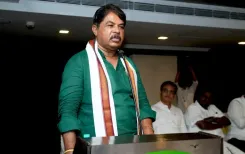
Delhi CM Rekha Gupta: NDDB deal to turn cattle dung into biogas

Synopsis
Delhi CM Rekha Gupta has shared Union Home Minister Amit Shah's announcement that the Delhi government has inked a deal with NDDB to convert cattle dung — previously alleged to be dumped into the Yamuna — into biogas and bio-fertiliser, with a pledge of zero dung discharge into the river.
Key Takeaways
Delhi CM Rekha Gupta shared Home Minister Amit Shah's statement on 7 July 2026 announcing an NDDB partnership for cattle-dung-to-biogas conversion.
Shah alleged the previous AAP government under Arvind Kejriwal allowed cattle dung to be dumped into the Yamuna daily.
The Delhi government's agreement with the National Dairy Development Board (NDDB) aims to produce biogas and natural fertiliser from cattle waste.
The initiative aligns with the Centre's GOBARdhan scheme launched in 2018 under the Swachh Bharat Mission.
Rollout timeline, plant capacity, and budget details are yet to be officially disclosed.
Yamuna water quality improvements will be tracked via CPCB quarterly reports.
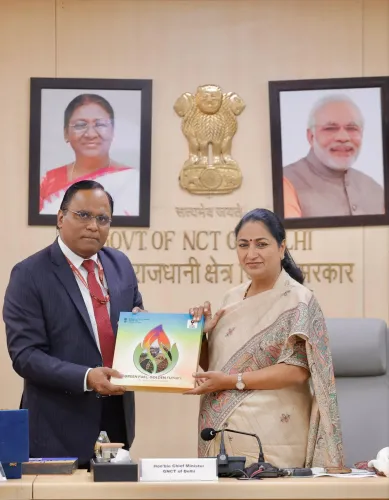
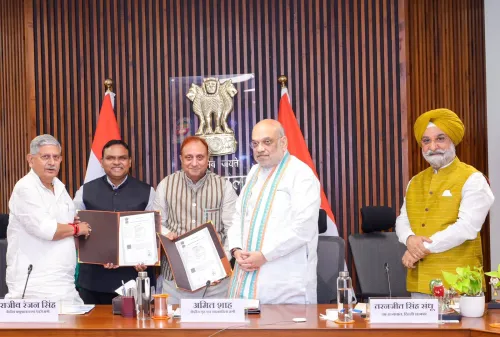
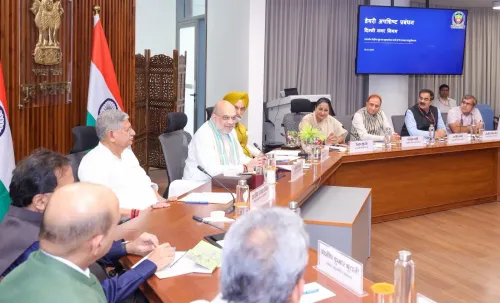
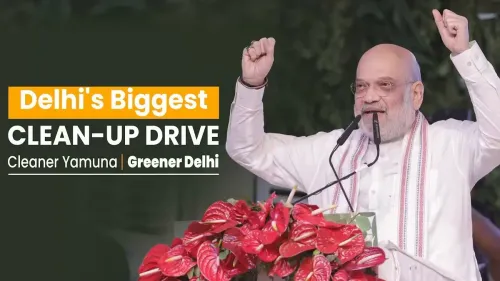
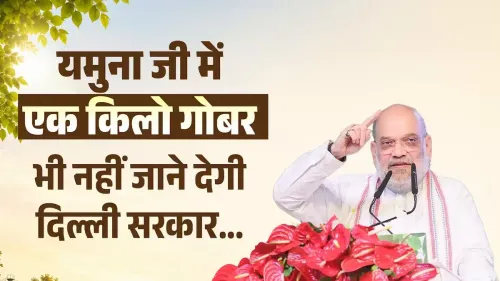
Delhi Chief Minister Rekha Gupta on Tuesday, 7 July 2026, shared remarks by Union Home Minister Amit Shah announcing that the Delhi government has signed an agreement with the National Dairy Development Board (NDDB) to convert cattle dung into biogas and natural fertiliser, with a pledge that not a single kilogram of dung will henceforth be dumped into the Yamuna.
Context
Quoting Home Minister Amit Shah, CM Gupta's post states: 'Kejriwal and company har roz 1,500 metric ton gobar Yamuna ji mein dalti thi' — ('Kejriwal and company used to dump 1,500 metric tonnes of cattle dung into the Yamuna every day.'). Shah added that the Delhi government will now use that same dung to produce gas and natural fertiliser through the NDDB partnership. The remarks draw a sharp contrast between the previous Aam Aadmi Party (AAP) administration under Arvind Kejriwal and the current dispensation's stated environmental priorities.
The Yamuna has been one of India's most polluted urban rivers for decades, burdened by sewage discharge, industrial effluents, and solid waste dumping along its Delhi stretch. The river has been the subject of repeated directions from the Supreme Court and the National Green Tribunal, and has remained a flashpoint in Delhi's political discourse.
Policy Backdrop
The NDDB partnership aligns with the Centre's GOBARdhan scheme, launched in 2018 under the Swachh Bharat Mission, which promotes the conversion of cattle dung and organic waste into biogas and bio-fertiliser. The scheme has been replicated across several states, and the Delhi agreement, if implemented at scale, would mark one of its most prominent urban applications.
The Namami Gange programme, launched in 2014, also included dedicated components targeting the Yamuna as a major tributary. The current announcement positions the NDDB deal as a complementary measure addressing an upstream source of river contamination — cattle waste — that had not been systematically tackled in previous administrations.
Stakeholders and Impact
Delhi residents, dairy farmers, and Yamuna basin communities stand to be the primary beneficiaries if the project delivers on its stated goals. Urban dairy clusters in areas such as Ghazipur and Mehrauli generate large volumes of cattle waste daily, much of which has historically entered stormwater drains that feed into the Yamuna.
The NDDB, a statutory body under the Ministry of Fisheries, Animal Husbandry and Dairying, has established expertise in biogas infrastructure and waste-to-value models in rural settings. Its application to Delhi's urban dairy ecosystem would be a significant scaling exercise. Biogas produced under the project could supplement energy needs for local communities, while bio-fertiliser could be channelled to peri-urban agricultural belts.
What's Next
Key details — including the rollout timeline, plant capacity, and capital outlay — are yet to be made public. Observers will watch for supplementary budget allocations in the next Delhi Legislative Assembly session and quarterly water quality data from the Central Pollution Control Board (CPCB) as early indicators of on-ground progress.
The political framing of the announcement — attributing past pollution to the Kejriwal government — signals that Yamuna clean-up will remain a central campaign and governance narrative for the BJP in Delhi. Whether the NDDB agreement translates into measurable improvement in Yamuna water quality will be closely scrutinised by courts, civic groups, and the electorate alike.
Point of View
A credible Central statutory body, the BJP-led Delhi government lends institutional weight to a promise that predecessors are accused of neglecting. The GOBARdhan alignment also signals an effort to integrate Delhi into the Centre's broader circular-economy architecture, potentially unlocking Central funding. However, the absence of a disclosed timeline or capacity figure means the announcement remains aspirational until operationalised, and courts and civil society will demand measurable milestones.
NationPress
6 Oct 2026
Frequently Asked Questions
What is the Delhi government's NDDB deal about?
The Delhi government has signed an agreement with the National Dairy Development Board (NDDB) to convert cattle dung into biogas and natural fertiliser, with the stated goal of preventing any dung from being dumped into the Yamuna river.
What did Amit Shah say about Yamuna pollution and cattle dung?
Home Minister Amit Shah alleged that the previous AAP government under Arvind Kejriwal allowed large quantities of cattle dung to be dumped into the Yamuna daily, and announced that the current Delhi government would end this practice through the NDDB partnership.
What is the GOBARdhan scheme and how does it relate to this?
GOBARdhan is a Central government scheme launched in 2018 under the Swachh Bharat Mission to convert cattle dung and organic waste into biogas and bio-fertiliser. The Delhi-NDDB deal aligns with this national framework and could be one of its largest urban implementations.
What is NDDB and why is it involved in this project?
The National Dairy Development Board (NDDB) is a statutory body under the Ministry of Fisheries, Animal Husbandry and Dairying with expertise in dairy infrastructure and waste-to-value projects. Its involvement brings technical credibility to the cattle-dung biogas initiative in Delhi.
Will this project actually clean the Yamuna river?
The project targets one specific source of river contamination — cattle waste. Its impact on overall Yamuna water quality will depend on rollout scale, timeline, and complementary measures for sewage and industrial discharge, which remain the river's larger pollution drivers.