CM Rekha Gupta: NDDB pact next week to keep cow dung out of Yamuna
Synopsis
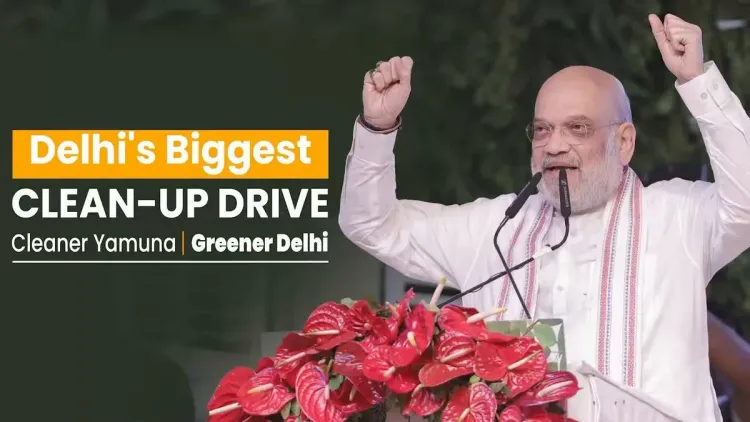
Delhi CM Rekha Gupta, citing Home Minister Amit Shah, announced a Delhi government-NDDB pact to be signed within a week that will convert cattle dung into biogas and fertiliser, stopping all dung from entering the Yamuna. The move is paired with Delhi's new EV Policy as part of a green Delhi vision.
Key Takeaways
The Delhi government will sign an agreement with NDDB within the week of 7 July 2026 to process cattle dung into biogas and organic fertiliser.
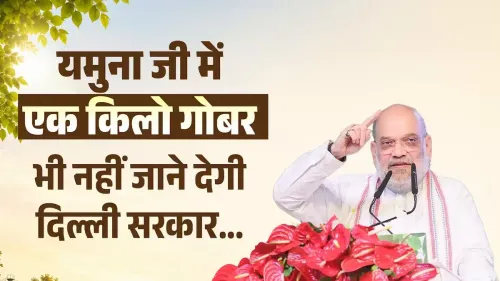
The stated goal is to ensure not even 1 kg of cow dung enters the Yamuna river .
Union Home Minister Amit Shah framed the initiative as a joint effort between the central Modi government and the Delhi government .
The NDDB pact is presented alongside the Delhi EV Policy and Ridge ecosystem restoration as three pillars of a 'green Delhi' vision.
NDDB has prior experience running cattle-dung biogas projects under the Swachh Bharat Mission across multiple Indian states.
Formal processing plant locations and tendering timelines have not yet been announced.
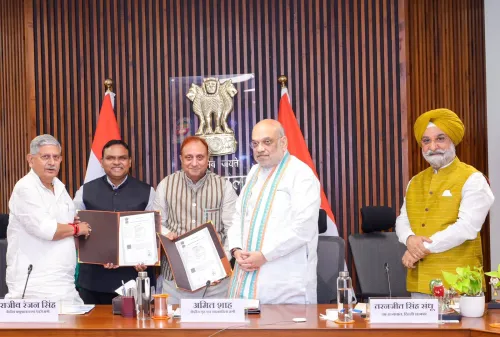
Delhi Chief Minister Rekha Gupta on Tuesday, 7 July 2026, announced that the Delhi government will sign an agreement with the National Dairy Development Board (NDDB) within the coming week to process cattle dung into biogas and organic fertiliser, ensuring that not a single kilogram of cow dung enters the Yamuna river. The announcement, framed around a statement by Union Home Minister Amit Shah, also links the initiative to Delhi's newly launched EV Policy as part of a broader vision for a greener capital.
Context
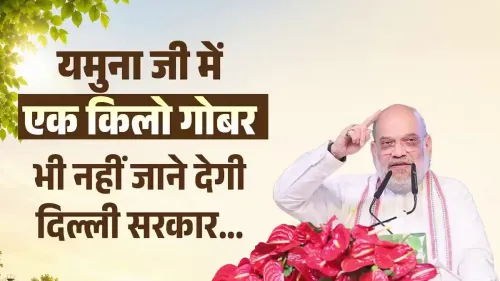
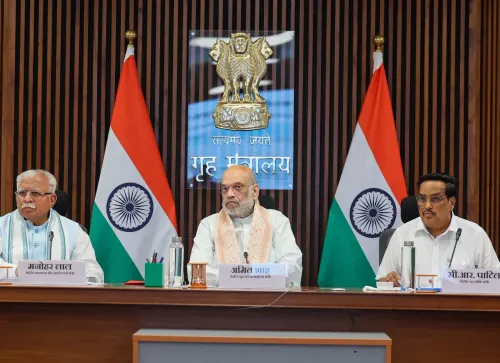
Quoting Home Minister Amit Shah, CM Gupta shared his words: 'Hum NDDB ke saath agle saptah samझौता kar, 1 kilo gobar bhi Yamuna ji mein na jaye, is prakar ki vyavastha karenge' — ('We will sign an agreement with NDDB next week and make arrangements so that not even 1 kg of cow dung enters the Yamuna.'). Shah further stated that the BJP's central government under Prime Minister Narendra Modi and the Delhi government together will process dung to produce gas and natural fertiliser, making a 'very large contribution' to the purification of the Yamuna.
The Yamuna, a major tributary of the Ganga passing through Delhi, has long suffered from untreated sewage, industrial effluent, and animal waste. Cattle dung discharged from dairy clusters along the river has been a persistent but under-addressed source of organic pollution.
Policy Backdrop
The National Dairy Development Board, established in 1965, has run cattle-dung-based biogas and waste-to-energy programmes across several Indian states, including projects linked to the Swachh Bharat Mission since the mid-2010s. The proposed Delhi pact would extend this model specifically to address river pollution in an urban setting.
The announcement also sits within India's broader river-rejuvenation architecture. The Namami Gange programme, launched in 2014-15, has targeted sewage treatment and pollution abatement across the Ganga basin, of which the Yamuna is a key part. Integrating dairy-sector circular-economy measures with urban green policy has precedent in Gujarat and Uttar Pradesh, where similar dung-to-energy models have been piloted.
On the mobility front, the Delhi EV Policy — referenced alongside the NDDB agreement — is part of a national wave of state-level electric vehicle frameworks adopted since 2020, aimed at reducing vehicular emissions in dense urban corridors.
Stakeholders and Impact
Delhi residents and Yamuna basin communities stand to benefit most directly from reduced organic pollution loads in the river, which affects drinking water quality and public health across the National Capital Region. Dairy farmers operating near the river could gain an additional revenue stream from selling processed dung as biogas feedstock or organic fertiliser.
CM Gupta presented the three pillars — Yamuna purification, Ridge ecosystem restoration, and the EV Policy — as a combined framework to realise what she called 'ek harit Dilli ki sankalpna' ('the vision of a green Delhi'). The convergence of central government resources through NDDB and state-level policy execution signals a coordinated federal approach to the capital's environmental challenges.
What's Next
The formal signing of the NDDB agreement is expected within the week of 7 July 2026, after which tendering for dung-processing plants along the Yamuna corridor would likely follow. The scale and locations of proposed processing facilities have not yet been disclosed.
Subsequent Yamuna water-quality data from monitoring agencies and EV registration figures from the Delhi transport department will serve as early indicators of whether the integrated green agenda is translating into measurable environmental improvement.
Point of View
Borrowing the credibility of a central institution (NDDB) to signal federal alignment. By attributing the announcement to Home Minister Amit Shah, CM Gupta positions the initiative as backed by the highest levels of the Union government, lending it political weight beyond a routine state scheme. The bundling of cattle-waste management, ridge ecology, and EV policy into a single 'green Delhi' narrative mirrors a broader BJP communication strategy of packaging disparate schemes under aspirational umbrella themes. Whether the NDDB agreement translates into operational infrastructure will be the real test, given the Yamuna's decades-long history of announced clean-up drives that have fallen short of targets.
NationPress
6 Oct 2026
Frequently Asked Questions
What is the Delhi government's NDDB agreement about?
The Delhi government plans to sign an agreement with the National Dairy Development Board (NDDB) to process cattle dung into biogas and organic fertiliser, with the aim of preventing any cow dung from being discharged into the Yamuna river.
When will the Delhi-NDDB agreement be signed?
According to the announcement made on 7 July 2026, the agreement is expected to be signed within the following week.
What is NDDB and what role will it play in cleaning the Yamuna?
NDDB, the National Dairy Development Board, is a central government body established in 1965. It will help process cattle dung collected near the Yamuna into biogas and natural fertiliser, turning a pollution source into a usable resource.
What is Delhi's EV Policy and how does it relate to the Yamuna clean-up?
Delhi's EV Policy is a government framework to boost electric vehicle adoption and cut vehicular emissions. CM Rekha Gupta has linked it with the NDDB cattle-dung initiative and Ridge ecosystem restoration as three combined pillars of a 'green Delhi' plan.
Who announced the NDDB-Yamuna initiative in Delhi?
Delhi Chief Minister Rekha Gupta shared the announcement on 7 July 2026, citing a statement by Union Home Minister Amit Shah about the upcoming agreement between the Delhi government and NDDB.