Amit Shah Reviews Yamuna Cleanup; MCD-NDDB MoU, 59 New STPs Planned
Synopsis
Union Home Minister Amit Shah chaired a Yamuna cleanup review on June 9, 2026, announcing an MCD-NDDB MoU to convert dairy waste into biogas, reporting 97% silt removal against a 28.57 lakh MT target, and confirming 129 STPs are operational with 59 more due by end-2027 across Delhi, Haryana, and Uttar Pradesh.
Key Takeaways
MCD and NDDB will sign an MoU to stop Delhi dairy-sector waste from entering the Yamuna, converting it into gobar gas and organic manure instead.
97 per cent of the targeted 28.57 lakh MT of silt from Yamuna-feeding drains has been removed this year; extracted silt will be reused in construction projects.
129 Sewage Treatment Plants (STPs) are already operational across Delhi, Haryana, and Uttar Pradesh .
An additional 59 STPs are planned for completion by end-2027 , expanding the region's sewage-interception capacity.
The review reflects central-government coordination across three states sharing the Yamuna basin, continuing the policy lineage of Namami Gange and earlier Yamuna Action Plans.
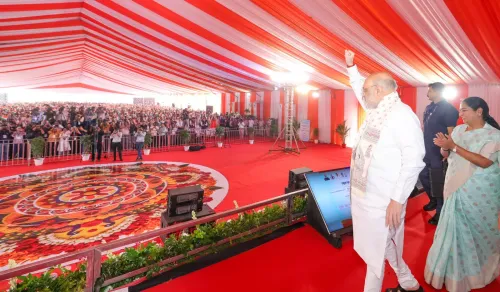
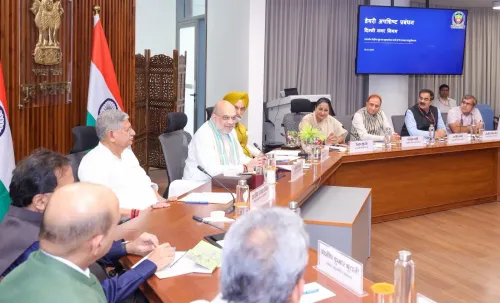
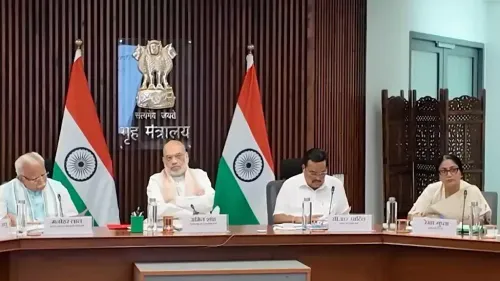
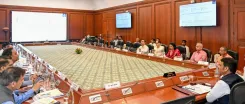
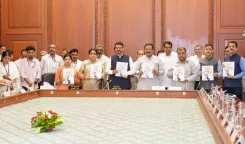
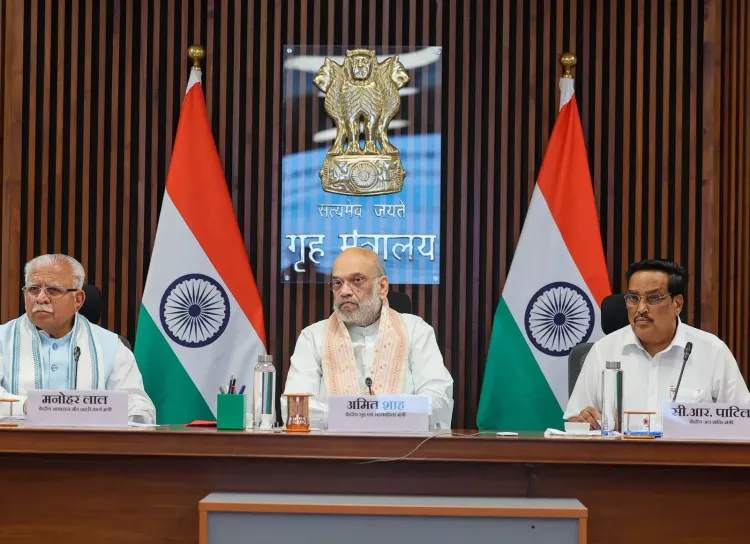
Union Home Minister Amit Shah on Tuesday, June 9, 2026 chaired a review meeting on measures to clean the Yamuna river, announcing a fresh inter-agency agreement to tackle dairy waste and accelerating sewage treatment infrastructure across Delhi, Haryana, and Uttar Pradesh.
What Shah Announced
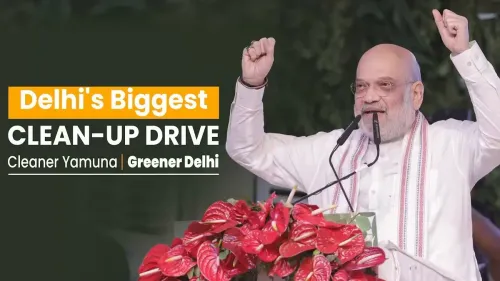
Shah stated that the Modi government is committed to cleaning the Yamuna — 'मोदी सरकार यमुना को स्वच्छ बनाने के लिए कटिबद्ध है' ['The Modi government is committed to making the Yamuna clean']. The meeting produced three headline outcomes: an MoU between the Municipal Corporation of Delhi (MCD) and the National Dairy Development Board (NDDB) to prevent dairy-sector waste from entering the river, a silt-removal milestone, and a firm deadline for new sewage treatment plants.
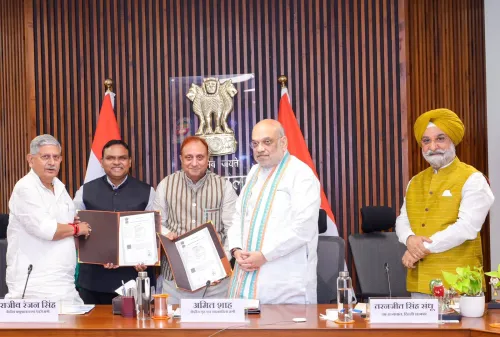
Under the proposed MoU, dairy effluents from Delhi's dairy sector will be processed to generate gobar gas (biogas) and organic manure rather than being discharged into the river — a circular-economy approach that converts a pollution source into an agricultural and energy resource.
Context
The Yamuna, a major tributary of the Ganga passing through the Delhi-NCR region, has long been burdened by untreated sewage, industrial effluents, and silt runoff from multiple upstream states. Central and state governments have pursued river-cleaning efforts since the Yamuna Action Plan phases beginning in 1993, and the Namami Gange programme launched in 2014 included dedicated Yamuna pollution-abatement components with inter-state coordination mechanisms.
Despite successive programmes, the river's water quality — particularly through Delhi — has remained a persistent policy and public-health challenge, drawing repeated intervention from the National Green Tribunal (NGT). The current review signals renewed central-level attention to implementation gaps.
Policy Backdrop
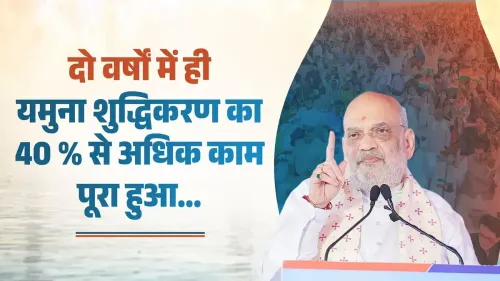
On silt removal, Shah's post stated that 97 per cent of the targeted 28.57 lakh metric tonnes (MT) of silt from drains flowing into the Yamuna has already been extracted this year. Crucially, the extracted silt is to be channelled into construction projects to prevent it from re-entering the river — another instance of waste-to-resource conversion embedded in the cleanup strategy.
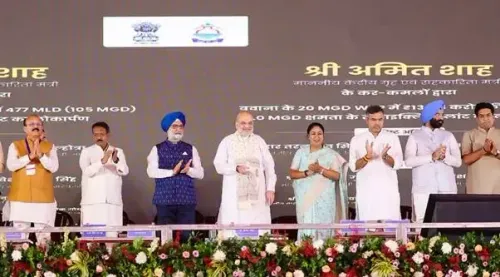
On sewage treatment, Shah noted that 129 Sewage Treatment Plants (STPs) are now operational across Delhi, Haryana, and Uttar Pradesh. An additional 59 STPs are slated for completion by end-2027, which would significantly expand the region's capacity to intercept raw sewage before it reaches the Yamuna. The three-state coordination framework reflects the river's cross-boundary nature and the central government's role in brokering joint action.
Stakeholders and Impact
Delhi residents stand to benefit most directly from reduced sewage and effluent loads, particularly communities living near the river's banks and those dependent on downstream water supply. Dairy farmers operating in the capital's dairy clusters will need to comply with the new waste-management protocols formalised under the MCD-NDDB agreement, though the shift to biogas and manure production could also generate supplementary income.
The construction sector is identified as a downstream beneficiary of the silt-reuse programme, gaining a low-cost raw material while the river is simultaneously protected from re-siltation. Environmental groups and the NGT, which has issued multiple orders on Yamuna pollution over the years, will likely track delivery against these commitments.
What's Next
The immediate milestones to watch are the formal signing and rollout of the MCD-NDDB MoU, the completion of silt removal to reach the 100 per cent target for the current year, and the construction timeline for the 59 new STPs due by end-2027. Verification of actual silt reuse in construction and the measured impact on river-water quality will be critical tests of whether these announcements translate into ecological improvement on the ground.
Point of View
Positioning the central government as the primary driver of a cleanup that successive state administrations have failed to deliver. The MCD-NDDB MoU and the silt-reuse framework embed circular-economy logic into what has historically been a straightforward infrastructure problem, suggesting a shift in how the Centre frames urban river restoration. The three-state STP coordination is the most substantive structural element: if the 59 new plants are delivered on schedule, it would represent the largest single expansion of Yamuna sewage-treatment capacity in a decade. The real test, however, will be whether operational metrics — plant uptime, actual effluent standards, verified silt diversion — are independently monitored and publicly reported.
NationPress
26 Oct 2026
Frequently Asked Questions
What did Amit Shah announce about cleaning the Yamuna river?
Amit Shah announced three key measures after a review meeting on June 9, 2026: an MoU between MCD and NDDB to convert Delhi dairy waste into biogas and manure instead of letting it flow into the Yamuna, a report that 97 per cent of the year's 28.57 lakh MT silt-removal target has been met, and a plan to build 59 new Sewage Treatment Plants by end-2027 in addition to the 129 already operational.
What is the MCD-NDDB MoU for Yamuna cleaning?
The MoU between the Municipal Corporation of Delhi (MCD) and the National Dairy Development Board (NDDB) aims to prevent waste from Delhi's dairy sector from draining into the Yamuna. Under the agreement, dairy effluents will be processed to produce gobar gas (biogas) and organic manure, turning a pollution source into a usable resource.
How many Sewage Treatment Plants are operational on the Yamuna?
As of June 2026, 129 Sewage Treatment Plants (STPs) are operational across Delhi, Haryana, and Uttar Pradesh. The government has announced that 59 more STPs will be constructed and commissioned by end-2027.
What is the silt removal target for the Yamuna in 2026?
The target is to remove 28.57 lakh metric tonnes (MT) of silt from drains that flow into the Yamuna. According to the review meeting chaired by Amit Shah, 97 per cent of this target has already been achieved, and the extracted silt will be reused in construction projects to prevent it from re-entering the river.
What is the Namami Gange programme and its link to Yamuna cleaning?
Namami Gange is a central government programme launched in 2014 to rejuvenate the Ganga river system, which includes Yamuna pollution-abatement components and inter-state coordination mechanisms. The current STP expansion and inter-agency coordination among Delhi, Haryana, and UP are consistent with the programme's broader framework for NCR river pollution control.