Amit Shah Chairs High-Level Yamuna Rejuvenation Review
Synopsis
Union Home Minister Amit Shah chaired a high-level review on Yamuna rejuvenation in Delhi, directing Delhi, Haryana and Uttar Pradesh to adopt an integrated action plan, sign an MCD-NDDB MoU on dairy waste-to-biogas conversion, accelerate desilting, and hold 20-day progress reviews for measurable results.
Key Takeaways
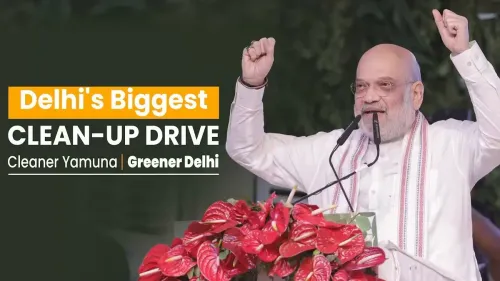
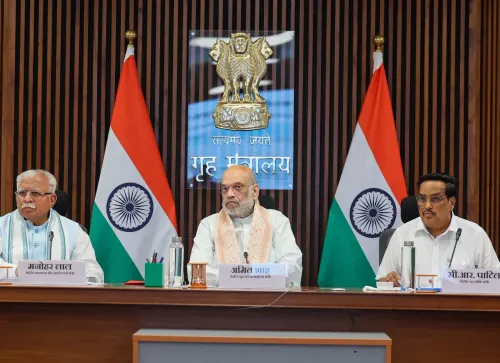
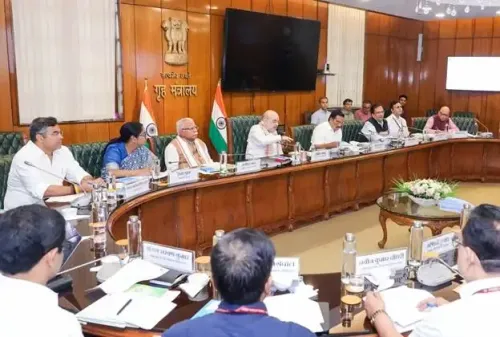
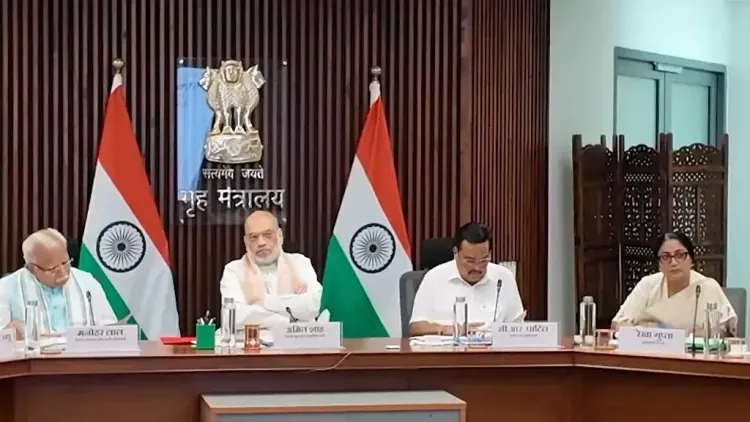
Amit Shah chaired a high-level review meeting on Yamuna rejuvenation in Delhi , attended by Delhi CM Rekha Gupta and Cabinet Minister Manohar Lal Khattar .
An MoU between MCD and NDDB will be signed to stop dairy waste from entering the Yamuna and convert it into biogas and manure .
Delhi, Haryana, and Uttar Pradesh governments and all related ministries directed to work under a single integrated action plan , not in silos.
Urgent desilting of the Yamuna ordered, with excavated silt to be used in manufacturing projects to prevent it washing back during monsoons.
STPs, industrial discharge, and drain outflows to be rigorously monitored for precise results, not just satisfactory performance.
Progress on the Yamuna rejuvenation project to be reviewed every 20 days .
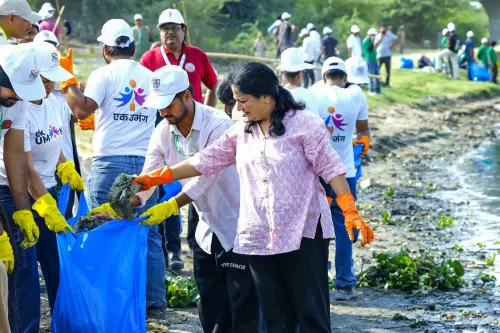
Union Jal Shakti Minister C. R. Paatil on Monday, June 8, 2026 shared key outcomes from a high-level review meeting chaired by Union Home Minister Amit Shah in Delhi, focused on accelerating the rejuvenation of the Yamuna river. The meeting brought together representatives from Delhi, Haryana, and Uttar Pradesh governments alongside all concerned central ministries, signalling a renewed push for integrated, results-driven action on one of India's most polluted urban rivers.
Context
Paatil, posting in Hindi, quoted Home Minister Shah's directive that the three states and all related ministries must work 'टुकड़ों में नहीं बल्कि एक टीम भावना से' — not in silos but with a unified team spirit — under an integrated action plan. The minister underlined that a clean Yamuna is a resolve under Prime Minister Narendra Modi's leadership and must be achieved swiftly. Delhi Chief Minister Rekha Gupta and Cabinet Minister Manohar Lal Khattar were present at the meeting.
The meeting produced several concrete directives. A Memorandum of Understanding (MoU) between the Municipal Corporation of Delhi (MCD) and the National Dairy Development Board (NDDB) will be signed to prevent dairy waste from Delhi's dairies from flowing into the Yamuna, converting it instead into biogas and manure. Under the NDDB model, dung from dairies and cattle shelters along the riverbank will be channelled directly to gas and fertiliser plants, ensuring scientific management of riverside waste.
Policy Backdrop
The Yamuna has been a persistent policy challenge for successive governments. The Yamuna Action Plan, launched in 1993 with Japanese assistance, built early sewage treatment infrastructure but fell short of cleaning the river. The Namami Gange programme, launched in 2015, extended a basin-level conservation framework to Ganga tributaries including the Yamuna, and the Centre has periodically convened inter-state coordination meetings since 2014 to align state-level efforts.
The current meeting reflects an escalation in that approach — moving from periodic reviews to a mandated 20-day review cycle for monitoring project progress. Shah directed that Sewage Treatment Plants (STPs), industrial discharge, and all drain outflows be monitored rigorously, with the emphasis on 'precise results, not merely satisfactory work.' Desilting of the Yamuna was also flagged as urgent, with instructions that excavated silt be used in manufacturing projects so that monsoon rains do not wash it back into the river.
Stakeholders and Impact
Delhi residents stand to benefit most directly from reduced sewage and waste loads in the river that flows through the capital. Dairy farmers and gaushalas along the Yamuna corridor will be integrated into the NDDB biogas model, potentially generating additional income from waste conversion. Industrial units discharging into Yamuna drains face tighter monitoring under the new framework.
The MCD-NDDB MoU represents a circular-economy approach that addresses both pollution abatement and resource recovery simultaneously. By converting organic waste into biogas and manure, the initiative aims to reduce the burden on already-strained STPs while creating usable energy and agricultural inputs. The desilting mandate, paired with industrial use of silt, similarly attempts to close a loop that has historically seen dredged material return to the river during heavy rainfall.
What's Next
The formalisation of the MCD-NDDB MoU and the scheduling of the first 20-day progress review are the immediate milestones to watch. The Centre's insistence on an integrated action plan — rather than ministry-by-ministry or state-by-state efforts — marks a structural shift in how the Yamuna clean-up is being governed. If the inter-state coordination mechanism holds and the monitoring cadence is maintained, it could serve as a template for other multi-state river rejuvenation efforts across the country.
Point of View
Likely ahead of Delhi's continued public scrutiny of the river's state. The MCD-NDDB MoU is notable for embedding a circular-economy logic into what has historically been a purely regulatory clean-up effort, potentially making the initiative more self-sustaining. Whether the three-state coordination mechanism — always the weakest link in Yamuna governance — holds will determine if this meeting marks a genuine inflection point or another chapter in a long policy cycle.
NationPress
19 Sept 2026
Frequently Asked Questions
What decisions were taken at Amit Shah's Yamuna review meeting?
The meeting directed an MoU between MCD and NDDB to convert Delhi dairy waste into biogas and manure, mandated urgent desilting of the Yamuna with silt used in manufacturing, ordered strict monitoring of STPs and industrial discharge, and set a 20-day review cycle for tracking progress.
What is the MCD-NDDB MoU on Yamuna cleaning?
The MoU between the Municipal Corporation of Delhi and the National Dairy Development Board will prevent dairy waste from Delhi's dairies and cattle shelters from flowing into the Yamuna by channelling dung directly to biogas and fertiliser plants.
Which states are involved in the Yamuna rejuvenation plan?
Delhi, Haryana, and Uttar Pradesh are the three states directed to work together under a unified integrated action plan, alongside all concerned central ministries, to clean the Yamuna.
What is the Namami Gange connection to Yamuna cleaning?
Namami Gange, launched in 2015, is the flagship central scheme for conserving the Ganga basin including its tributaries like the Yamuna. The current inter-state coordination approach extends the basin-level planning model established under that programme.
Why is Yamuna desilting important and what will the silt be used for?
Desilting removes accumulated sediment that degrades the river's flow and water quality. The meeting directed that excavated silt be used in various manufacturing projects so that monsoon rains do not wash it back into the Yamuna.