Fuel price hike of ₹3/litre sparks political row; Rohini Acharya targets Centre

Synopsis
Petrol and diesel prices have risen by more than ₹3 per litre across India from 15 May, the latest in a cascade of price hikes spanning gold, milk, and CNG. RJD's Rohini Acharya has gone on the offensive on X, calling it proof that the government serves the wealthy while daily wage earners bear the brunt — a framing the opposition is likely to sustain into the next electoral cycle.
Key Takeaways
Petrol and diesel prices rose by more than ₹3 per litre across India, effective 15 May .
RJD leader Rohini Acharya attacked the Centre on X, calling the hike part of a broader, unrelenting inflation crisis.
The fuel increase follows earlier hikes in gold and silver import duties , milk prices , and CNG rates .
Acharya alleged the government is unresponsive to the hardships of daily wage earners and ordinary citizens.
The Centre had not issued a formal response to the opposition criticism as of 15 May .
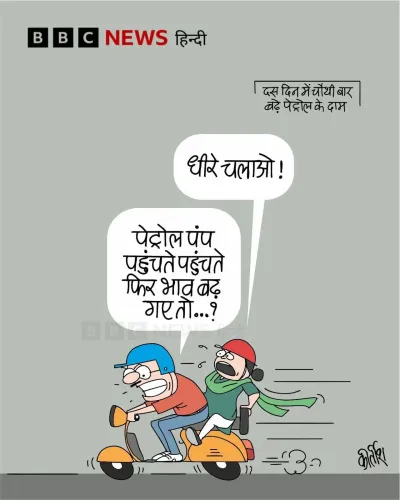
Rashtriya Janata Dal (RJD) leader Rohini Acharya, daughter of party chief Lalu Prasad, launched a sharp attack on the Centre on 15 May after petrol and diesel prices were hiked by more than ₹3 per litre across the country, effective the same day. Acharya argued the increase is symptomatic of a broader, sustained inflation crisis that is squeezing ordinary households.
Rohini Acharya's Broadside on X
Taking to social media platform X, Acharya framed the fuel hike not as an isolated policy decision but as evidence of entrenched inflationary pressure. 'The question is not just about a 3-rupee hike; it's about the burden of relentlessly rising inflation,' she wrote in her post.
She further alleged that the weight of rising prices falls disproportionately on daily wage earners and working-class citizens. 'When petrol and diesel prices rise, the heaviest burden falls on those who earn and eat daily, on the common people, but the government, which works at the behest of wealthy tycoons, couldn't care less about the hardships of the common folk,' she added.
Acharya also invoked the ruling Bharatiya Janata Party (BJP)'s long-standing campaign slogan of 'Achhe Din', arguing that public expenses have continued to climb while meaningful relief or official explanations remain absent.
A Cascading Wave of Price Increases
The fuel hike is the latest in a series of price escalations that have hit Indian consumers in quick succession. According to reports, the cycle began with a rise in import duties on gold and silver following an appeal by Prime Minister Narendra Modi, which sent bullion prices higher.
That was followed by increases in milk prices and CNG rates, and now petrol and diesel have joined the list. The cumulative effect has triggered widespread concern over household budgets, with essential commodities becoming progressively more expensive across India.
Political Significance of the Attack
The RJD's response is notable given the party's stronghold in Bihar, where fuel and commodity prices have an outsized impact on rural and semi-urban households. Acharya's intervention signals that the opposition intends to make cost-of-living a central political issue ahead of any upcoming electoral cycle.
Notably, this is not the first time opposition parties have rallied around fuel pricing — similar political rows erupted during earlier hike cycles in 2021 and 2022, when petrol crossed the ₹100 per litre mark in several states. The current hike renews that pressure on the government.
What Comes Next
The Centre has not yet issued a formal response to the opposition's criticism. Analysts note that sustained fuel price increases tend to have a second-order inflationary effect, pushing up transport and logistics costs that eventually feed into food and consumer goods prices. Citizens and industry bodies are likely to watch closely for any government intervention — such as an excise duty cut — that could moderate prices at the pump.
Point of View
Milk, and CNG, the ₹3 fuel hike is not a standalone event — it is the fourth visible price shock in a short window, and that sequencing is what gives the opposition its narrative. Rohini Acharya's intervention is tactically sharp: Bihar's electorate is acutely sensitive to fuel costs, and framing the government as indifferent to daily wage earners is a durable attack line. The Centre's silence, if prolonged, only sharpens the contrast. The real question is whether an excise duty rollback — the standard pressure valve in previous hike cycles — is politically viable given current fiscal constraints.
NationPress
25 Sept 2026
Frequently Asked Questions
By how much have petrol and diesel prices increased in India?
Petrol and diesel prices have risen by more than ₹3 per litre across the country, effective 15 May. The hike applies nationwide and is the latest in a series of consumer price increases.
Who is Rohini Acharya and why is she criticising the government?
Rohini Acharya is an RJD leader and the daughter of party chief Lalu Prasad. She criticised the Centre on X, arguing that the fuel hike reflects sustained inflation that disproportionately burdens daily wage earners while the government remains unresponsive.
What other price hikes preceded the fuel increase?
The current fuel hike follows earlier increases in import duties on gold and silver, a rise in milk prices, and higher CNG rates — forming a cascade of cost pressures on Indian households in quick succession.
Has the Centre responded to the opposition's criticism?
As of 15 May, the Centre had not issued a formal response to the political criticism triggered by the fuel price hike.
Why does the fuel price hike matter beyond the pump price?
Fuel price increases typically have a second-order inflationary effect, raising transport and logistics costs that eventually push up food and consumer goods prices, amplifying the burden on ordinary households across India.