CM Bhajanlal meets Union Minister Prahlad Joshi on food, solar schemes
Synopsis
Chief Minister Bhajanlal Sharma met Union Minister Prahlad Joshi in New Delhi on 7 July 2026, discussing Rajasthan's public food distribution system, grain storage expansion, MSP wheat procurement progress, and the implementation of PM Suryaghar, PM-KUSUM, and Battery Energy Storage Systems in the state.
Key Takeaways
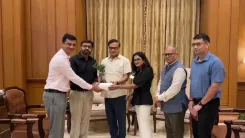
CM Bhajanlal Sharma met Union Minister Prahlad Joshi in New Delhi on 7 July 2026 .
Discussions covered the Public Distribution System , expansion of grain storage capacity , and development of modern warehouses in Rajasthan.
Union Minister Joshi praised Rajasthan's notable progress in wheat procurement at MSP under CM Sharma's leadership.
The meeting addressed accelerating the PM Suryaghar Muft Bijli Yojana through the Utility-Led Aggregation Model in Rajasthan.
Effective implementation of PM-KUSUM and development of Battery Energy Storage Systems (BESS) were also on the agenda.
The interaction reflects the centre-state partnership model for rolling out food security and clean energy programmes.
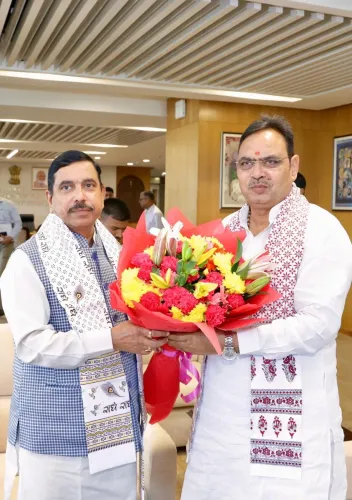
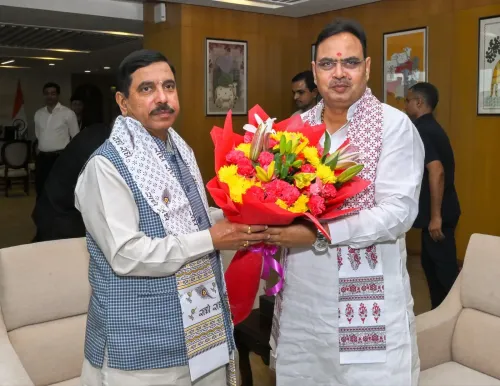
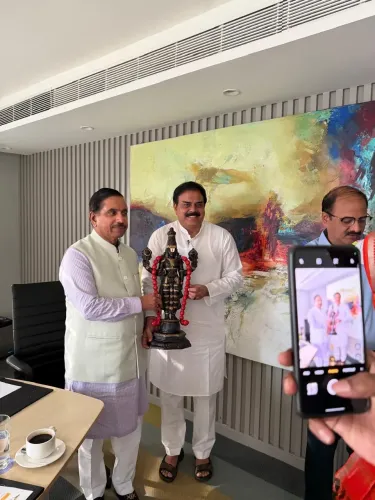
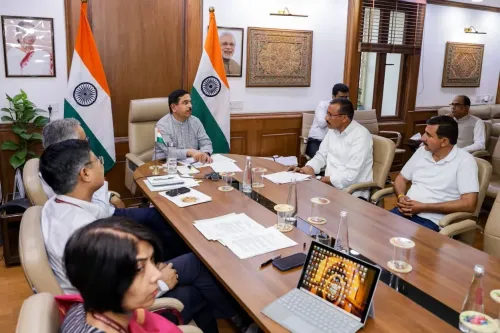
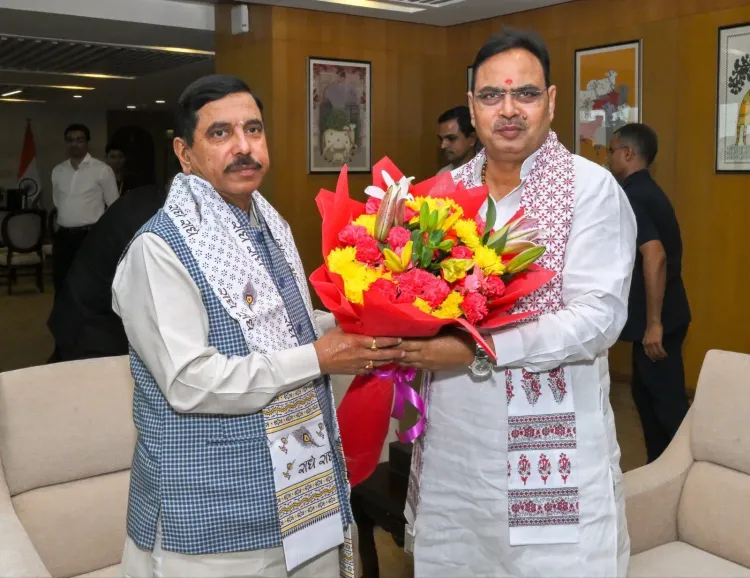
Chief Minister Bhajanlal Sharma met Union Minister Prahlad Joshi in New Delhi on 7 July 2026 during an official visit to the capital. The Chief Minister's Office of Rajasthan announced that the meeting covered the public food distribution system, expansion of grain storage capacity, and development of modern warehouses in the state.
Context
The discussions, as shared by the Chief Minister's Office, spanned two broad domains: food security infrastructure and clean energy. On the food front, the two leaders discussed strengthening the Public Distribution System (PDS), scaling up grain storage capacity across Rajasthan, and building modern warehouses to reduce post-harvest losses and improve supply-chain efficiency.
Union Minister Prahlad Joshi — who holds charge of both Consumer Affairs, Food and Public Distribution, and New and Renewable Energy — praised Rajasthan's notable progress in wheat procurement at Minimum Support Price (MSP) under Chief Minister Sharma's leadership. He described the state's achievement as a symbol of the strong partnership between the central and state governments, according to the official post.
Policy Backdrop
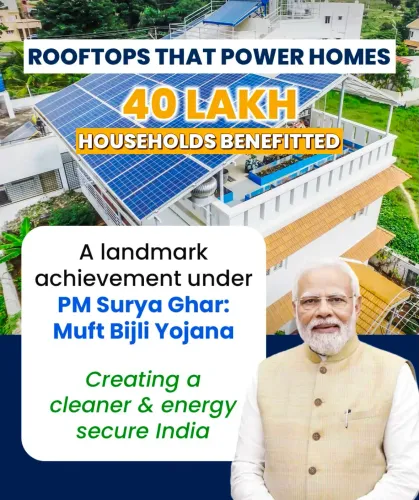
The meeting touched on three central renewable energy programmes. First, the PM Suryaghar Muft Bijli Yojana — announced in the 2024 Union Budget — which supports rooftop solar installations providing eligible households up to 300 units of free electricity per month. The two sides discussed accelerating its rollout in Rajasthan through the Utility-Led Aggregation Model, a mechanism designed to bring distribution companies into the centre of the implementation process.
Second, the Pradhan Mantri Kisan Urja Suraksha evam Utthaan Mahabhiyan (PM-KUSUM) scheme, launched in 2019, which promotes solar pumps and decentralised renewable energy for the agriculture sector, came up for discussion on effective implementation. Third, the development of Battery Energy Storage Systems (BESS) was discussed as an enabler for grid stability as the state's solar capacity grows.
Rajasthan, with its vast arid terrain and high solar irradiance, has emerged as one of India's leading states for solar energy potential. Simultaneously, the state has participated in rising wheat procurement operations under the centre-state MSP framework in recent seasons.
Stakeholders and Impact
Wheat farmers across Rajasthan stand to benefit from improved MSP procurement infrastructure and modern warehousing, which can reduce distress sales and ensure timely payment. Rural households covered under the PDS would gain from a more robust and efficient food grain distribution network.
On the energy side, rooftop solar beneficiaries and agricultural pump users are the primary target groups of PM Suryaghar and PM-KUSUM respectively. The Utility-Led Aggregation Model, if implemented at scale, could streamline rooftop solar adoption by routing installations through state distribution companies rather than individual applicants, potentially speeding up uptake significantly.
What's Next
The broader pattern of such centre-state meetings is that they precede concrete steps — capacity augmentation orders, pilot project launches, or revised implementation timelines. Observers will watch for announcements on new warehouse projects, actual solar installation targets assigned to Rajasthan under PM Suryaghar and PM-KUSUM, and any state-level policy adjustments to accommodate BESS development.
The hashtag #आपणो_अग्रणी_राजस्थान ('Our Leading Rajasthan') used in the post reflects the state government's ongoing branding of Rajasthan as a proactive partner in national development programmes. Progress on these fronts will be closely tracked through the next procurement season and the current financial year's energy installation cycles.
Point of View
Reinforcing the narrative of effective BJP governance at both the state and central levels ahead of future electoral cycles. The inclusion of Battery Energy Storage Systems on the agenda is notable: it moves the conversation beyond installation targets toward grid reliability, a more mature phase of energy transition policy. Such bilateral meetings rarely produce immediate announcements, but they set the bureaucratic groundwork for budget allocations and scheme-specific targets in the months that follow.
NationPress
7 Jul 2026
Frequently Asked Questions
Why did CM Bhajanlal Sharma meet Prahlad Joshi in New Delhi?
CM Bhajanlal Sharma met Union Minister Prahlad Joshi on 7 July 2026 to discuss Rajasthan's Public Distribution System, grain storage expansion, modern warehouse development, MSP wheat procurement progress, and the implementation of central solar energy schemes including PM Suryaghar and PM-KUSUM.
What is the PM Suryaghar Muft Bijli Yojana discussed in the meeting?
PM Suryaghar Muft Bijli Yojana is a central government scheme announced in the 2024 Union Budget that supports rooftop solar installations, providing eligible households up to 300 units of free electricity per month. Rajasthan discussed rolling it out through the Utility-Led Aggregation Model.
What is PM-KUSUM and how does it relate to Rajasthan?
PM-KUSUM (Pradhan Mantri Kisan Urja Suraksha evam Utthaan Mahabhiyan) is a scheme launched in 2019 to promote solar pumps and decentralised renewable energy for farmers. Rajasthan discussed its effective implementation with Union Minister Prahlad Joshi during the 7 July 2026 meeting.
What did Union Minister Prahlad Joshi say about Rajasthan's wheat procurement?
Union Minister Prahlad Joshi praised Rajasthan's notable progress in wheat procurement at Minimum Support Price (MSP) under Chief Minister Bhajanlal Sharma's leadership, calling it a symbol of the strong partnership between the central and state governments.
What is Battery Energy Storage System (BESS) and why was it discussed?
Battery Energy Storage Systems (BESS) store electricity generated from renewable sources for use when generation is low, improving grid stability. It was discussed during the CM Bhajanlal-Prahlad Joshi meeting as part of Rajasthan's clean energy expansion agenda.