CM Bhajan Lal meets Union Minister Pralhad Joshi in Delhi
Synopsis
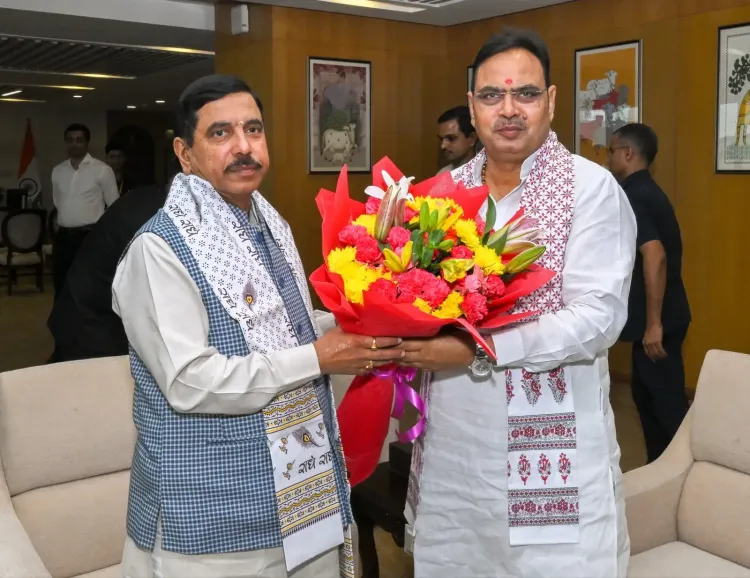
Rajasthan Chief Minister Bhajan Lal Sharma met Union Minister Pralhad Joshi in New Delhi on 7 July 2026, discussing PDS reforms, grain storage expansion, and faster rollout of PM Surya Ghar Muft Bijli Yojana and the Utility-Led Aggregation model for renewable energy in Rajasthan.
Key Takeaways
Bhajan Lal Sharma met Union Minister Pralhad Joshi in New Delhi on 7 July 2026 .
Discussions covered strengthening Rajasthan's Public Distribution System and expanding foodgrain storage infrastructure.
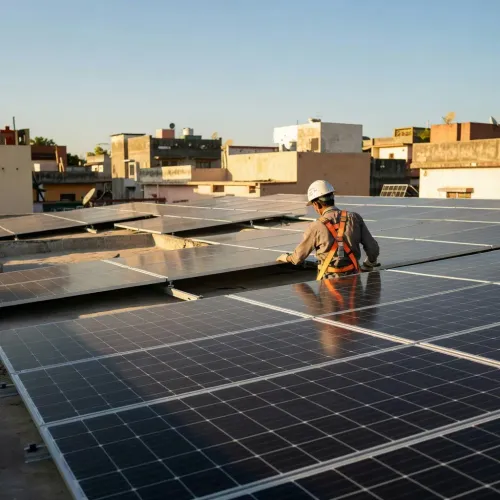
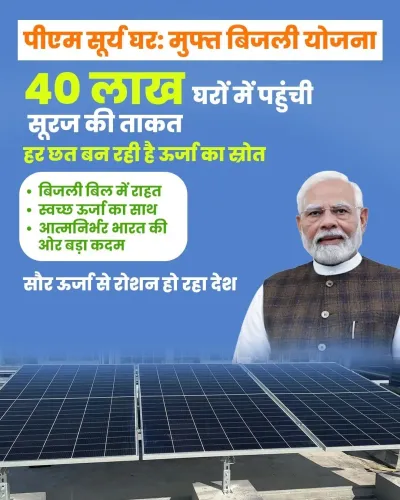
The meeting addressed effective implementation of the PM Surya Ghar Muft Bijli Yojana , which offers up to 300 units of free electricity monthly to households via rooftop solar.
Accelerating the Utility-Led Aggregation (ULA) model for scaling distributed solar through state utilities was a key agenda point.
The engagement reflects coordinated centre-state efforts under PM Narendra Modi toward food security and clean energy goals in Rajasthan.
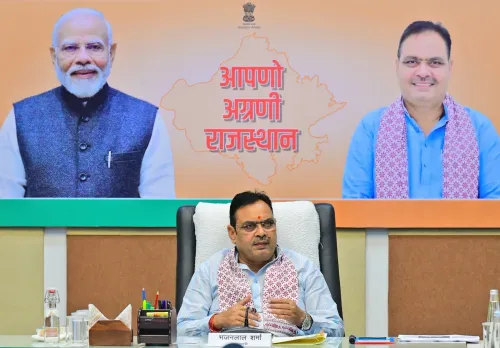
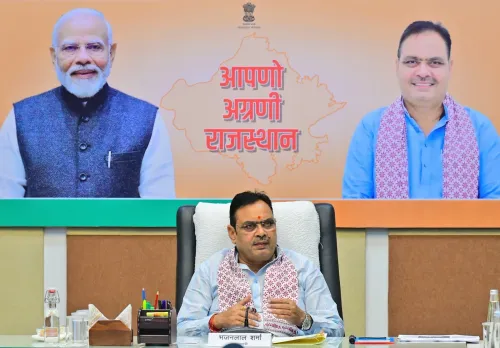
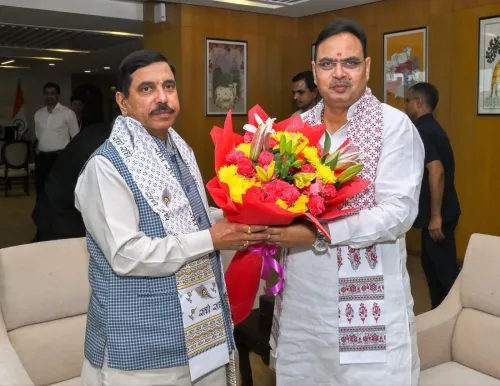
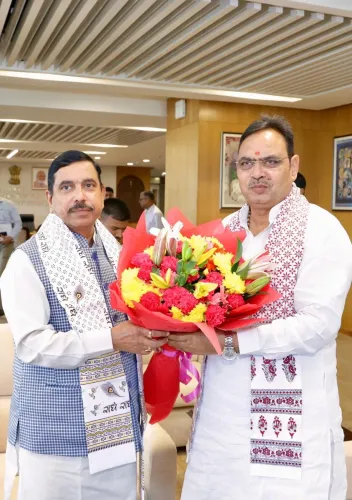
Rajasthan Chief Minister Bhajan Lal Sharma met Union Minister Pralhad Joshi in New Delhi on Tuesday, 7 July 2026, for discussions on strengthening the state's public distribution system, expanding foodgrain storage infrastructure, and accelerating renewable energy projects including the PM Surya Ghar Muft Bijli Yojana.
Context
Sharma posted on X describing the meeting with Joshi, who holds the Union portfolios of Consumer Affairs, Food and Public Distribution, and New and Renewable Energy. In the post, the Chief Minister wrote that 'सार्थक चर्चा हुई' ('a meaningful discussion took place') on several fronts — from shoring up Rajasthan's food and public distribution network to advancing renewable energy development and future plans in the state.
The meeting also focused on giving momentum to the Utility-Led Aggregation (ULA) model, a framework designed to aggregate distributed renewable energy projects through state utilities to scale solar deployment more efficiently.
Policy Backdrop
The PM Surya Ghar Muft Bijli Yojana, launched in February 2024, provides eligible households with up to 300 units of free electricity per month through rooftop solar installations, backed by central financial support and implemented through state-level partnerships. Rajasthan, with its high solar irradiance, is among the states best positioned to deliver large-scale results under the scheme.
On the food security side, the National Food Security Act 2013 mandates state-level PDS reforms and storage upgrades, making periodic centre-state consultations on storage infrastructure a routine governance requirement. Rajasthan's Renewable Energy Policy 2023 separately set ambitious state targets for solar and wind capacity, building on solar park development that began in the state in the 2010s.
Stakeholders and Impact
The discussions directly concern ration card holders and rural households dependent on the PDS for subsidised foodgrains, as well as households and renewable energy project developers who stand to benefit from expanded solar infrastructure. Improvements to grain storage capacity would reduce post-procurement losses and improve last-mile delivery of subsidised food.
Sharma framed the meeting within the broader ambition of 'विकसित भारत–विकसित राजस्थान' ('Developed India–Developed Rajasthan'), attributing progress to coordinated efforts between the central and state governments under Prime Minister Narendra Modi. The ULA model, if scaled effectively, could allow Rajasthan's discoms to aggregate and manage rooftop solar capacity more systematically across the grid.
What's Next
Such high-level ministerial meetings typically precede budgetary allocations, revised scheme guidelines, or joint review sessions. Observers will watch for announcements on new silo or storage capacity additions in Rajasthan's upcoming budget cycle, as well as fresh renewable energy tenders aligned with the ULA framework.
The next quarterly review of PM Surya Ghar installations by state discoms will be a key indicator of how effectively the centre-state coordination translates into on-ground progress for Rajasthan's households and energy targets.
Frequently Asked Questions
What did Rajasthan CM Bhajan Lal Sharma discuss with Pralhad Joshi?
Sharma met Joshi on 7 July 2026 in New Delhi to discuss strengthening Rajasthan's public distribution system, expanding foodgrain storage infrastructure, and accelerating the PM Surya Ghar Muft Bijli Yojana and the Utility-Led Aggregation model for renewable energy.
What is the PM Surya Ghar Muft Bijli Yojana?
PM Surya Ghar Muft Bijli Yojana is a central rooftop solar scheme launched in February 2024 that provides eligible households with up to 300 units of free electricity per month, with central financial support and state-level implementation.
What is the Utility-Led Aggregation (ULA) model in solar energy?
The ULA model allows state utilities or discoms to aggregate multiple distributed rooftop solar projects, making it easier to manage, finance, and integrate them into the grid at scale rather than handling each installation individually.
Why is Rajasthan important for India's renewable energy goals?
Rajasthan has among the highest solar irradiance in India, making it a key state for rooftop and utility-scale solar deployment. The state's Renewable Energy Policy 2023 set ambitious targets for solar and wind capacity addition.
What could follow from the Bhajan Lal Sharma and Pralhad Joshi meeting?
Such ministerial meetings typically precede budgetary allocations, revised scheme guidelines, or joint review sessions. New grain storage capacity announcements and fresh renewable energy tenders under the ULA framework are among the outcomes to watch.