CM Fadnavis Hails IMF's 7% Growth Forecast for India
Synopsis
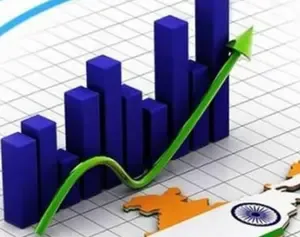
Maharashtra CM Devendra Fadnavis highlighted the IMF's October 2026 World Economic Outlook, which projects India's economy growing at 7.0% in both 2026 and 2027, positioning India among the world's fastest-growing major economies amid global uncertainty.
Key Takeaways
The IMF October 2026 World Economic Outlook projects India's GDP growth at 7.0% for both 2026 and 2027 .
Maharashtra CM Devendra Fadnavis amplified the forecast on October 13, 2026 , crediting PM Modi's leadership.
India's projection places it among the fastest-growing major economies globally, a distinction multilateral bodies have repeatedly assigned it since 2015.
The Viksit Bharat@2047 framework, announced in 2023 , provides the long-term policy backdrop against which such projections are politically framed.
The next major data point is the April 2027 IMF World Economic Outlook update and the FY2027-28 Union Budget in February 2027 .
When the International Monetary Fund pencils in 7.0% growth for your economy — two years running — it is not a footnote. It is a headline. Maharashtra Chief Minister Devendra Fadnavis seized on the IMF's October 2026 World Economic Outlook on Tuesday, October 13, flagging India's projection as proof that the country is holding its own — and then some — against a backdrop of global economic turbulence.
What the IMF October 2026 forecast actually says
The IMF's October 2026 World Economic Outlook projects India's GDP to expand at 7.0% in both 2026 and 2027. That double-year consistency is the detail worth noting: it signals institutional confidence in the durability of India's growth momentum, not just a single-year blip. At that clip, India sits comfortably among the fastest-growing major economies on earth — a distinction multilateral bodies have repeatedly assigned to it through much of the 2020s.
Fadnavis framed the forecast in explicitly national terms: 'India Defies the Odds!' — crediting the trajectory to what he called the 'visionary leadership' of Prime Minister Narendra Modi and tagging both @narendramodi and @IMFNews in the post. The hashtags — #IndiaGrowthStory, #ViksitBharat, #IndianEconomy, #NewIndia — map directly onto the governing coalition's long-term communications architecture.
Viksit Bharat and the politics of a multilateral stamp
The Viksit Bharat@2047 vision — formally articulated by Prime Minister Modi in 2023 — sets developed-economy status as India's north star by the centenary of independence. An IMF endorsement of near-7% growth for consecutive years is exactly the kind of third-party validation that fits that narrative. Successive Indian governments have leaned on positive multilateral forecasts to underscore the downstream impact of structural reforms: the Goods and Services Tax, the Insolvency and Bankruptcy Code, and the country's rapidly expanding digital public infrastructure.
The IMF has, in fact, flagged India as the fastest-growing major economy across multiple World Economic Outlook editions since 2015, with projections typically landing in the 6.5–7.5% band. The pattern of amplifying those numbers — particularly during periods of global stress — has become a reliable feature of Indian political communication.
Why the timing matters
Global growth in 2026 has been uneven at best. Trade fragmentation, elevated interest rates in advanced economies, and geopolitical friction have weighed on the outlook for much of the developed world. India's ability to sustain near-7% growth in that environment is the specific claim Fadnavis is making — and the IMF projection, if it holds, is meaningful evidence for it.
The next checkpoint arrives with the April 2027 IMF World Economic Outlook update, which will either reinforce or revise these projections. Closer to home, the FY2027-28 Union Budget in February 2027 will test whether fiscal policy keeps pace with the ambition the forecast implies. Both moments will draw scrutiny from global investors and domestic policymakers alike.
For now, India's growth story has an IMF number attached to it — and that number is seven.
Point of View
Rather than one, gives it unusual rhetorical durability. The April 2027 WEO revision will be the real test of whether that political capital holds.
NationPress
13 Oct 2026
Frequently Asked Questions
What does the IMF project for India's GDP growth in 2026 and 2027?
The IMF's October 2026 World Economic Outlook projects India's economy to grow at 7.0% in both 2026 and 2027 , ranking it among the fastest-growing major economies globally.
What is Viksit Bharat@2047?
Viksit Bharat@2047 is a long-term development vision formally articulated by Prime Minister Narendra Modi in 2023 , targeting developed-economy status for India by the 100th anniversary of its independence.
Why did CM Fadnavis post about the IMF forecast?
Maharashtra CM Devendra Fadnavis highlighted the IMF's October 2026 forecast to underscore India's economic momentum under PM Modi's leadership and align the data with the ruling coalition's Viksit Bharat narrative.
Has the IMF projected India as the fastest-growing major economy before?
Yes. The IMF has repeatedly identified India as the fastest-growing major economy across multiple World Economic Outlook editions since 2015 , with growth projections typically in the 6.5–7.5% range .
When is the next IMF World Economic Outlook update for India?
The next major update is the April 2027 IMF World Economic Outlook , which will revise or confirm the current projections for India's growth trajectory.