CM Majhi backs Shah's rebuke of Rahul Gandhi over EC criticism
Synopsis
Odisha CM Mohan Charan Majhi amplified Amit Shah's sharp rebuke of Rahul Gandhi, backing BJP's narrative of decisive voter mandates in Rajasthan, Gujarat and Tripura as evidence against Congress's institutional critiques ahead of 2029.
Key Takeaways
Odisha CM Mohan Charan Majhi publicly backed Amit Shah 's criticism of Rahul Gandhi and the Congress leadership on October 13, 2026 .
Shah urged Congress to stop blaming the Election Commission of India and instead introspect on its own electoral record.
BJP cited local body victories in Rajasthan and Gujarat and a claimed 77.5% vote share in Tripura as proof of voter support for PM Modi's agenda.
BJP won the 2023 Tripura assembly elections , ending long Left Front dominance — a verified milestone the party continues to leverage in national narratives.
The post and hashtag #ShahExposesRahul signal early pre-positioning for the 2029 general elections .
The move reflects BJP's organisational practice of synchronising state-level leaders with central party messaging.
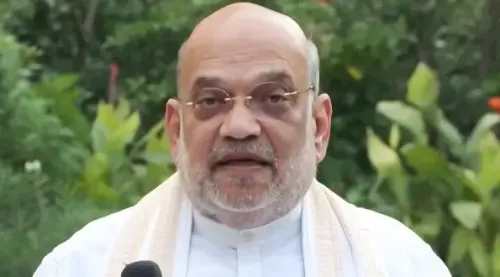
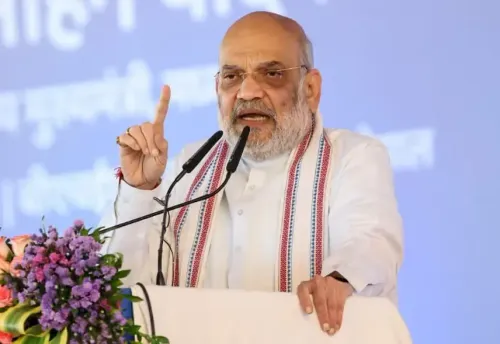
The BJP's electoral counter-offensive sharpened on Tuesday, October 13, as Odisha Chief Minister Mohan Charan Majhi amplified Union Home Minister Amit Shah's broadside against Congress leader Rahul Gandhi, framing the opposition's institutional critiques as a distraction from what he called 'decades of electoral irrelevance.'
Shah's message: introspect, don't blame the EC
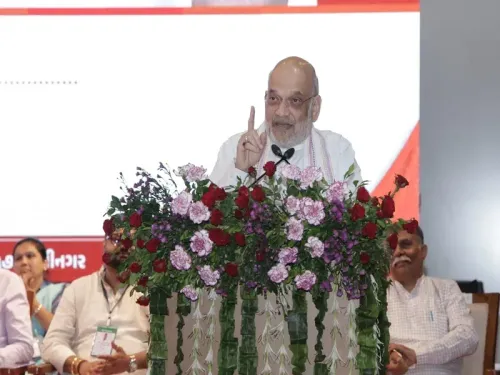
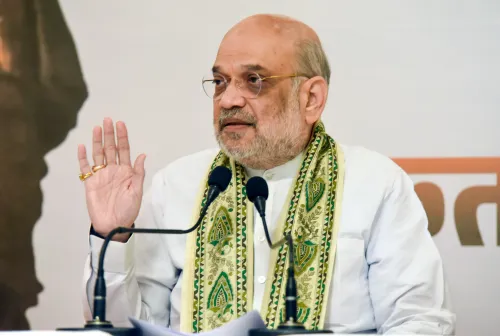
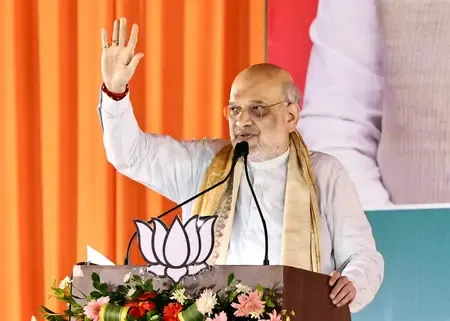
Amit Shah, the BJP's chief organisational strategist, delivered what CM Majhi described as a 'stark reality check' — urging the Congress leadership to look inward rather than challenge the credibility of bodies like the Election Commission of India. The remark targets a recurring Congress posture: attributing electoral defeats to institutional bias rather than political failure. Shah's argument, as amplified by Majhi, is blunt — janta ka faisla (the verdict of the people) leaves no room for excuses.
Local body wins in Rajasthan, Gujarat and the Tripura figure
Majhi pointed to sweeping BJP victories in local body elections in Rajasthan and Gujarat, and cited a 77.5% vote share in Tripura as evidence of sustained voter support for Prime Minister Narendra Modi's development agenda. The research notes these specific figures have not been independently verified, so they are presented here as claimed in the post. What is established fact: BJP secured a majority in the 2023 Tripura Legislative Assembly elections, ending decades of Left Front dominance in the northeastern state — a landmark result that the party has repeatedly cited as proof of its pan-India reach.
'The writing is on the wall for 2029'
The closing line of Majhi's post — and the hashtag #ShahExposesRahul — signals that this is not just a reaction to one speech. It is early positioning for the 2029 general election cycle, with the BJP attempting to lock in a narrative: opposition = institutional grievance; BJP = voter mandate. The Congress has, on multiple occasions, raised concerns about the Election Commission's conduct during recent election cycles, a charge the ruling party consistently rejects as deflection.
For a regional chief minister to push a national party message this forcefully is itself a data point — it reflects the BJP's well-documented discipline in amplifying central leadership communication through every rung of its elected officials. The next test of that message will come in the state-level elections scheduled before 2029, where local body results like those in Rajasthan and Gujarat will be scrutinised as leading indicators.
The voters, as Majhi put it, have already written the script — the only question is whether the opposition is reading it.
Point of View
State leaders echo, and the hashtag does the algorithmic work. The EC-criticism angle is a long-running fault line: Congress's challenge to electoral institutions, however substantive or not, consistently hands the BJP a 'sore loser' counter-narrative that travels well with its base. By invoking 2029 explicitly this early, Majhi and Shah are attempting to frame the entire intervening period — every state election, every local body result — as chapters in a single, predetermined story. Whether that framing holds will depend on whether Congress can find a counter-argument beyond institutional grievance.
NationPress
13 Oct 2026
Frequently Asked Questions
What did Amit Shah say about Rahul Gandhi and the Election Commission?
According to Odisha CM Mohan Charan Majhi's post, Amit Shah delivered a 'stark reality check' urging Rahul Gandhi and Congress leadership to stop blaming the Election Commission of India for electoral losses and instead introspect on what BJP describes as 'decades of electoral irrelevance.'
What is BJP's vote share in Tripura that Majhi cited?
Majhi's post claims a 77.5% vote share in Tripura for BJP. This specific figure has not been independently verified; however, BJP did win a confirmed majority in the 2023 Tripura Legislative Assembly elections , ending decades of Left Front rule.
Why is Congress criticising the Election Commission?
The Congress party has raised concerns about the Election Commission's conduct during recent election cycles, alleging institutional bias. The BJP consistently counters this by pointing to its state-level victories as proof that voter mandates, not institutional interference, explain election outcomes.
What is the significance of BJP's local body wins in Rajasthan and Gujarat?
BJP has cited local body election wins in Rajasthan and Gujarat as evidence of continued grassroots support for PM Modi's development agenda, using them to counter the Congress narrative that the party's national dominance is being propped up by institutional favour.
What does 'writing is on the wall for 2029' mean in Majhi's post?
It is a rhetorical signal that BJP believes its current electoral momentum — in state, local body and assembly polls — makes its dominance in the 2029 general elections a foregone conclusion, urging the Congress to accept voter verdicts rather than challenge electoral institutions.