CM Majhi Backs PMAY Drive to End Slum Life in Odisha
Synopsis
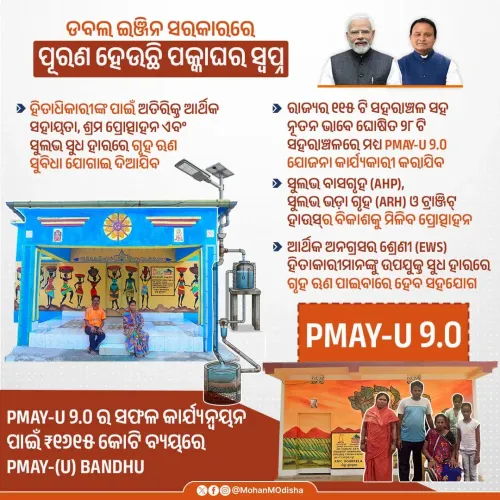
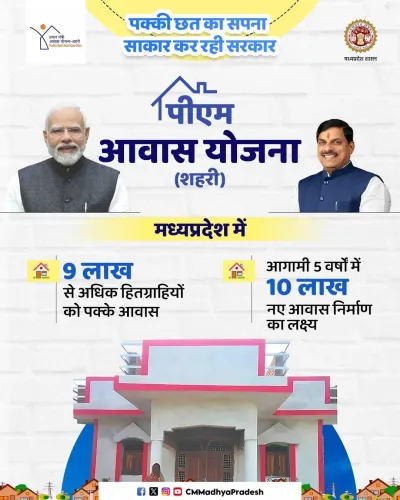
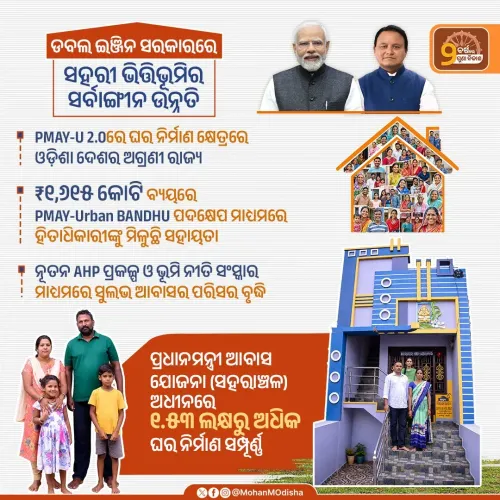
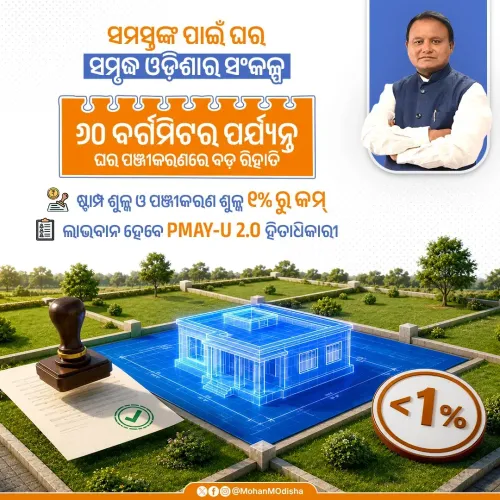
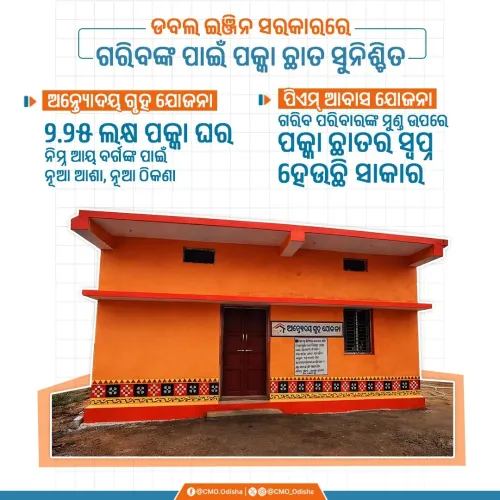
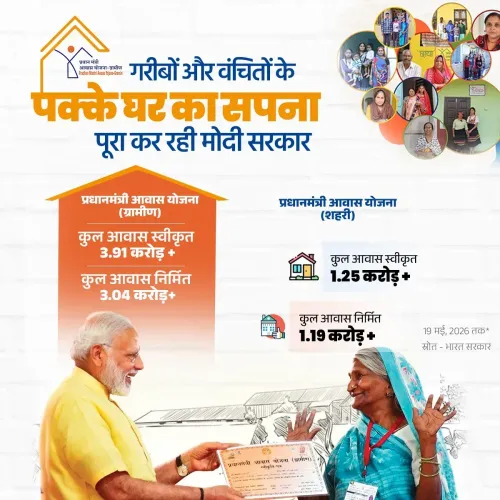
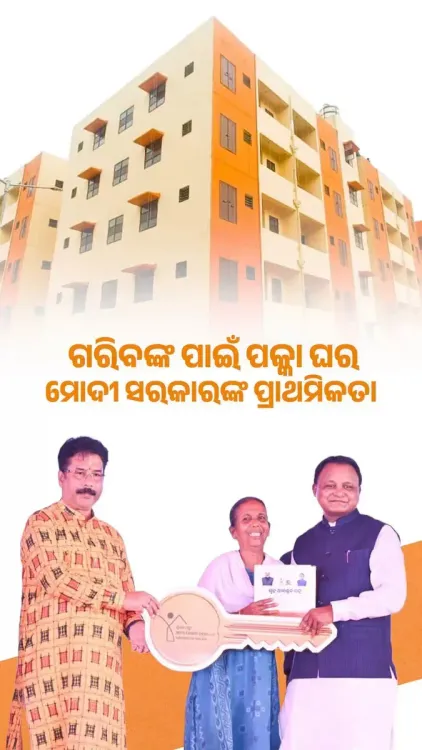
Odisha Chief Minister Mohan Charan Majhi reaffirmed on 13 October 2026 his government's push under Pradhan Mantri Awas Yojana to provide pucca houses to poor families and lift them out of slum living, crediting PM Narendra Modi's vision for the drive.
Key Takeaways
CM Mohan Charan Majhi posted on 13 October 2026 reaffirming Odisha's commitment to housing the poor under PMAY .
The post specifically highlights slum rehabilitation, signalling emphasis on the PMAY-Urban component in cities like Bhubaneswar and Cuttack .
Pradhan Mantri Awas Yojana was launched in 2015 , replacing the older Indira Awas Yojana and covering both urban and rural poor.
Odisha came under BJP rule after the 2024 assembly election , aligning state welfare delivery with central government schemes.
The government frames housing access as a transition from slum life to a 'safe and dignified life' — connecting shelter to broader poverty transformation.
Concrete progress on PMAY-Gramin and PMAY-Urban targets in Odisha's next assembly session will be the key test of delivery.
For millions of families living under leaking tin sheets and tarpaulin, the promise of a solid roof is not just a welfare statistic — it is a fundamental shift in dignity. On Tuesday, 13 October 2026, Odisha Chief Minister Mohan Charan Majhi took to X to reaffirm his government's commitment to housing the poor under the Pradhan Mantri Awas Yojana (PMAY), framing it as the realisation of a long-deferred dream for the state's most vulnerable.
Posting in both Odia and English, CM Majhi wrote: 'The dream of owning a home is becoming a reality, with secure roofs over the heads of economically disadvantaged families. Inspired by the vision and strong commitment of Hon'ble Prime Minister Shri Narendra Modi Ji, efforts are being made to provide pucca houses to underprivileged families, helping them move beyond slum living and lead a safe and dignified life.'PMAY's Long Road from Indira Awas to Pucca India
The scheme underpinning Majhi's message has roots stretching back decades. Rural housing support under Indira Awas Yojana was overhauled and rebranded when Prime Minister Narendra Modi's government launched Pradhan Mantri Awas Yojana in 2015, expanding its scope to cover both urban slum rehabilitation and rural economically weaker sections. The stated ambition: every Indian family, a pucca house. That single policy pivot consolidated fragmented housing support into one visible central programme — and gave state governments a ready vehicle for welfare delivery.
Odisha entered this picture more fully after the BJP's 2024 assembly election victory ended decades of the Biju Janata Dal's rule in the state. With Majhi at the helm, Odisha moved to align its welfare messaging and delivery machinery with central BJP-led schemes, of which PMAY is the most symbolically resonant.
Slum Rehabilitation at the Heart of Odisha's Housing Push
CM Majhi's post specifically calls out 'slum living' as the condition being reversed — language that signals the PMAY-Urban component, which targets in-situ slum rehabilitation. For Odisha, this is not an abstract goal: the state's coastal and industrial belt cities, including Bhubaneswar and Cuttack, carry a significant urban-poor population living in informal settlements. A roof is not only shelter — it is an address, a legal identity, a foothold in the formal city.
The BJP-led government's framing — linking housing to 'safe and dignified life' — is also a deliberate political signal. It positions the state's welfare delivery as continuous with Modi's national narrative: that poverty reduction is not charity but transformation of circumstance.
What the state delivers on the ground in the coming assembly session — concrete targets met under PMAY-Gramin and PMAY-Urban, supplementary housing budgets, or new slum rehabilitation notifications — will test whether the message lands in mortar and brick, not just in words.
Point of View
Majhi stitches Odisha's delivery record to the national narrative, a pattern seen across BJP-ruled states since 2015. The slum-rehabilitation framing is telling: urban housing in Odisha's growing coastal cities is a live political pressure point, and PMAY-Urban gives the state a central funding hook to address it. The real political dividend, however, will only accrue if on-ground completion figures match the messaging.
NationPress
13 Oct 2026
Frequently Asked Questions
What is Pradhan Mantri Awas Yojana and who benefits from it?
Pradhan Mantri Awas Yojana (PMAY), launched in 2015, is the central government's flagship housing programme that provides pucca houses to economically weaker sections and low-income groups in both urban and rural India, including slum dwellers. It replaced the earlier Indira Awas Yojana.
What did Odisha CM Mohan Charan Majhi say about housing on 13 October 2026?
CM Majhi posted that the dream of owning a home is becoming reality for economically disadvantaged families in Odisha, crediting PM Modi's vision and the efforts under PMAY to provide pucca houses and move families beyond slum living into safe and dignified conditions.
When did BJP come to power in Odisha?
The BJP won the Odisha assembly election in 2024, ending decades of Biju Janata Dal rule. Mohan Charan Majhi was sworn in as Chief Minister following that victory.
What is the difference between PMAY-Urban and PMAY-Gramin?
PMAY-Urban targets housing for the urban poor, including in-situ rehabilitation of slum dwellers in cities. PMAY-Gramin (previously Indira Awas Yojana) focuses on providing pucca houses to rural families living below the poverty line.
Which cities in Odisha have significant slum populations?
Bhubaneswar and Cuttack, Odisha's largest urban centres, have notable informal settlements and are key focus areas for PMAY-Urban's slum rehabilitation component.