Sonowal at 21st MSDC Meet: India's Ports Enter Statutory Era
Synopsis
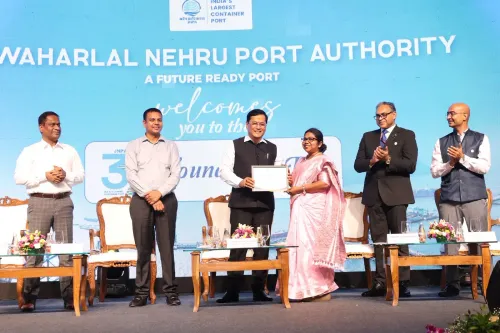
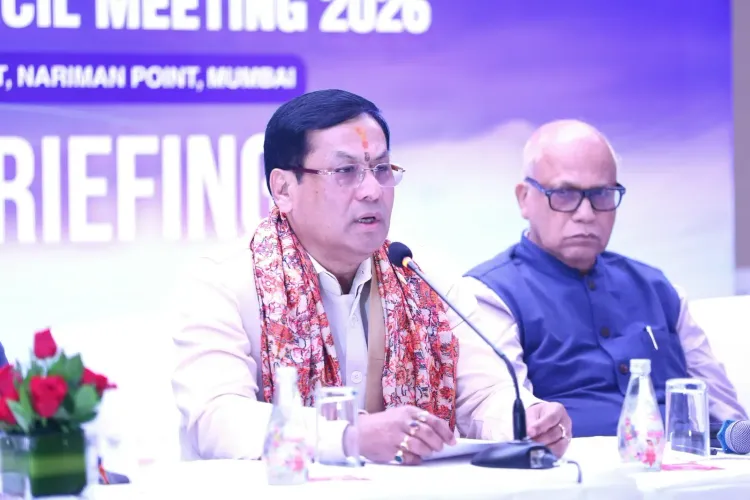
Union Minister Sarbananda Sonowal attended the 21st MSDC meeting on October 13, 2026 — the first since the council became a statutory body under the Indian Ports Act, 2025 — marking a milestone in India's centre-state maritime governance framework.
Key Takeaways
The 21st MSDC meeting held on October 13, 2026 was the first since the council was made a statutory body.
The Indian Ports Act, 2025 granted the Maritime State Development Council its new statutory status, formalising centre-state coordination on port development.
Union Minister Sarbananda Sonowal highlighted 'strong centre-state synergy' and 'cooperative federalism' as the guiding principles.
PM Narendra Modi leads the council's direction, positioning maritime reform within the government's infrastructure growth agenda.
The reform builds on a decade-long legislative arc: Sagarmala (2015) , the Major Port Authorities Act, 2021 , and now the Indian Ports Act, 2025 .
First statutory project approvals and state port development plans will be the immediate benchmarks to watch.
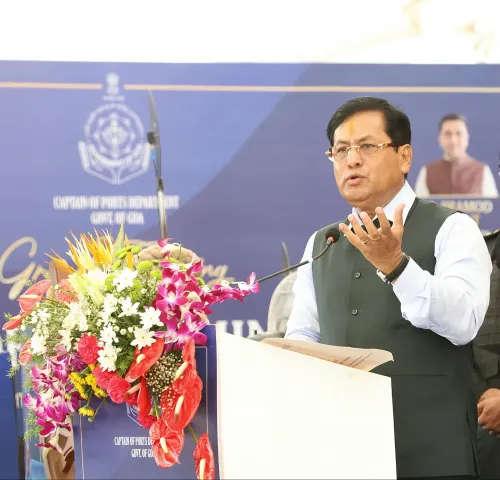
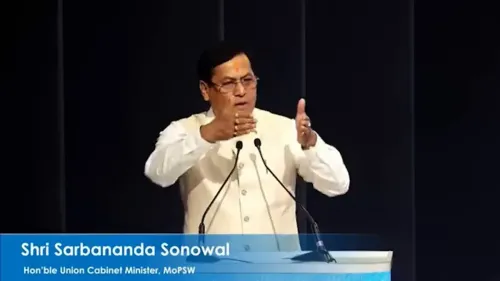
India's maritime governance crossed a legislative threshold on Tuesday, October 13, 2026, as Union Minister of Ports, Shipping and Waterways Sarbananda Sonowal attended the 21st Maritime State Development Council (MSDC) meeting — the first convened since the council was elevated to a statutory body under the Indian Ports Act, 2025.
From advisory to statutory: what the upgrade means
For years, the MSDC functioned as a coordination forum between the Centre and coastal states — influential but not legally binding. The Indian Ports Act, 2025 changed that calculus, giving the council a formal statutory footing and, with it, a firmer mandate to shape port development planning across the country. The 21st meeting marks the first real test of that upgraded architecture.
Sonowal described the session as powered by 'strong centre-state synergy' and 'the true spirit of cooperative federalism,' underscoring that the legislative upgrade is designed not to centralise authority but to lock state governments into a shared framework with defined roles and accountability.
A decade of port reform — and where the 2025 Act fits
The overhaul did not arrive in a vacuum. India's Sagarmala Project, launched in 2015, first signalled the Centre's intent to treat ports as engines of economic growth rather than mere cargo-handling facilities. The Major Port Authorities Act, 2021 followed, replacing a 1963-era statute and granting greater operational autonomy to the country's largest ports. The Indian Ports Act, 2025 is the next layer — broadening the reform frame to the entire port ecosystem, including non-major ports governed by states, and institutionalising the MSDC as the connective tissue between New Delhi and state capitals.
The progression is deliberate: each statute has addressed a different tier of the system, and together they amount to the most comprehensive legislative refresh of Indian maritime governance in more than half a century.
PM Modi's imprint and the cooperative federalism play
Sonowal credited Prime Minister Narendra Modi with leading the council's direction — a signal that the maritime transformation is positioned firmly within the broader infrastructure-led growth narrative of the current government. Coastal states, long frustrated by jurisdictional ambiguities between central major ports and state-run minor ports, now have a statutory seat at the planning table. That is politically significant: it gives chief ministers a formal stake in outcomes they previously only observed.
The real measure of success, however, will come in implementation — which projects the newly empowered MSDC approves first, how quickly states submit their port development plans, and whether the statutory framework actually accelerates timelines or simply formalises existing delays.
What the maritime sector will watch next
The MSDC's first statutory decisions will set the template. Stakeholders in port logistics, coastal shipping, and shipbuilding will be watching for implementation rules and the council's first formally notified project approvals under the new regime. If the 21st meeting produces actionable resolutions — rather than declarations of intent — it will validate the argument that institutional form follows legislative function.
India handles a significant share of its international trade by sea; every percentage point of efficiency gained at the port-state interface compounds across the supply chain. The statutory MSDC is the instrument designed to capture that gain. October 13 was its opening act.
Point of View
Forcing coastal states to engage rather than merely attend. For Sonowal, who has navigated both state and central politics, framing it as cooperative federalism is a deliberate message to opposition-ruled coastal states: the architecture is inclusive by design, not by politics. The deeper question is whether statutory form translates to execution speed, given that India's port logistics gaps are well-documented. The 21st meeting's first decisions will reveal whether the new law is a governing instrument or a ceremonial upgrade.
NationPress
13 Oct 2026
Frequently Asked Questions
What is the Maritime State Development Council (MSDC)?
The MSDC is a body that coordinates port and maritime development between the central government and India's coastal states. Under the Indian Ports Act, 2025, it was elevated from an advisory forum to a statutory body with a formal legal mandate.
What is the Indian Ports Act, 2025?
The Indian Ports Act, 2025 is legislation that updated India's port governance framework, most notably granting statutory status to the MSDC and broadening the reform framework beyond major ports to the wider port ecosystem involving state governments.
What is the significance of the 21st MSDC meeting?
The 21st MSDC meeting, held on October 13, 2026, was the first convened after the council became a statutory body, making it the opening test of the new legally empowered framework for centre-state maritime coordination.
What is India's Sagarmala Project?
Sagarmala is a central government initiative launched in 2015 to promote port-led economic development, modernise port infrastructure, and improve coastal and inland waterway connectivity across India.
How does the Indian Ports Act, 2025 relate to the Major Port Authorities Act, 2021?
The Major Port Authorities Act, 2021 granted greater autonomy to India's centrally administered major ports, while the Indian Ports Act, 2025 extends the reform to the broader port ecosystem and formalises centre-state coordination through a statutory MSDC.