Sonowal: All ports on Sagar Setu by March 2027
Synopsis
Union Minister Sarbananda Sonowal announced that the Maritime States Development Council has resolved to implement 'One Nation One Port Process' across all Indian ports by March 2027, integrating every port into the unified Sagar Setu Maritime Single Window platform to cut logistics costs and eliminate procedural fragmentation.
Key Takeaways
The Maritime States Development Council (MSDC) has passed a resolution to implement 'One Nation One Port Process' at all ports by March 2027 .
Sagar Setu , the government's unified Maritime Single Window, will serve as the single digital interface for all port clearances nationwide.
The initiative targets both central major ports and state-administered minor ports , ending procedural fragmentation between them.
The reform builds on the Sagarmala Project (2015) and Maritime India Vision 2030 , both of which flagged port harmonisation as a logistics-cost lever.
Faster vessel turnaround times and reduced regulatory duplication are the primary benefits anticipated for exporters, importers, and shipping lines.
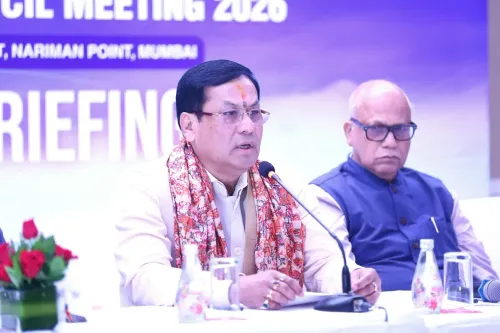
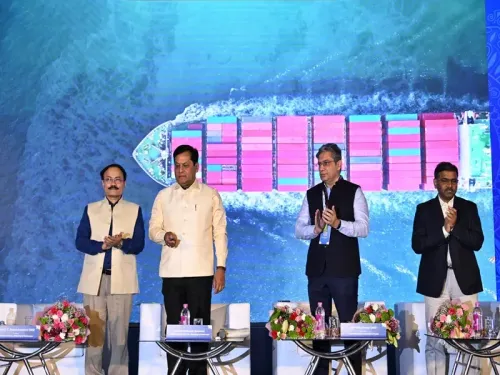
India's ports are getting a unified rulebook — and a hard deadline. Union Minister of Ports, Shipping and Waterways Sarbananda Sonowal announced on Tuesday, 13 October 2026 that the Maritime States Development Council (MSDC) has resolved to roll out the 'One Nation One Port Process' across every port in the country by March 2027, integrating them all into a single digital clearance platform called Sagar Setu.
What 'One Nation One Port Process' actually means
Right now, a shipping line calling at Mumbai faces different documentation workflows from one docking at Visakhapatnam or Kandla. Procedures, forms, and approvals vary not just between major ports — administered by central port authorities — and minor ports run by state governments, but often between terminals within the same port. The 'One Nation One Port Process' initiative aims to end that fragmentation by standardising every step, from vessel arrival reporting to cargo clearance, into a single uniform sequence regardless of which port a vessel enters.
The vehicle for that standardisation is Sagar Setu, the government's unified Maritime Single Window platform. Once fully operational, exporters, importers, shipping agents, and customs brokers will interact with one digital interface instead of navigating a patchwork of port-specific portals and paper-based processes.
MSDC's role and the March 2027 clock
The Maritime States Development Council is the key coordinating body that brings the Union government and coastal state governments to the same table on port policy. An MSDC resolution carries institutional weight precisely because it binds both central port authorities and state maritime boards — the two parallel streams that govern India's port ecosystem. With the council formally resolving to complete integration by March 2027, there is now a shared, time-bound commitment rather than an aspirational roadmap.
That deadline is about 17 months away. The pace of onboarding state-run minor ports — which handle a significant share of coastal and bulk cargo — will be the critical variable to watch.
Why logistics costs hang on this
India's logistics costs as a share of GDP have long been a competitive liability. The Sagarmala Project, launched in 2015, and Maritime India Vision 2030, released in 2021, both flagged port process harmonisation as a lever for cutting vessel turnaround times and reducing regulatory duplication. Sonowal's announcement is the operational translation of that vision into a specific mechanism with a specific date.
For exporters and shipping lines, the promise is direct: less time, fewer touch-points, lower transaction costs per port call. That matters enormously for India's competitiveness on global trade routes where competing hub ports — Singapore, Dubai, Colombo — have run unified single-window systems for years.
The infrastructure is now being assembled. Whether 17 months is enough to bring every port — major and minor, central and state — onto a single digital spine is the question the maritime sector will be watching very closely.
Point of View
If met, would position India to close a long-standing competitive gap with single-window port systems in East and Southeast Asia. The real political test lies in state compliance: minor ports under state jurisdiction have historically been the weak link in Centre-driven maritime reform. How the government handles stragglers — whether through incentives, budgetary support, or Centre-state pressure — will determine whether this resolution becomes a genuine logistics inflection point or another entry on a long list of well-intentioned maritime modernisation milestones.
NationPress
14 Oct 2026
Frequently Asked Questions
What is 'One Nation One Port Process' in India?
'One Nation One Port Process' is a government initiative to standardise port entry, documentation, and clearance procedures uniformly across all major and minor ports in India, eliminating the current patchwork of port-specific workflows.
What is Sagar Setu and how does it work?
Sagar Setu is India's unified Maritime Single Window digital platform that consolidates port clearances — including customs, vessel arrival reporting, and cargo documentation — into one interface for all ports, replacing multiple disconnected portals.
When will all Indian ports be integrated with Sagar Setu?
The Maritime States Development Council has resolved to complete integration of all ports with Sagar Setu under 'One Nation One Port Process' by March 2027 , as announced by Union Minister Sarbananda Sonowal on 13 October 2026.
What is the Maritime States Development Council (MSDC)?
The MSDC is India's apex coordinating body for port policy that brings together the Union government and coastal state governments to align both central major ports and state-administered minor ports under common frameworks.
How does Sagar Setu connect to the Sagarmala Project?
Sagarmala, launched in 2015 to drive port-led development, and Maritime India Vision 2030 both identified digital process harmonisation as essential to cutting logistics costs. Sagar Setu and 'One Nation One Port Process' are the operational mechanisms now carrying that mandate forward.