CM Samrat Choudhary Reviews Bihar's Ration Card and PDS Transparency
Synopsis
Bihar CM Samrat Choudhary chaired a review of the Food and Consumer Protection Department on October 13, ordering swift ration card issuance for eligible poor families and greater transparency in the Public Distribution System — underscoring persistent gaps in Bihar's food-security delivery.
Key Takeaways
Bihar CM Samrat Choudhary chaired a review meeting of the Food and Consumer Protection Department on October 13, 2026 .
He directed officials to expedite ration card issuance for eligible poor families currently left out of the system.
A second directive called for making the Public Distribution System more transparent to curb leakages.
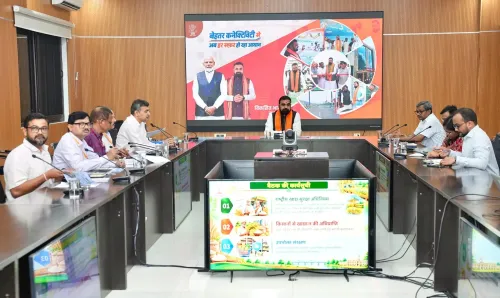
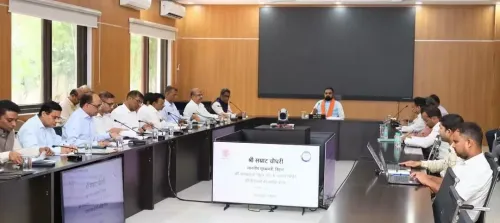
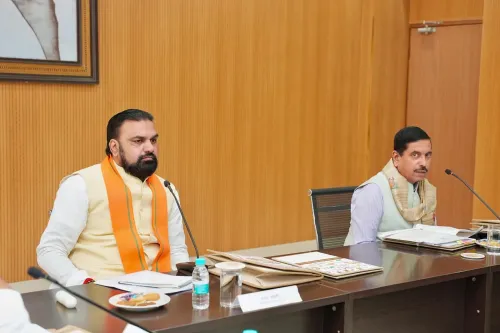
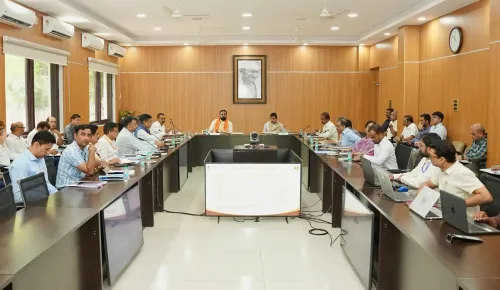
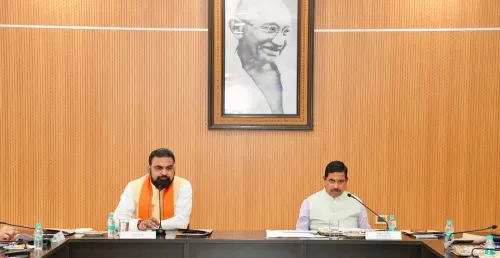
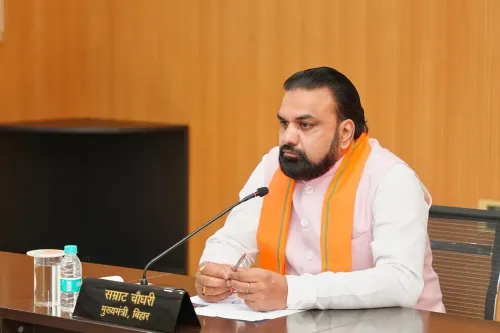
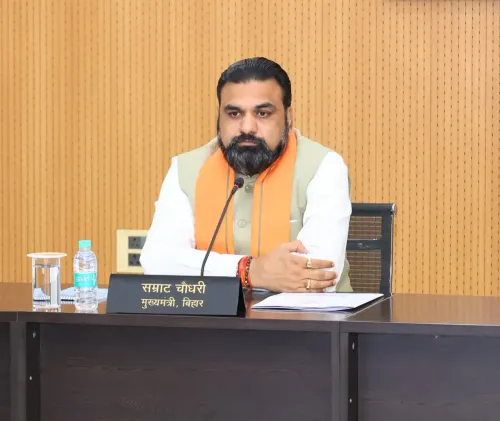
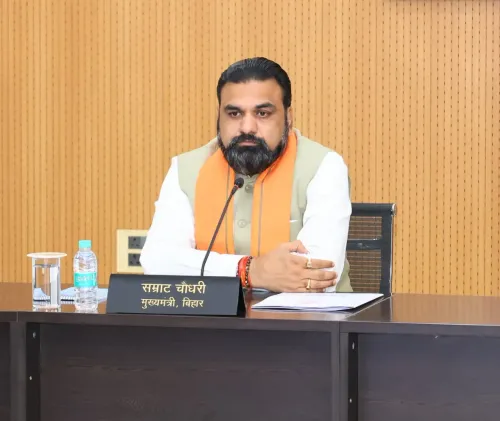
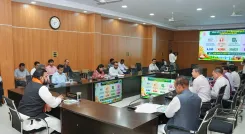
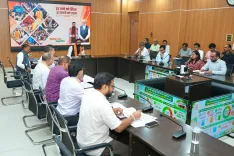
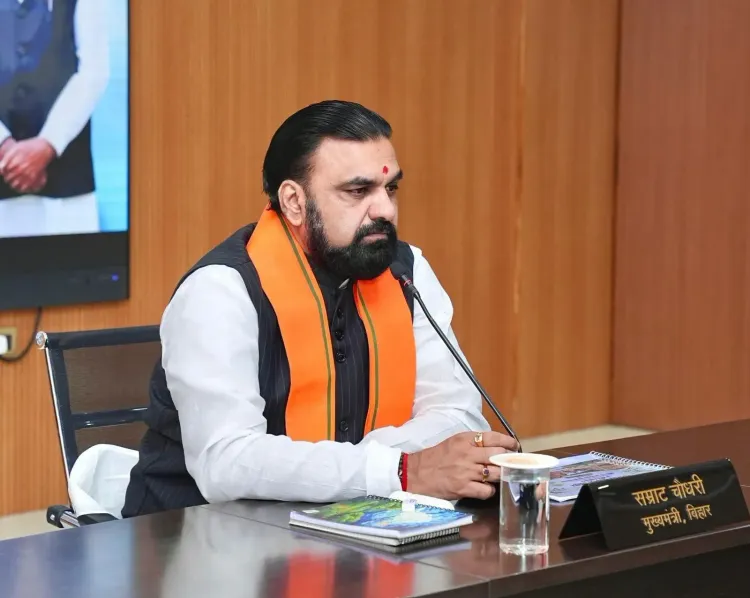
The meeting was held at the 'Sankalpa' auditorium, Lok Sevak Avas , Patna, and accompanied by four official photographs.
Bihar's PDS reforms build on the National Food Security Act, 2013 and the One Nation One Ration Card initiative of 2019 .
Aadhaar-seeding and digitisation of fair price shops are ongoing planks of Bihar's PDS overhaul.
Food security in Bihar got a direct line to the top on Tuesday, October 13, 2026, as Bihar Chief Minister Samrat Choudhary chaired a review meeting of the Food and Consumer Protection Department at the Sankalpа ('Resolve') auditorium inside Lok Sevak Avas — his official residence — and issued firm directives to fast-track ration cards for eligible poor families and make the Public Distribution System (PDS) more transparent.
What the CM ordered inside 'Sankalpa'
Choudhary directed officials to expedite the issuance of ration cards to eligible poor families who have yet to be enrolled, a gap that has historically translated into real hunger for those caught in bureaucratic backlogs. His second directive was equally pointed: make the PDS more transparent — a signal that leakages and ghost beneficiaries remain an active concern in the system.
The meeting, held under the hashtags #ViksitBharat and #SamriddhBihar ('Prosperous Bihar'), was accompanied by four photographs shared publicly, framing the session as both a working review and a public accountability moment.
Bihar's PDS: a system under constant reform pressure
The stakes here are not abstract. Bihar is among India's most populous and food-insecure states, with a large share of its population depending on subsidised grain entitlements established under the National Food Security Act, 2013. That law gave legal force to priority-household entitlements — but legal rights and actual delivery are two different things.
The One Nation One Ration Card initiative, rolled out from 2019, attempted to make those entitlements portable across state lines, a critical reform for Bihar's vast migrant workforce. Still, exclusion errors — eligible families left off lists — and inclusion errors — ineligible beneficiaries drawing rations — have persisted as twin headaches for state administrations. Bihar has pursued Aadhaar-seeding of ration cards and digitisation of fair price shops in line with central guidelines, yet the Chief Minister's decision to personally review the department signals that progress has not been sufficient.
Why ration card speed matters more than it sounds
A family without a ration card is a family outside the food-security net entirely. Delays in issuance — often caused by documentation gaps, administrative bottlenecks, or district-level inertia — compound poverty in the most direct way imaginable. The CM's directive to issue cards 'shighra' ('swiftly') is a pressure valve aimed at that exact failure point. Combined with a transparency push, the meeting signals an intent to tighten both the front door (who gets enrolled) and the back door (whether they actually receive their due).
Watch for follow-up progress reports from Bihar's Food Department on new ration card issuances and any announced technology upgrades — those numbers will tell whether Tuesday's directives translate into delivery on the ground.
Point of View
A state with significant food-insecurity and a large migrant population dependent on portable ration entitlements, these directives carry real political and humanitarian weight. Whether the review translates into measurable issuance numbers or remains a signalling exercise will determine its place in Bihar's welfare record.
NationPress
14 Oct 2026
Frequently Asked Questions
What did Bihar CM Samrat Choudhary announce about ration cards?
CM Samrat Choudhary directed officials to swiftly issue ration cards to all eligible poor families in Bihar who have not yet been enrolled, removing a key barrier to food security for excluded households.
What is the Public Distribution System (PDS) in Bihar?
The PDS is a government scheme that distributes subsidised food grains — primarily rice and wheat — to priority households through a network of fair price shops, operating under the National Food Security Act, 2013.
What is the One Nation One Ration Card scheme?
Launched in 2019, the One Nation One Ration Card initiative allows PDS beneficiaries to access their subsidised food entitlements at any fair price shop across India, making the scheme portable — a major benefit for migrant workers from states like Bihar.
Where did the Bihar Food Department review meeting take place?
The review meeting was held at the 'Sankalpa' auditorium inside Lok Sevak Avas, the official residence of the Bihar Chief Minister in Patna.
How is Bihar making its PDS more transparent?
Bihar has been pursuing Aadhaar-seeding of ration cards and digitisation of fair price shops in line with central government guidelines; CM Choudhary's October 2026 directive reinforces these measures with a push to reduce leakages and exclusion errors.