Bihar CM Reviews PDS Schemes with Union Minister Joshi
Synopsis
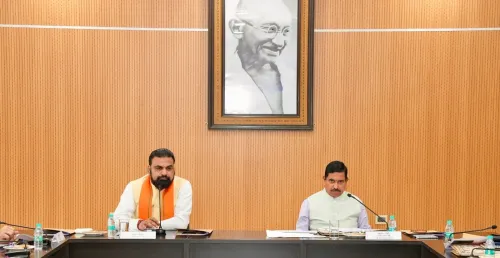
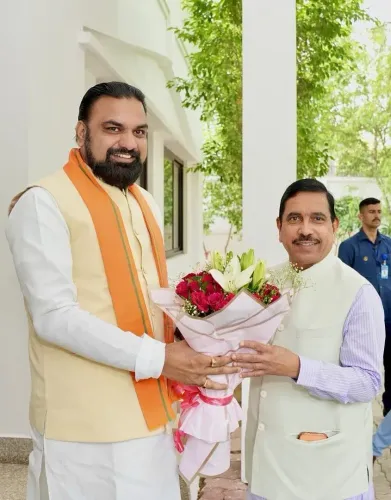
Bihar Chief Minister Samrat Choudhary met Union Minister Prahlad Joshi on 9 July 2026 at Patna's Sankalp auditorium for a detailed review of the Public Distribution System and state departmental welfare schemes, underscoring the Centre-state coordination on food security delivery.
Key Takeaways
Bihar Chief Minister Samrat Choudhary held a comprehensive review meeting with Union Minister Prahlad Joshi on 9 July 2026 .
The meeting was held at the 'Sankalp' auditorium, Lok Sevak Avas, Patna .
The review covered departmental schemes and the functioning of the Public Distribution System (PDS) in Bihar.
Prahlad Joshi is the Union Minister of Consumer Affairs, Food and Public Distribution, making him the central government's nodal figure for PDS oversight.
Bihar is among India's largest PDS-dependent states, with crores of households entitled to subsidised food grains under the National Food Security Act, 2013 .
Such joint reviews typically precede policy announcements on digitisation, beneficiary list updates, or allocation adjustments.
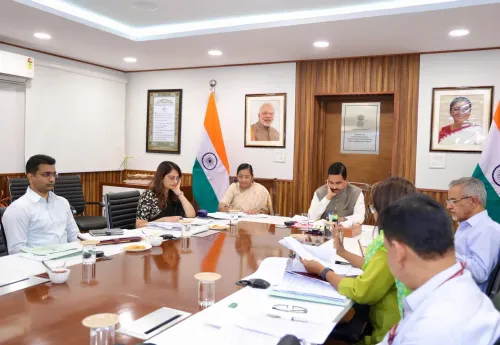
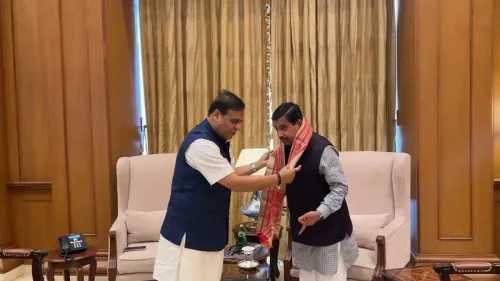
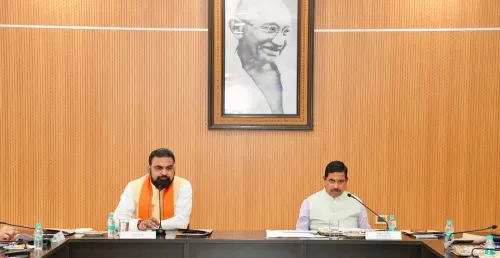
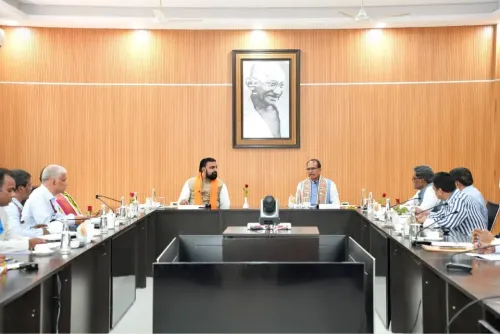
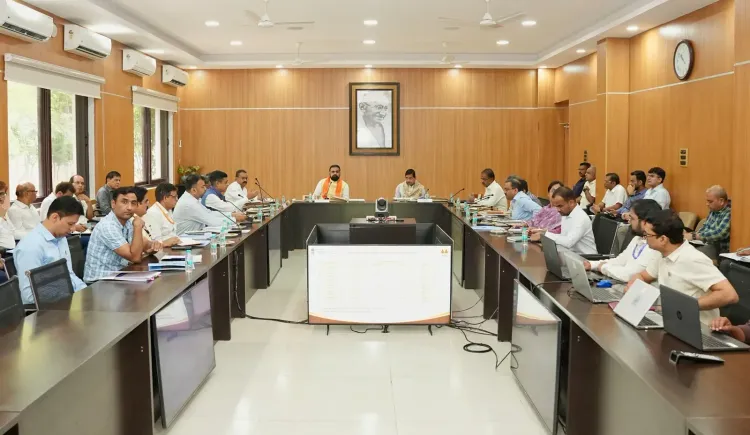
The Chief Minister's Office of Bihar announced on Thursday, 9 July 2026 that Chief Minister Samrat Choudhary conducted a detailed review of departmental schemes and the Public Distribution System (PDS) with Union Minister Prahlad Joshi at the 'Sankalp' sabha gaar (Sankalp auditorium) in Lok Sevak Avas, Patna.
Context
The meeting brought together the state's top executive and the Union Minister of Consumer Affairs, Food and Public Distribution for an in-depth assessment of ongoing welfare schemes and the functioning of the PDS in Bihar. The post noted the review was 'vistrit' (comprehensive), covering both departmental programmes and the broader food distribution network.
The venue, Sankalp auditorium at Lok Sevak Avas, is a designated government facility in Patna used for official administrative meetings, signalling the formal character of the engagement.
Policy Backdrop
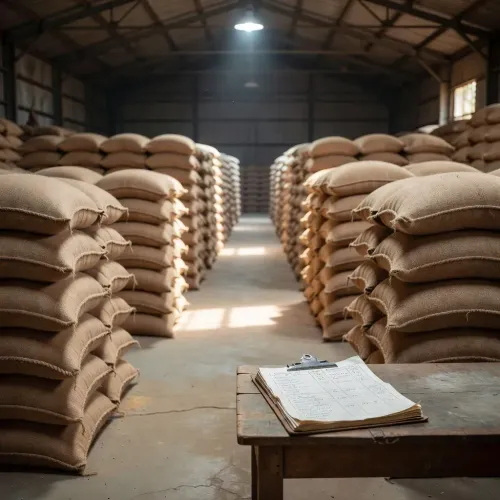
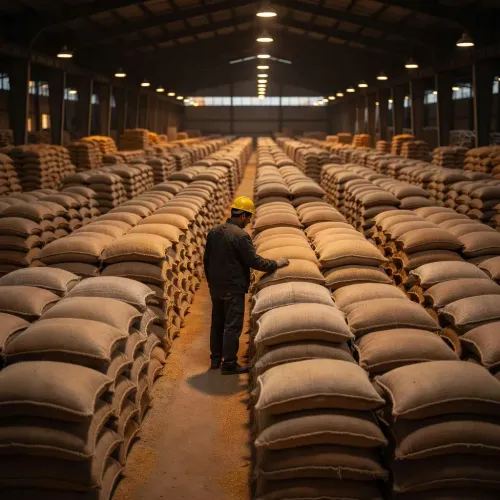
India's Public Distribution System operates under the National Food Security Act (NFSA), 2013, which legally entitles priority households to subsidised food grains distributed through a network of fair price shops across the country. Bihar, with one of the largest populations of NFSA-entitled beneficiaries, is a critical state for the scheme's national performance.
Central and state governments periodically conduct joint reviews of PDS implementation to address systemic issues such as leakages, ghost beneficiaries, and distribution gaps. In recent years, these reviews have increasingly focused on technology integration — including Aadhaar seeding, digitised ration cards, and the One Nation One Ration Card (ONORC) portability framework — to improve last-mile delivery.
Stakeholders and Impact
The primary stakeholders in any PDS review are the crores of priority and Antyodaya households in Bihar who depend on subsidised grain allocations for food security. Efficient PDS functioning directly affects the nutritional and economic stability of the state's most vulnerable populations.
State food department officials, district supply officers, and fair price shop operators are also directly affected by any policy or procedural changes that may follow such high-level reviews. Coordination between the Union Ministry and the state administration is essential for aligning central allocations with ground-level distribution capacity.
What's Next
Meetings of this nature typically precede announcements on allocation adjustments, digitisation targets, or scheme expansion. Possible follow-up actions include revised PDS beneficiary lists, updated Aadhaar-linkage timelines, or new directives on fair price shop operations in Bihar.
Observers will watch for any formal communiqué from the Ministry of Consumer Affairs or the Bihar government in the days following the review, particularly ahead of the next state budget session or central scheme evaluation cycle.
Point of View
Possibly touching on Aadhaar-seeding gaps or ONORC uptake, both of which have been persistent implementation challenges in the state. Politically, the meeting also signals alignment between the state government and the Union Ministry, which can smooth the path for additional central allocations or scheme expansions ahead of Bihar's electoral calendar.
NationPress
8 Oct 2026
Frequently Asked Questions
What was reviewed in the Bihar CM and Prahlad Joshi meeting?
Chief Minister Samrat Choudhary and Union Minister Prahlad Joshi conducted a detailed review of departmental welfare schemes and the Public Distribution System (PDS) in Bihar on 9 July 2026.
What is the Public Distribution System (PDS) in India?
The Public Distribution System is India's nationwide programme for distributing subsidised food grains to eligible households through fair price shops, governed by the National Food Security Act, 2013.
Who is Prahlad Joshi?
Prahlad Joshi is the Union Minister of Consumer Affairs, Food and Public Distribution, responsible for central oversight of the PDS and consumer welfare schemes across India.
Where was the Bihar PDS review meeting held?
The meeting was held at the 'Sankalp' auditorium in Lok Sevak Avas, Patna, a government facility used for official administrative engagements.
What could follow from the Bihar PDS review meeting?
Such reviews typically lead to follow-up actions such as revised beneficiary lists, Aadhaar-linkage updates, digitisation targets, or adjustments in central food grain allocations for Bihar.