CM Samrat Choudhary backs Rs 25,530 cr Sarthak PDS Yojana
Synopsis
Bihar Chief Minister Samrat Choudhary has backed the Union Cabinet's Rs 25,530 crore Sarthak PDS Yojana, calling it a step toward a more transparent and accountable Public Distribution System that serves over 80 crore Indians with subsidised rations each month.
Key Takeaways
Bihar Chief Minister Samrat Choudhary publicly endorsed the Sarthak PDS Yojana on 27 May 2026 .
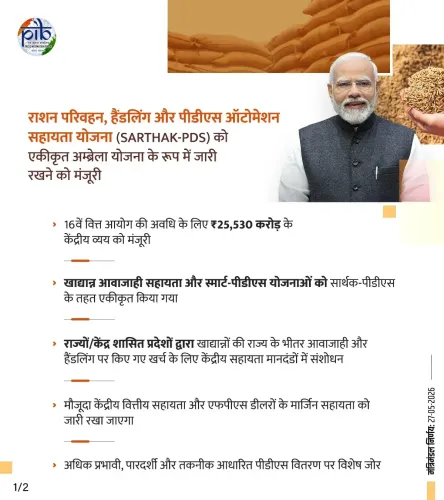
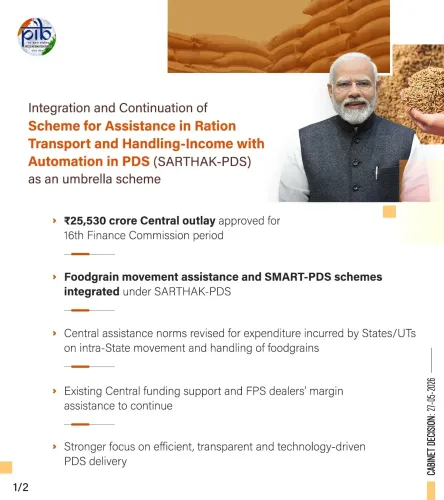
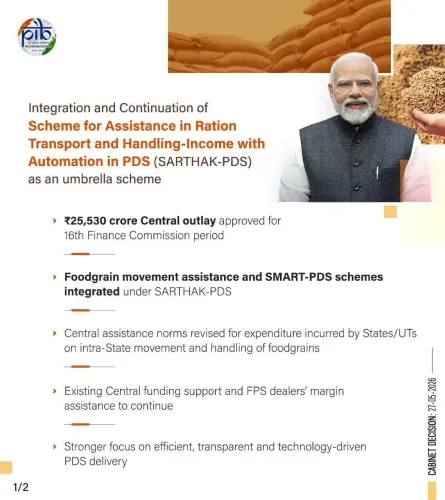
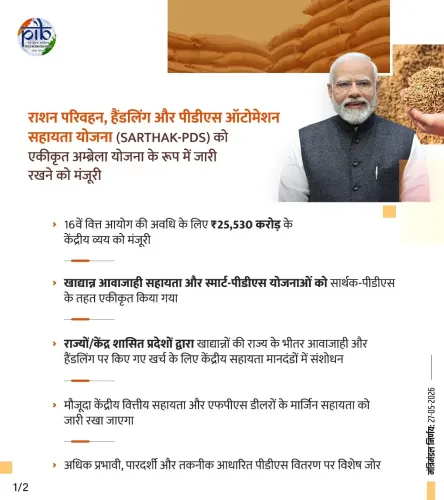
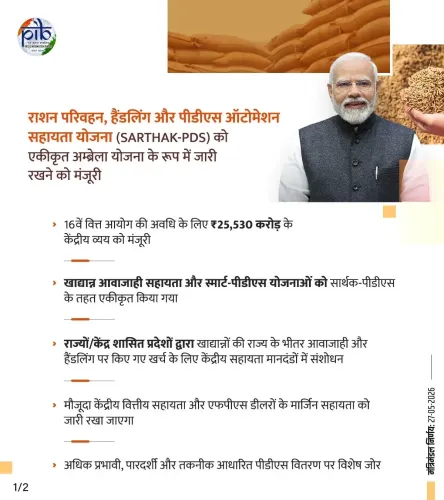
The scheme carries an outlay of Rs 25,530 crore and targets the modernisation of India's Public Distribution System.
Over 80 crore citizens currently receive subsidised rations monthly under India's food security programme.
Key reforms include technology-based upgrades , higher remuneration for ration dealers , and improved transportation infrastructure .
The initiative builds on earlier PDS reforms such as Aadhaar-seeding and the One Nation One Ration Card portability scheme.
State-level implementation guidelines and supplementary budget allocations remain the critical next steps to watch.
Bihar Chief Minister Samrat Choudhary on Wednesday, 27 May 2026, backed the Union Cabinet-approved 'Sarthak PDS Yojana', a Rs 25,530 crore scheme aimed at modernising India's Public Distribution System (PDS) to serve over 80 crore beneficiaries with greater transparency and accountability.
Context
Posting on X under the hashtag #CabinetBriefing, Choudhary described India as currently running the world's largest food security programme, reaching more than 80 crore citizens every month with subsidised rations. He wrote: 'Today India is successfully operating the world's largest food security programme, through which subsidised rations are being delivered to more than 80 crore citizens every month.'
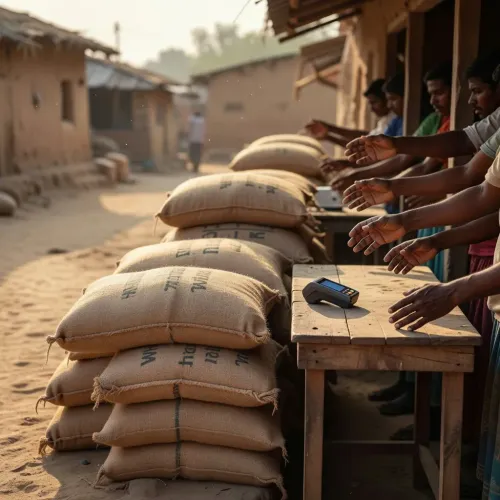
The Chief Minister highlighted three pillars of the new scheme — technology-based reforms, an increase in the remuneration of ration dealers, and improved transportation infrastructure — as the means through which welfare delivery to the poor will be strengthened further.
Policy Backdrop
India's PDS traces its current legal foundation to the National Food Security Act of 2013, which entitled eligible households — roughly 67 per cent of the population — to subsidised food grains. The programme has since undergone successive digitisation drives, including Aadhaar-seeding of beneficiary databases and computerisation of fair-price shops, aimed at plugging leakages.
The One Nation One Ration Card portability scheme, piloted in 2019 and subsequently expanded nationwide, allowed migrant workers to access their PDS entitlements from any fair-price shop in the country. The Sarthak PDS Yojana appears to continue this trajectory, adding financial incentives for ration dealers and logistics upgrades to the existing reform stack.
The coverage figure of 80 crore beneficiaries has been cited consistently in official communications for several years, underlining the scale at which the central government operates its food subsidy architecture.
Stakeholders and Impact
The two primary groups affected by the scheme are poor and marginalised households — particularly those covered under the Antyodaya Anna Yojana segment targeting the poorest of the poor — and the network of ration dealers who operate fair-price shops across the country. An increase in dealer remuneration is expected to address long-standing complaints about thin margins that have historically contributed to diversion and leakage of subsidised grain.
For a state like Bihar, which has one of the country's largest concentrations of PDS-dependent households and a significant migrant labour population, improvements in logistics and portability carry particular significance. Choudhary framed the reforms within Prime Minister Narendra Modi's broader Antyodaya (upliftment of the last person) vision, stating that 'every poor person in the country is moving forward with dignity.'
What's Next
Attention will now shift to state-level implementation guidelines for the technology upgrades envisaged under the Sarthak PDS Yojana, including the rollout of digitised supply-chain tracking and the revised dealer-commission structure. Supplementary budget provisions for the scheme in the current fiscal cycle will also be closely watched.
Bihar's own administrative machinery will be expected to align with the central framework, making the state government's follow-through a key indicator of how quickly the Rs 25,530 crore outlay translates into on-ground change for millions of beneficiaries across the state.
Point of View
Dealer incentives, and logistics signals an acknowledgement that digitisation alone has not fully closed the leakage problem in PDS, and that supply-side actors like ration dealers need a stronger stake in the system's integrity. For Bihar specifically, where PDS dependence and migrant mobility are both high, the portability and logistics components carry outsized importance. The real test will be whether state-level implementation keeps pace with the central outlay, a gap that has historically diluted the impact of well-funded welfare schemes.
NationPress
11 Oct 2026
Frequently Asked Questions
What is the Sarthak PDS Yojana?
The Sarthak PDS Yojana is a Rs 25,530 crore central government scheme designed to modernise India's Public Distribution System by introducing technology-based reforms, increasing ration dealer remuneration, and upgrading transportation infrastructure for subsidised food delivery.
How many people benefit from India's PDS?
Over 80 crore citizens currently receive subsidised rations every month through India's Public Distribution System, making it the world's largest food security programme according to official statements.
What did Bihar CM Samrat Choudhary say about the PDS scheme?
Bihar Chief Minister Samrat Choudhary said the Sarthak PDS Yojana will make the Public Distribution System more transparent, modern, and accountable, and that technology reforms and better logistics will strengthen delivery to the poor.
What is the Antyodaya vision in Indian welfare policy?
Antyodaya refers to the principle of uplifting the last and most marginalised person in society. It underpins several central government welfare schemes, including the Antyodaya Anna Yojana component of PDS that targets the poorest households with the highest subsidies.
What is the One Nation One Ration Card scheme?
The One Nation One Ration Card scheme, piloted in 2019 and expanded nationwide, allows PDS beneficiaries — especially migrant workers — to access their subsidised food grain entitlement from any fair-price shop across India, regardless of where they originally registered.