Goyal: Govt approves Sarthak-PDS scheme, Rs 25,530 cr outlay
Synopsis
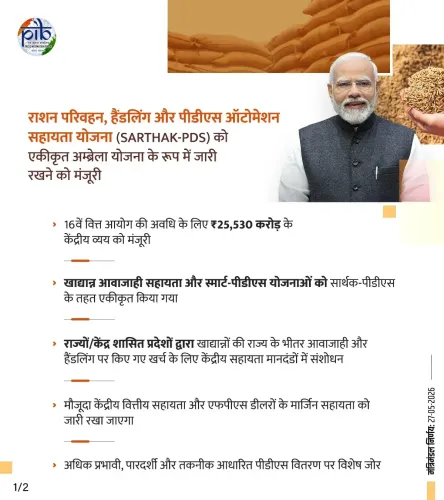
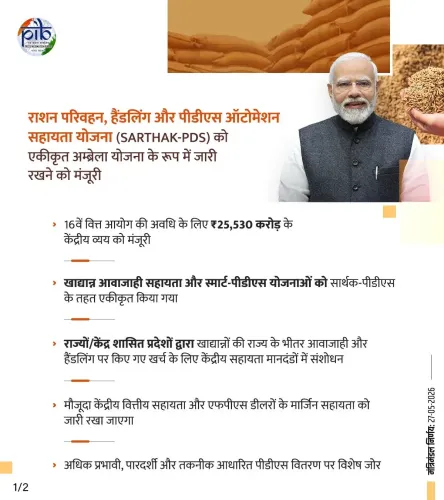
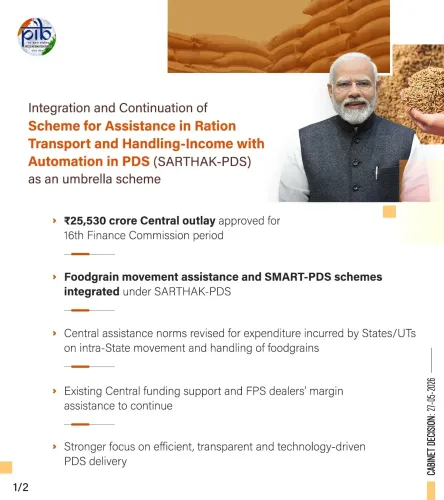
The Modi government has approved the Sarthak-PDS scheme with Rs 25,530 crore over five years, aiming to integrate ration transport, food grain distribution, and Smart PDS systems to close last-mile gaps in India's public food distribution network.
Key Takeaways
The central government, chaired by PM Narendra Modi , has approved the Sarthak-PDS scheme on 27 May 2026 .
The scheme carries a total outlay of Rs 25,530 crore to be spent over five years .
It will integrate ration transport , food grain distribution , and Smart PDS systems into a unified framework.
The goal is to ensure food security reaches the last beneficiary in the chain under the National Food Security Act .
The scheme builds on earlier reforms including Aadhaar-linked biometric authentication and the One Nation One Ration Card initiative launched in 2019.
State food departments and fair price shop dealers are the primary implementation partners.
Union Commerce and Industry Minister Piyush Goyal on Wednesday, 27 May 2026 announced that the central government, under the chairmanship of Prime Minister Narendra Modi, has approved the Sarthak-PDS scheme — a comprehensive overhaul of India's public food distribution infrastructure — with an outlay of Rs 25,530 crore over the next five years.
Context
Goyal posted on X in Hindi, stating: 'PM @NarendraModi ji ki adhyakshata mein Kendra Sarkar ne Sarthak-PDS Yojana ko sweekriti di' — [The central government, under the chairmanship of PM Modi, has approved the Sarthak-PDS scheme]. He added that Rs 25,530 crore will be spent over the next five years to integrate ration transport, food grain distribution, and Smart PDS systems to ensure food security for the last person in the chain.
The scheme's name — 'Sarthak', meaning 'meaningful' or 'purposeful' in Hindi — signals an intent to consolidate fragmented delivery pipelines under a single, monitored framework. The announcement was accompanied by a link to an official Press Information Bureau release.
Policy Backdrop
India's Public Distribution System (PDS) is the country's primary food security mechanism, delivering subsidised grains to beneficiaries covered under the National Food Security Act (NFSA) of 2013. The NFSA entitles 75 per cent of the rural population and 50 per cent of the urban population to subsidised food grains through a network of fair price shops.
Successive governments have attempted to plug leakages in the system — estimated at 30 to 40 per cent in earlier decades — through Aadhaar-linked biometric authentication, end-to-end computerisation, and supply-chain digitisation. The One Nation One Ration Card scheme, rolled out from 2019, enabled inter-state portability of PDS benefits, allowing migrant workers to access subsidised grains anywhere in the country.
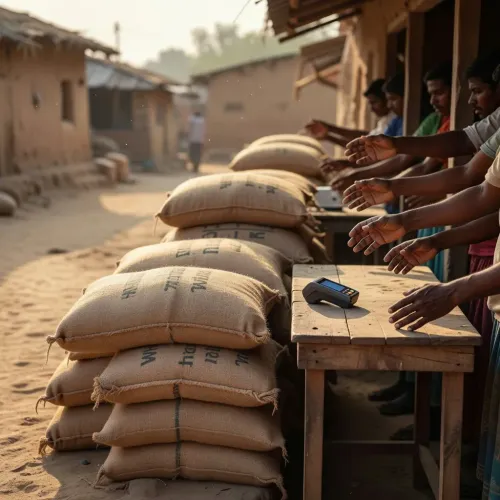
The Sarthak-PDS scheme appears to build on this lineage by weaving together ration transport logistics, last-mile grain distribution, and a Smart PDS layer — real-time monitoring and biometric verification — into a unified architecture.
Stakeholders and Impact
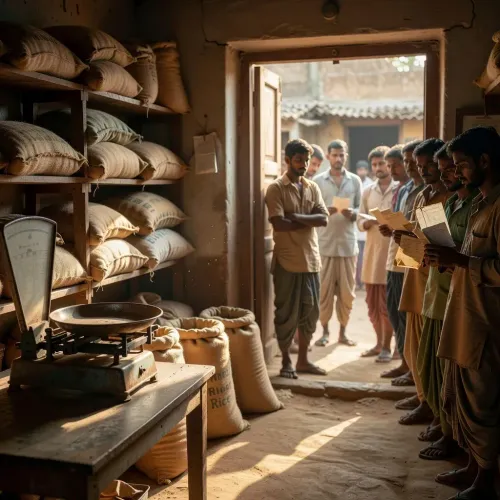
The scheme's primary beneficiaries are the hundreds of millions of households covered under the NFSA, particularly those in remote or underserved areas where supply-chain gaps have historically meant erratic or short-weighted deliveries. State food and civil supplies departments and fair price shop dealers will be the key implementation partners, as food distribution in India is a concurrent responsibility shared between the Centre and states.
For fair price shop owners, the integration of Smart PDS infrastructure — including point-of-sale devices and digital stock reconciliation — could reduce administrative friction while simultaneously tightening accountability. State governments will need to align their own logistics networks and IT systems with the new central framework to draw down the scheme's funds.
What's Next
The government is expected to release detailed scheme guidelines, state-wise implementation timelines, and fund-release conditions in the coming weeks. Performance benchmarks — including measurable reductions in diversion and leakage — will be closely watched by food security advocates and parliamentary oversight bodies.
With a five-year horizon and a Rs 25,530 crore central commitment, the Sarthak-PDS scheme sets the stage for what could be the most significant structural reform of India's food distribution network since the NFSA's passage in 2013. Whether the Smart PDS integration delivers on its last-mile promise will depend heavily on state-level execution and the pace of digital infrastructure rollout in rural India.
Point of View
Moving beyond piecemeal digitisation toward an integrated logistics-and-verification architecture. By bundling transport tracking, Smart PDS, and last-mile delivery under a single scheme, the Centre is signalling that it views supply-chain leakage — not just entitlement expansion — as the frontier of food security policy. The Rs 25,530 crore commitment also gives the BJP a welfare-governance narrative ahead of state election cycles, framing technology as the vehicle for inclusive delivery. The real test, as with earlier PDS reforms, will be whether state governments — who control the actual distribution machinery — execute at the pace and fidelity the Centre envisions.
NationPress
20 Sept 2026
Frequently Asked Questions
What is the Sarthak-PDS scheme?
The Sarthak-PDS scheme is a central government initiative approved in May 2026 that integrates ration transport, food grain distribution, and Smart PDS systems to strengthen last-mile food security delivery under the National Food Security Act.
How much money has been allocated for the Sarthak-PDS scheme?
The government has allocated Rs 25,530 crore for the Sarthak-PDS scheme, to be spent over a period of five years.
Who announced the Sarthak-PDS scheme?
Union Commerce and Industry Minister Piyush Goyal announced the scheme's approval on X on 27 May 2026, noting it was cleared under the chairmanship of Prime Minister Narendra Modi.
What is Smart PDS in India?
Smart PDS refers to the use of digital tools — including biometric authentication, point-of-sale devices at fair price shops, and real-time stock monitoring — to reduce leakages and improve accountability in India's Public Distribution System.
How does Sarthak-PDS relate to One Nation One Ration Card?
Sarthak-PDS builds on the One Nation One Ration Card framework launched in 2019, which enabled inter-state portability of PDS benefits, by adding an integrated logistics and Smart PDS layer to further close supply-chain gaps.