Pralhad Joshi: Cabinet clears SARTHAK-PDS till 2031

Synopsis
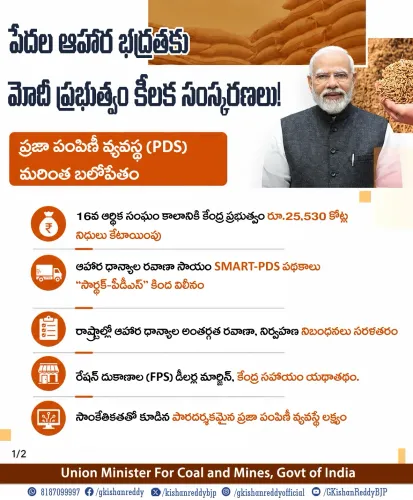
The Union Cabinet has approved a ₹25,530 crore extension of the SARTHAK-PDS scheme until 2031, deploying AI, Machine Learning, and Blockchain to modernise ration delivery for over 81 crore National Food Security Act beneficiaries. Minister Pralhad Joshi announced the decision, calling it a transformative step in technology-driven welfare governance.
Key Takeaways
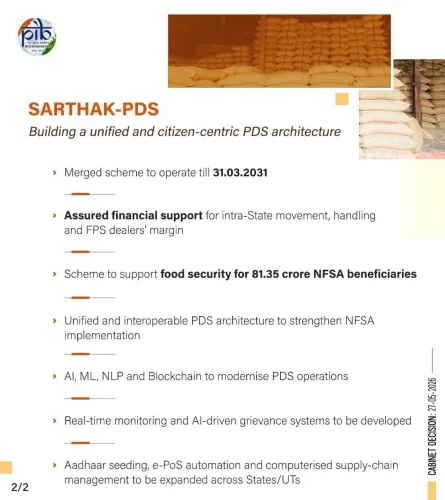
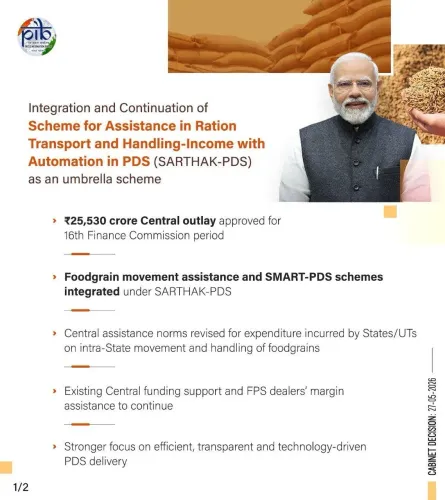
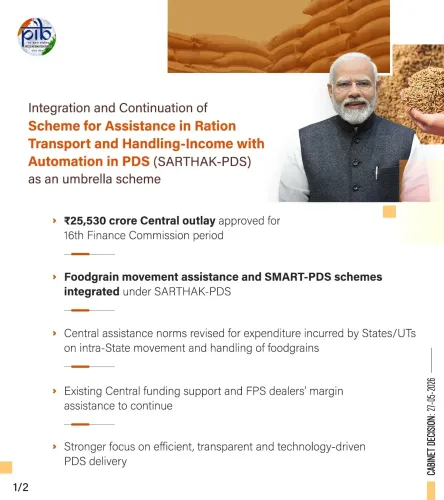
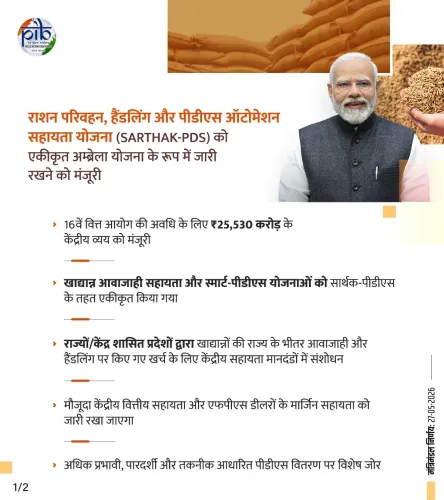
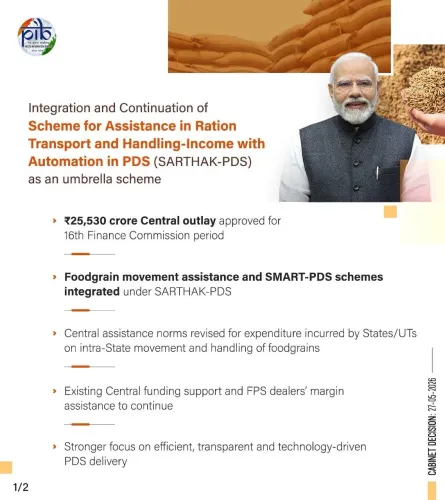
The Union Cabinet has approved the extension of SARTHAK-PDS until 2031 with an outlay of ₹25,530 crore .
The scheme will deploy AI, Machine Learning, Blockchain , and real-time monitoring across the Public Distribution System.
Over 81 crore beneficiaries covered under the National Food Security Act (NFSA) are set to benefit.
The move builds on earlier PDS reforms including Aadhaar -linked e-PoS devices and end-to-end computerisation dating to 2012 .
State food departments will be key implementation partners for last-mile technology integration.
The scheme horizon of 2031 aligns with a broader central government push to embed AI-grade oversight across direct-benefit welfare channels.
Union Consumer Affairs Minister Pralhad Joshi announced on Thursday, 28 May 2026 that the Union Cabinet has approved the extension of the SARTHAK-PDS scheme until 2031 with a total outlay of ₹25,530 crore, aiming to modernise the Public Distribution System (PDS) for over 81 crore beneficiaries covered under the National Food Security Act (NFSA).
Context
Posting in both English and Kannada, Minister Joshi described the Cabinet decision as 'a transformative step towards strengthening food security.' The Kannada portion of his post reads: 'ಸಾರ್ಥಕ್-ಪಿಡಿಎಸ್ ಯೋಜನೆಯನ್ನು 2031ರವರೆಗೆ ವಿಸ್ತರಿಸಲು ಕೇಂದ್ರ ಸಚಿವ ಸಂಪುಟವು ಅನುಮೋದನೆ ನೀಡಿದೆ' [The Union Cabinet has approved the extension of the SARTHAK-PDS scheme till 2031]. The minister credited the decision to the 'visionary leadership' of Prime Minister Narendra Modi, framing it as a milestone in technology-driven welfare governance.
SARTHAK-PDS is designed to embed Artificial Intelligence (AI), Machine Learning (ML), Blockchain, and real-time monitoring systems into the ration distribution chain. The stated goal is to make delivery more efficient, transparent, and 'beneficiary-centric' across every state and union territory.
Policy Backdrop
India's PDS has undergone successive waves of reform over the past decade. The National Food Security Act, 2013 created a legal entitlement to subsidised food grains for priority and Antyodaya households, bringing over 80 crore people under statutory coverage. A parallel End-to-End Computerisation of PDS initiative, approved in 2012, digitised ration cards and supply-chain records across most states.
From 2014 onward, Aadhaar-linked electronic point-of-sale devices were rolled out at fair-price shops to authenticate beneficiaries and curb diversion. The SARTHAK-PDS extension represents the next layer of that technology stack, adding predictive analytics and distributed ledger tools to what has historically been a paper-and-register system prone to leakage and ghost beneficiaries.
Similar technology integration is under way in other welfare programmes, including MGNREGA wage disbursements and fertiliser subsidy tracking, reflecting a broader central-government push to embed AI-grade oversight across direct-benefit delivery channels.
Stakeholders and Impact
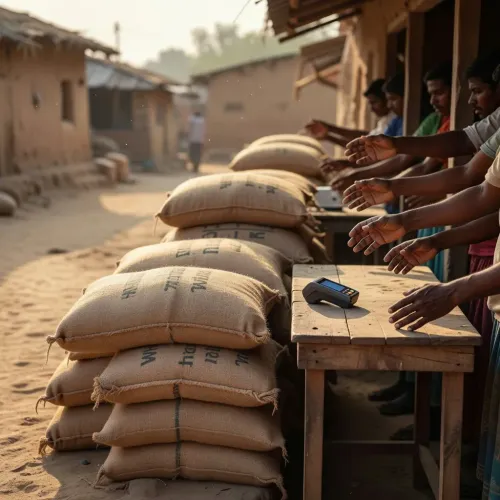
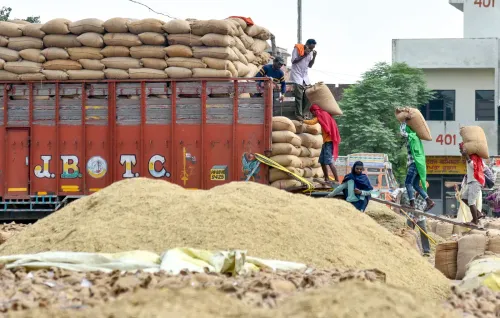
The most direct beneficiaries are the 81-crore-plus NFSA households — primarily low-income families in rural and semi-urban India — who depend on subsidised wheat, rice, and coarse grains distributed through roughly 5 lakh fair-price shops nationwide. Real-time monitoring is expected to reduce instances of short-weighing, stock diversion, and bogus transactions at the shop level.
State food departments will be the primary implementation partners, responsible for integrating new software and hardware at the last mile. The ₹25,530 crore outlay over the scheme period is expected to fund infrastructure upgrades, software development, connectivity expansion, and capacity-building for frontline workers managing the distribution network.
What's Next
Attention will now shift to state-level rollout timelines for the blockchain and real-time dashboard components, which require significant ground-level infrastructure, particularly in remote or low-connectivity districts. Any mid-term review of the ₹25,530 crore outlay by the Expenditure Finance Committee will be a key marker of implementation progress.
With the scheme horizon set at 2031, the government will likely use interim milestones — such as the number of fair-price shops onboarded to AI-enabled systems and reduction in PDS leakage rates — to assess whether the investment is yielding the transparency and efficiency gains promised in today's Cabinet decision.
Point of View
530 crore through 2031, the government is signalling that technology — not just administrative reform — is now the primary instrument for accountability in the PDS. The choice of AI, ML, and blockchain reflects an ambition to move from reactive audits to predictive, real-time oversight. For Minister Joshi, whose portfolio sits at the intersection of food security and consumer protection, the announcement also reinforces the BJP's governance-efficiency narrative ahead of a politically sensitive period in several state electoral cycles.
NationPress
13 Oct 2026
Frequently Asked Questions
What is SARTHAK-PDS?
SARTHAK-PDS is a central government scheme designed to modernise India's Public Distribution System using technologies such as Artificial Intelligence, Machine Learning, Blockchain, and real-time monitoring to improve efficiency and transparency in ration delivery.
How much money has been approved for SARTHAK-PDS?
The Union Cabinet has approved an outlay of ₹25,530 crore for the SARTHAK-PDS scheme, which will run until 2031 .
How many people will benefit from the SARTHAK-PDS extension?
Over 81 crore beneficiaries covered under the National Food Security Act (NFSA) are expected to benefit from the upgraded Public Distribution System.
What technologies will be used in the new PDS system?
The upgraded system will use Artificial Intelligence (AI) , Machine Learning (ML) , Blockchain , and real-time monitoring systems to track and verify ration distribution at every stage of the supply chain.
Who announced the SARTHAK-PDS Cabinet approval?
Union Consumer Affairs Minister Pralhad Joshi announced the Cabinet approval on 28 May 2026 via a post on X, describing it as a transformative step in technology-driven food security governance.