Kishan Reddy: Cabinet clears ₹25,530 cr SARTHAK-PDS scheme
Synopsis
The Cabinet Committee on Economic Affairs has approved SARTHAK-PDS, an umbrella food-security scheme with a ₹25,530 crore Central outlay for five years. The scheme covers 81.35 crore NFSA beneficiaries and deploys AI, blockchain and ML to modernise India's Public Distribution System through 2031.
Key Takeaways
The CCEA , chaired by PM Narendra Modi , approved continuation of SARTHAK-PDS on 27 May 2026 .
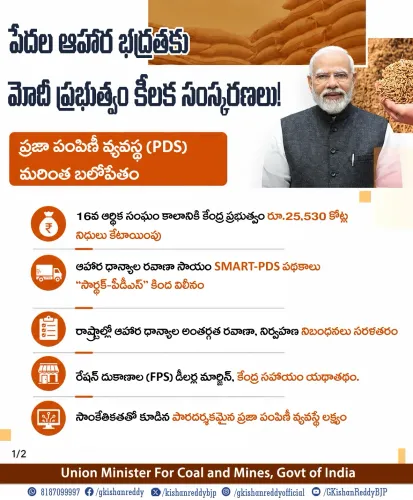
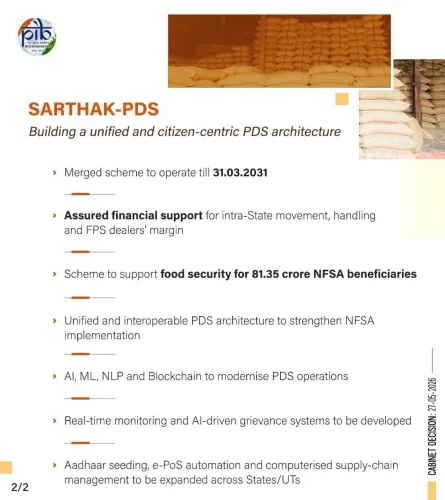
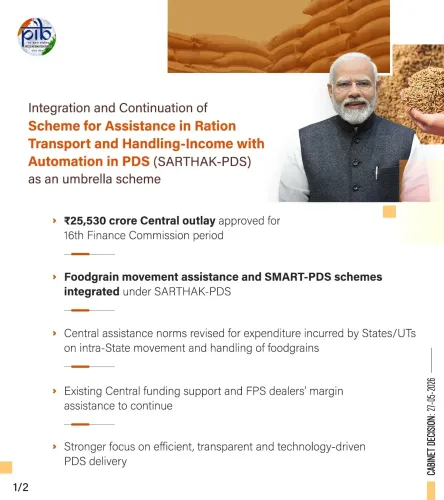
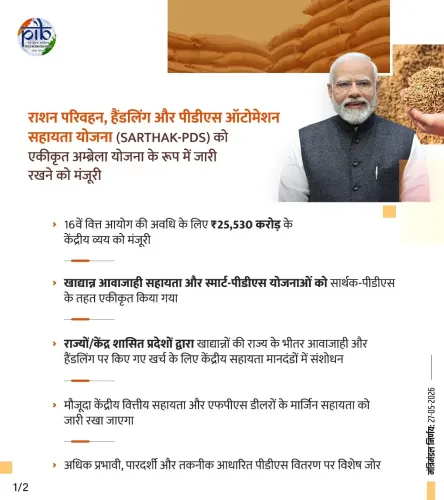
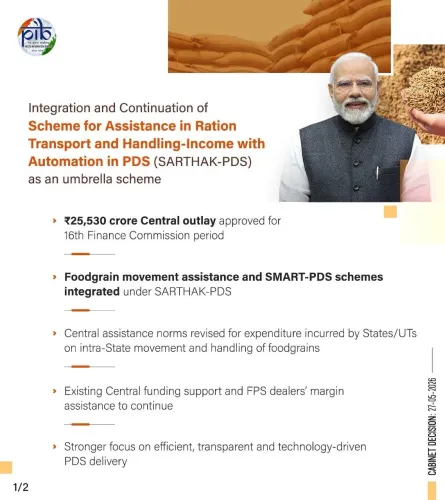
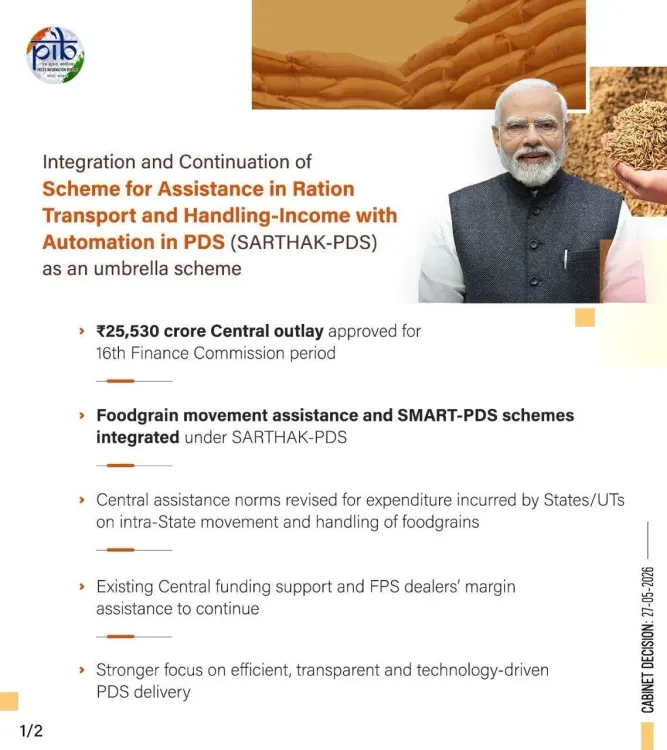
Total Central outlay is ₹25,530 crore for the 16th Finance Commission cycle , running to 31 March 2031 .
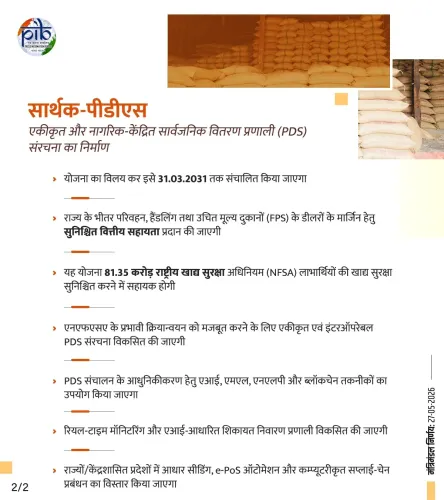
The scheme covers 81.35 crore beneficiaries entitled under the National Food Security Act .
SMART PDS component will deploy AI, Machine Learning, NLP and Blockchain for supply-chain transparency and grievance redressal.
FPS dealers will receive higher commission support and improved foodgrain handling assistance.
The scheme targets seamless last-mile delivery with real-time monitoring and data-driven governance.
Union Coal and Mines Minister G. Kishan Reddy on Wednesday, 27 May 2026, announced that the Cabinet Committee on Economic Affairs (CCEA), chaired by Prime Minister Narendra Modi, has approved the continuation of the umbrella scheme SARTHAK-PDS with a total Central outlay of ₹25,530 crore for the next five years, covering 81.35 crore beneficiaries across India.
Context
The CCEA approval extends the SARTHAK-PDS scheme through the 16th Finance Commission cycle, with funding secured until 31 March 2031. The scheme consolidates two components: assistance to state agencies for intra-state movement of foodgrains and Fair Price Shop (FPS) dealers' margin under the National Food Security Act (NFSA), and the SMART PDS — the Scheme for Modernization and Reforms through Technology in Public Distribution System.
Kishan Reddy described the initiative as aimed at building a 'transparent, efficient and citizen-centric Public Distribution System' through technologies including Artificial Intelligence (AI), Machine Learning (ML), Natural Language Processing (NLP), and Blockchain.
Policy Backdrop
The National Food Security Act, enacted in 2013, extended statutory food entitlements to roughly 67 per cent of India's population, making the Public Distribution System one of the world's largest food welfare networks. Technology integration in PDS began in earnest with Aadhaar-linked reforms rolled out from 2015 onward, aimed at pruning duplicate and ghost beneficiaries from subsidy rolls.
The present decision continues that technology-first trajectory into the next Finance Commission period. Earlier rounds of digitisation reduced leakages in several states, and the SMART PDS component seeks to institutionalise real-time monitoring, grievance redressal, and data-driven supply-chain management at scale.
Stakeholders and Impact
The scheme's most direct beneficiaries are the 81.35 crore NFSA-entitled households who receive subsidised foodgrains through the PDS network. FPS dealers stand to gain from higher commission support and improved handling margins, which the government has flagged as a key reform within the package.
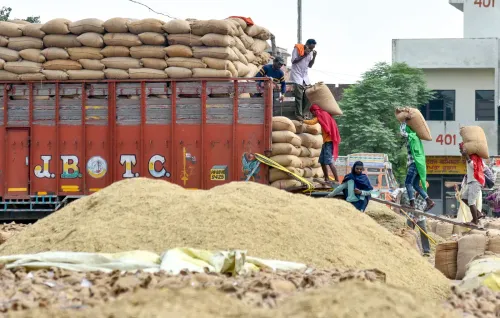
State food agencies, which manage intra-state logistics, will receive Central assistance for transportation costs — a persistent pain point that has historically led to delays in last-mile delivery. The AI and blockchain tools embedded in SMART PDS are intended to give both Central and state governments granular visibility over stock movement and beneficiary transactions.
What's Next
Implementation will depend on state-level rollout of the AI, ML, and blockchain infrastructure, which varies significantly in readiness across India's 28 states and 8 Union Territories. Periodic audits — including reviews by the Comptroller and Auditor General (CAG) — will be watched as indicators of whether leakage reduction targets are being met.
Parliament may also see mid-term reviews of SARTHAK-PDS before 2031, particularly if states flag capacity or connectivity gaps in deploying the technology stack. The scheme's performance will be a key data point when the 16th Finance Commission assesses Centre-state expenditure outcomes in the welfare sector.
Point of View
Digitised beneficiary lists, and real-time tracking — now extended with a more ambitious technology stack including AI and blockchain. Anchoring the scheme to the 16th Finance Commission cycle signals that the Centre intends to lock in this architecture before the next inter-governmental fiscal renegotiation. For the BJP, announcing the scheme through a senior minister on social media is consistent with a broader communications strategy of attributing welfare wins directly to the Modi Cabinet. The real test will be state-level implementation fidelity, where past technology rollouts have shown uneven results depending on local administrative capacity.
NationPress
11 Oct 2026
Frequently Asked Questions
What is SARTHAK-PDS and what does it do?
SARTHAK-PDS is an umbrella Central scheme that combines financial assistance for intra-state foodgrain transportation and FPS dealer margins with the SMART PDS technology modernisation programme. It aims to make India's Public Distribution System more transparent and efficient for the 81.35 crore beneficiaries covered under the National Food Security Act.
How much money has the government approved for SARTHAK-PDS?
The Cabinet Committee on Economic Affairs approved a total Central outlay of ₹25,530 crore for SARTHAK-PDS, covering the five-year period of the 16th Finance Commission cycle up to 31 March 2031.
What technologies will be used under SMART PDS?
SMART PDS will deploy Artificial Intelligence, Machine Learning, Natural Language Processing, and Blockchain technology to enable real-time monitoring of foodgrain supply chains, improve grievance redressal, and strengthen data-driven governance across the Public Distribution System.
Who are the beneficiaries of the SARTHAK-PDS scheme?
The scheme covers 81.35 crore beneficiaries entitled to subsidised foodgrains under the National Food Security Act, along with Fair Price Shop dealers who will receive higher commission support and state food agencies that manage intra-state logistics.
How does SARTHAK-PDS relate to existing food security laws?
SARTHAK-PDS operates within the framework of the National Food Security Act of 2013, which gives statutory entitlement to subsidised foodgrains to roughly 67 per cent of India's population. The scheme funds the delivery infrastructure and technology needed to fulfil those entitlements at the last mile.