Nadda Hails Cabinet Nod for ₹25,530 Cr SARTHAK-PDS Scheme
Synopsis
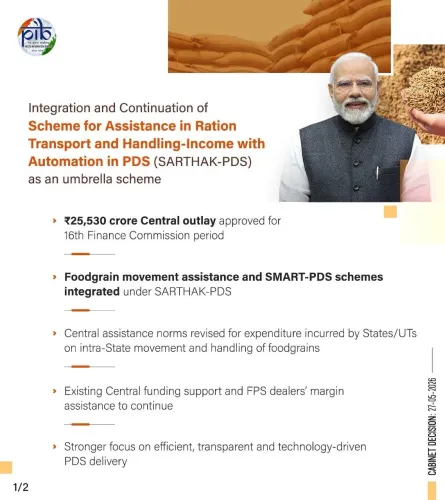
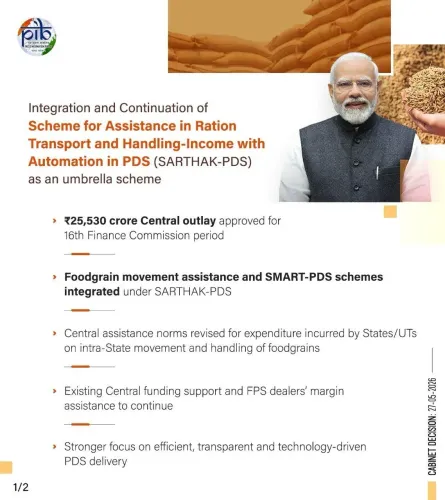
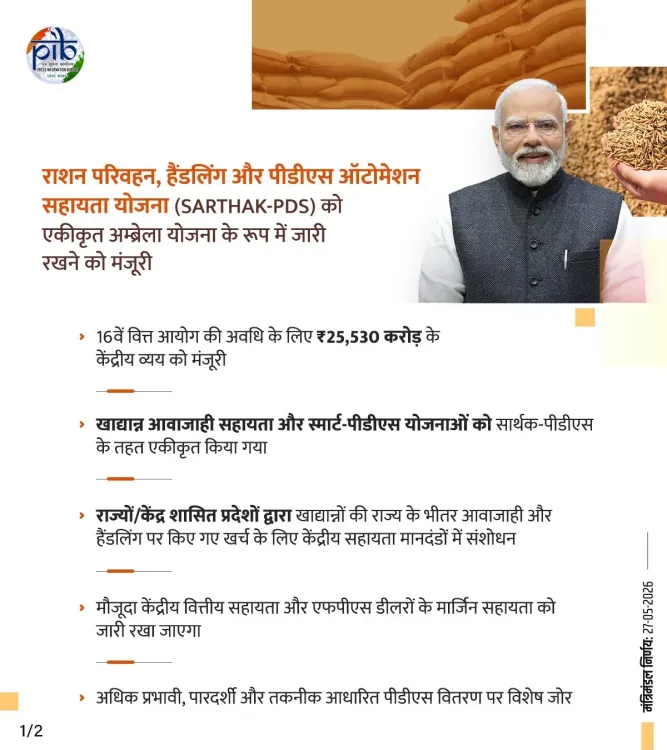
The Union Cabinet, led by PM Narendra Modi, has approved SARTHAK-PDS — a ₹25,530 crore umbrella scheme to automate supply chains, revise ration dealer pay, and subsidise transport costs across India's Public Distribution System over five years.
Key Takeaways
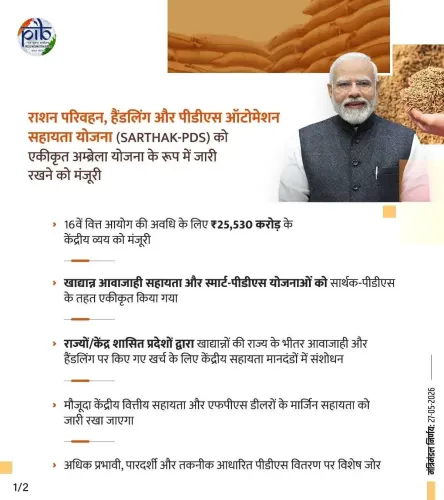
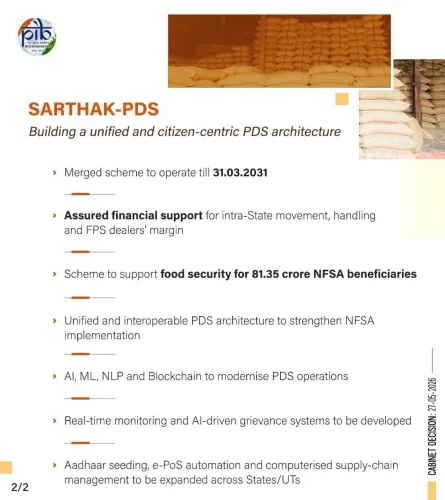
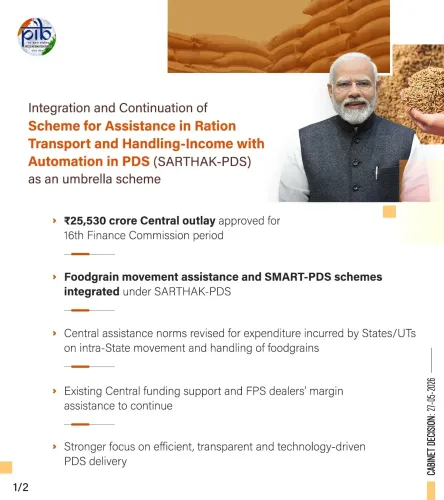
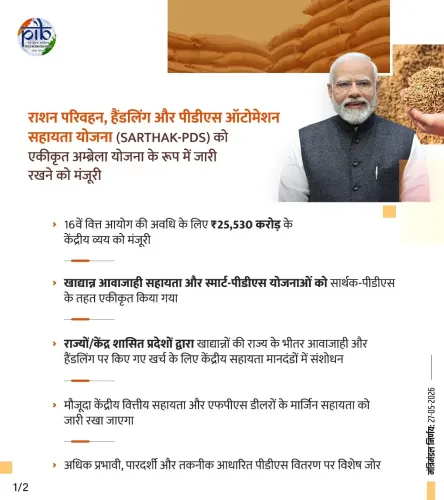
The Union Cabinet approved SARTHAK-PDS , a ₹ 25,530 crore umbrella scheme to modernise India's Public Distribution System.
The scheme runs for five years and covers transport cost subsidies from FCI godowns to fair price shops nationwide.
Remuneration for ration dealers will be revised under the new framework.
Technology-based automation — building on existing Aadhaar-seeding and e-PoS infrastructure — is a central pillar of the scheme.
The decision is aimed at improving transparency and reducing leakage in the world's largest food security programme, covering roughly 67 per cent of India's population.
Nadda credited PM Narendra Modi for the Cabinet decision, calling it 'unprecedented' in strengthening food security delivery.
Union Health Minister J. P. Nadda on Wednesday, 27 May 2026 welcomed the Union Cabinet's approval of SARTHAK-PDS — a ₹25,530 crore umbrella scheme to modernise India's Public Distribution System (PDS) over the next five years. The scheme, cleared under the leadership of Prime Minister Narendra Modi, aims to automate supply-chain operations, revise dealer remuneration, and subsidise transport costs from Food Corporation of India (FCI) warehouses to fair price shops across the country.
Context
Posting in Hindi on X, Nadda described the decision as 'unprecedented' (अभूतपूर्व) in strengthening what he called 'the world's largest food security programme.' He wrote that the scheme will provide 'assistance in transportation costs from FCI godowns to fair price shops, revision of remuneration for ration dealers, and promotion of technology-based modernisation.' The minister added that the move will bring 'transparency in the functioning of the Public Distribution System' and benefit consumers through advanced technology.
Policy Backdrop
India's PDS traces its modern legal foundation to the National Food Security Act (NFSA), 2013, which gave subsidised foodgrain entitlements the status of a legal right, covering approximately 67 per cent of the country's population. End-to-end computerisation of PDS operations was approved as early as 2012 and scaled up significantly after 2014 through Aadhaar-seeding and electronic point-of-sale devices at fair price shops. SARTHAK-PDS continues this trajectory by bundling logistics support with further digital upgrades under a single umbrella framework, replacing or extending earlier piecemeal interventions.
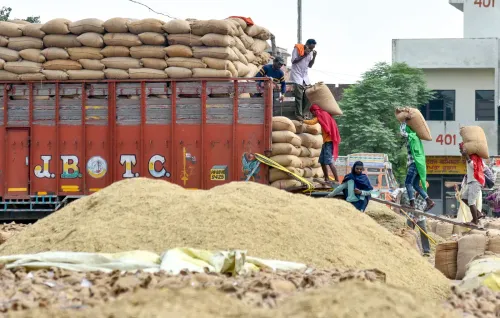
The Food Corporation of India, established in 1965, remains the central agency responsible for procurement, storage, and movement of foodgrains that feed the PDS network. Delays and diversion at the warehouse-to-shop-level have historically been the weakest link in the chain; the new scheme's transport subsidy component directly targets that bottleneck.
Stakeholders and Impact
The scheme's primary beneficiaries are the roughly 800 million NFSA-covered households who depend on subsidised wheat, rice, and other commodities distributed through the PDS network. Fair price shop dealers — a large, often underpaid intermediary class — stand to gain from the promised revision in their remuneration, which has been a long-standing demand of dealer associations. State food departments will bear implementation responsibility and will need to align their logistics and IT infrastructure with the new central guidelines.
Technology-based modernisation, as outlined in the Cabinet decision, is expected to include upgraded electronic weighing, real-time stock tracking, and potentially expanded Aadhaar-authenticated delivery — measures that have previously demonstrated measurable reductions in leakage in pilot states.
What's Next
Detailed state-level implementation guidelines and financial utilisation norms are expected to be issued by the Ministry of Consumer Affairs, Food and Public Distribution in the coming weeks. Parliamentary scrutiny — particularly by the Standing Committee on Food and Consumer Affairs — is likely once the scheme's operational framework is tabled. The five-year horizon of SARTHAK-PDS means its first performance review could coincide with the next general election cycle, making its on-ground rollout politically as well as administratively significant. How quickly states translate the central outlay into last-mile improvements for ration cardholders will be the true measure of the scheme's impact.
Point of View
Time-bound fiscal commitment — a structurally significant move that signals the government's intent to institutionalise automation rather than treat it as a pilot. The ₹25,530 crore outlay is substantial enough to suggest genuine political will, but the scheme's success will hinge on state-level execution, which has historically been uneven. By linking transport subsidies to technology mandates, the Centre is effectively using financial leverage to push reluctant states toward digital compliance. For the BJP, delivering a visibly improved ration experience to hundreds of millions of beneficiaries before the next electoral cycle is both a governance imperative and a political dividend.
NationPress
21 Oct 2026
Frequently Asked Questions
What is the SARTHAK-PDS scheme?
SARTHAK-PDS stands for 'Ration Transport and Handling Assistance Scheme with Automation in the Public Distribution System.' It is a ₹25,530 crore umbrella scheme approved by the Union Cabinet in May 2026 to modernise India's PDS over five years through transport subsidies, dealer remuneration revision, and technology-based upgrades.
How much money has been approved for SARTHAK-PDS?
The Union Cabinet has approved ₹25,530 crore for SARTHAK-PDS, to be spent over a period of five years.
Who will benefit from the SARTHAK-PDS scheme?
The primary beneficiaries are households covered under the National Food Security Act — approximately 67 per cent of India's population — along with fair price shop dealers, who will see a revision in their remuneration.
What does the SARTHAK-PDS scheme do for ration dealers?
SARTHAK-PDS includes a provision to revise the remuneration of ration (fair price shop) dealers, addressing a long-standing demand to improve the financial viability of operating a government-authorised ration outlet.
How will SARTHAK-PDS reduce corruption in the ration system?
The scheme promotes technology-based modernisation — including automation of supply-chain operations — which is designed to improve transparency and reduce diversion of subsidised foodgrains between FCI warehouses and fair price shops.