CM Mohan Yadav Hails Rs 25,530 Cr SARTHAK-PDS Phase-2 Nod
Synopsis
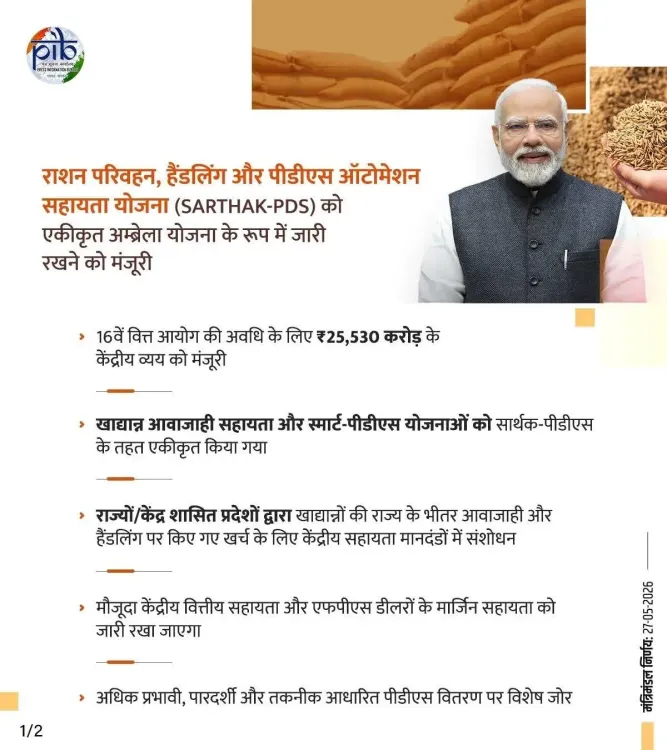
The Union Cabinet has approved ₹25,530 crore for SARTHAK-PDS Phase-2, integrating AI and modern technology into India's public distribution system. Madhya Pradesh CM Dr. Mohan Yadav welcomed the decision as a landmark step for the welfare of the poor under PM Modi's leadership.
Key Takeaways
The Union Cabinet approved ₹25,530 crore for SARTHAK-PDS Phase-2 under PM Narendra Modi's leadership.
AI and modern technologies will be deployed to enhance transparency in ration distribution across India.
The scheme builds on earlier PDS reforms including Aadhaar seeding , e-POS devices , and the One Nation One Ration Card initiative.
Mohan Yadav publicly welcomed the cabinet decision and expressed gratitude to the Prime Minister.
The National Food Security Act, 2013 entitles subsidised food grains to roughly two-thirds of India's population, making PDS one of the world's largest welfare programmes.
State-level rollout timelines and technology integration benchmarks will be key to watch in the implementation phase.
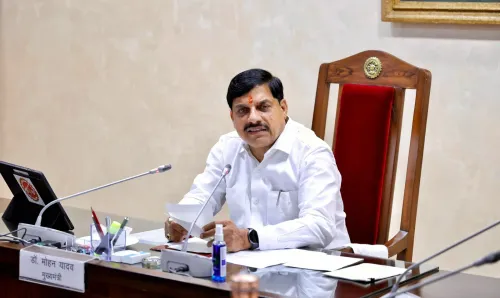
Madhya Pradesh Chief Minister Dr. Mohan Yadav on Wednesday, 27 May 2026 welcomed the Union Cabinet's approval of ₹25,530 crore for SARTHAK-PDS Phase-2, a technology-driven overhaul of India's public distribution system, crediting Prime Minister Narendra Modi for prioritising the welfare of the poor.
Context
In a post on X, Dr. Yadav announced that the Union Cabinet, under PM Modi's leadership, had sanctioned ₹25,530 crore for the scheme. Translating his post, he wrote: 'Aadaraniya Pradhanmantri Shri Narendra Modi ji ke netritva mein Kendriya Mantrimandal ne SARTHAK-PDS Phase-2 ke liye ₹25,530 crore ki sweekriti di hai' — 'Under the respected Prime Minister's leadership, the Union Cabinet has approved ₹25,530 crore for SARTHAK-PDS Phase-2.' He added that artificial intelligence and modern technologies would be deployed to make ration distribution 'more transparent,' and expressed 'heartfelt gratitude' to the Prime Minister for a decision that places the welfare of the poor at the highest priority.
Policy Backdrop
India's Public Distribution System (PDS) is the country's largest subsidised food-grain programme, operating under the National Food Security Act, 2013, which entitles coverage to roughly two-thirds of the population. Over the past decade, successive reforms — including mandatory Aadhaar seeding, electronic point-of-sale devices rolled out from 2017, and the One Nation One Ration Card scheme launched in 2019-20 — have progressively digitised the delivery chain to curb leakages and improve targeting. The cabinet's latest allocation for SARTHAK-PDS Phase-2 extends this trajectory by incorporating AI-based tools and advanced monitoring technologies into the distribution infrastructure.
India's broader Digital India and Direct Benefit Transfer (DBT) frameworks have consistently sought to eliminate intermediaries in welfare delivery. Technology integration in PDS has been a cross-party administrative priority, though the current government has accelerated its pace and scale significantly since 2014.
Stakeholders and Impact
The primary beneficiaries of SARTHAK-PDS Phase-2 are poor and low-income households across India who depend on subsidised rations under the National Food Security Act. Improved transparency mechanisms are expected to reduce diversion of food grains and ensure more accurate, timely delivery to entitled families. State governments, including Madhya Pradesh, will be key implementing partners, managing last-mile distribution through fair-price shops.
For Madhya Pradesh — a state with a large rural and tribal population — enhanced PDS efficiency carries significant social and political weight. CM Yadav's public endorsement signals the state's readiness to align with the central scheme's rollout and positions the BJP government's welfare narrative ahead of future electoral cycles.
What's Next
Attention will now turn to the state-level rollout timelines for SARTHAK-PDS Phase-2, including how AI tools will be operationalised at fair-price shops and how beneficiary data will be integrated with existing Aadhaar and One Nation One Ration Card infrastructure. Impact assessments of technology integration — particularly in large states like Madhya Pradesh — will be closely watched by welfare economists and civil society groups. The scale of the ₹25,530 crore investment suggests a multi-year implementation horizon with phased targets for transparency benchmarks.
Point of View
530 crore sanction for SARTHAK-PDS Phase-2 represents the most significant single-tranche investment in PDS modernisation in recent years, signalling that the central government views technology-driven welfare delivery as a structural priority rather than a pilot exercise. CM Yadav's swift and effusive endorsement is consistent with BJP-governed states publicly amplifying central welfare announcements to consolidate the party's 'pro-poor' identity. The emphasis on AI marks an escalation beyond earlier biometric and e-POS reforms, raising both the potential for leakage reduction and questions about data governance and exclusion risks for digitally marginalised beneficiaries. How effectively states translate this central allocation into measurable outcomes at the last mile will determine whether the scheme becomes a model or a cautionary tale in India's welfare-tech journey.
NationPress
10 Oct 2026
Frequently Asked Questions
What is SARTHAK-PDS Phase-2?
SARTHAK-PDS Phase-2 is a Union Cabinet-approved scheme allocated ₹25,530 crore to modernise India's Public Distribution System using AI and advanced technologies to improve transparency and efficiency in ration delivery to eligible poor households.
How much money has the cabinet approved for SARTHAK-PDS Phase-2?
The Union Cabinet approved ₹25,530 crore for SARTHAK-PDS Phase-2, as announced on 27 May 2026 .
How will AI be used in India's ration distribution system?
Under SARTHAK-PDS Phase-2, AI and modern technologies are to be integrated into the ration distribution chain to improve transparency, reduce diversion of food grains, and ensure more accurate delivery to entitled beneficiaries under the National Food Security Act.
What did Madhya Pradesh CM Mohan Yadav say about the PDS cabinet decision?
CM Dr. Mohan Yadav welcomed the cabinet decision on X, saying it places the welfare of the poor at the highest priority, and expressed 'heartfelt gratitude' to PM Modi for the approval.
What is the history of PDS reforms in India?
India's PDS reforms include the National Food Security Act, 2013 , mandatory Aadhaar seeding and e-POS devices from 2017 , and the One Nation One Ration Card scheme from 2019-20 , all aimed at curbing leakages and improving targeting of food subsidies.