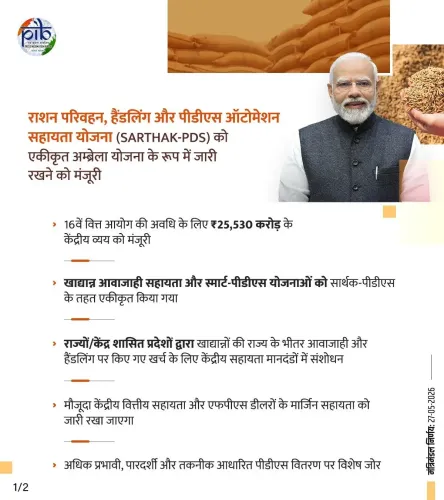
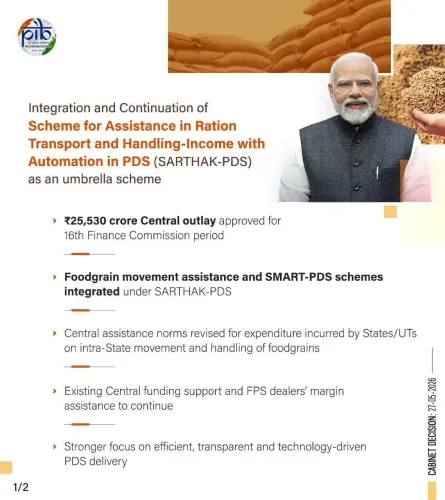
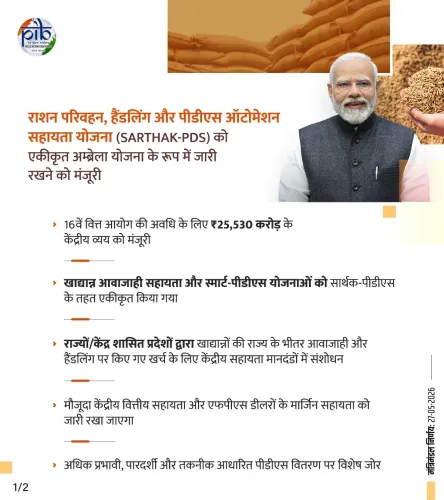
PM Modi Announces Modernisation of PDS Delivery System
Synopsis
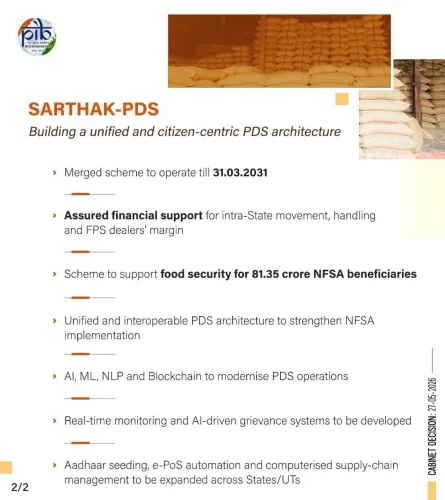
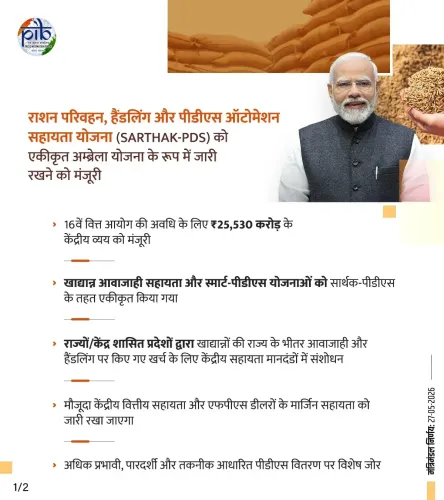
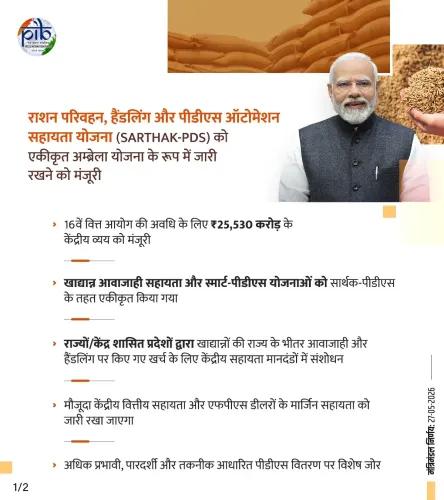
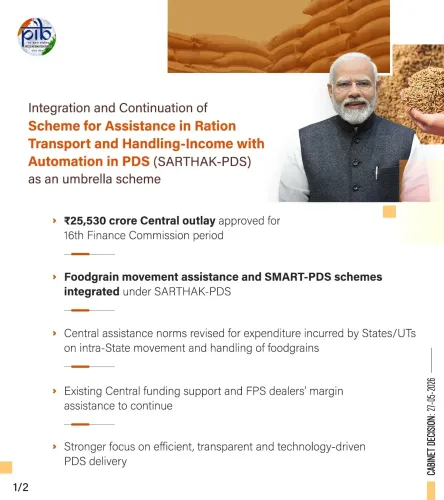
Prime Minister Narendra Modi on 27 May 2026 announced the continuation and modernisation of the Saarthak Public Distribution System, pledging improvements to food grain delivery, logistics, and transportation to ensure timely access for every needy citizen under India's food security framework.
Key Takeaways
PM Modi announced on 27 May 2026 that the government will modernise and continue the Saarthak PDS framework.
The modernisation focuses on improving delivery, logistics, and transportation of food grains to beneficiaries.
The National Food Security Act covers up to 75 per cent rural and 50 per cent urban population for subsidised food grains.
An estimated 80 crore beneficiaries depend on PDS for subsidised food grain access across India.
The Food Corporation of India (FCI) manages the central procurement, storage, and logistics network underpinning PDS operations.
Specific modernisation measures, including technology upgrades and revised logistics contracts, are expected to be detailed in forthcoming government orders.
Prime Minister Narendra Modi on Wednesday, 27 May 2026, announced that the government has decided to continue and modernise the Saarthak Public Distribution System (PDS), with a focus on making delivery, logistics, and transportation more efficient to ensure timely food grain access for every needy citizen across India.
In a post on X in Hindi, PM Modi stated: 'देश के हर जरूरतमंद तक पीडीएस के माध्यम से समय पर खाद्यान्न पहुंचे, इसके लिए हमारी सरकार प्रतिबद्ध है।' ('Our government is committed to ensuring that food grains reach every needy person in the country through PDS on time.') He added that a decision has been taken to continue Saarthak PDS by making it more modern and effective, which will improve delivery, logistics, and transportation arrangements under the system.
Context
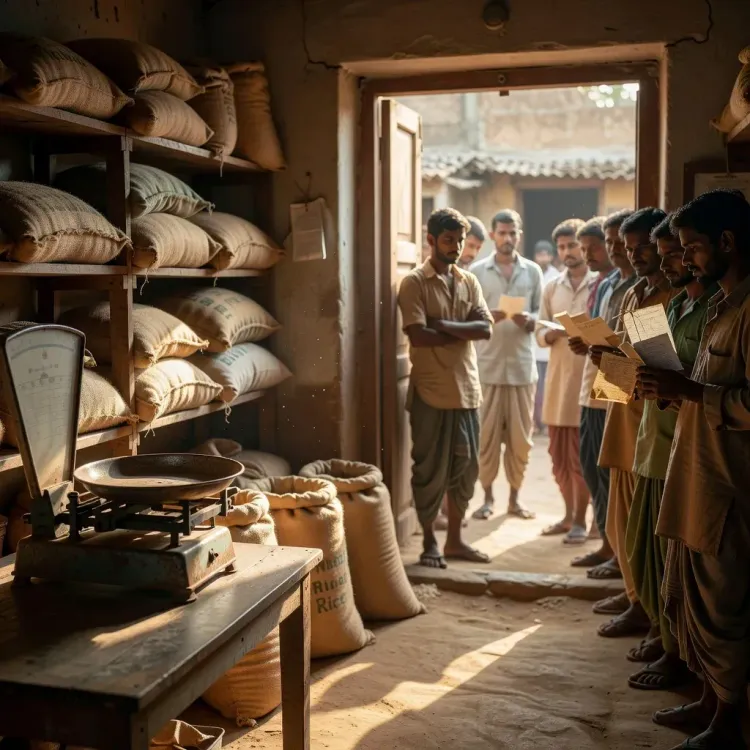
The Public Distribution System is India's largest food security network, distributing subsidised wheat, rice, and coarse grains to eligible households under the National Food Security Act (NFSA), 2013. The NFSA entitles up to 75 per cent of the rural population and 50 per cent of the urban population to subsidised food grains. The system is administered jointly by the central government and state governments, with the Food Corporation of India (FCI) handling procurement, storage, and movement of grain stocks.
Successive governments have pursued technology integration in PDS to reduce diversion and improve last-mile delivery. The current government accelerated end-to-end computerisation of the PDS supply chain after 2014 and introduced Aadhaar-based biometric authentication at fair price shops to curb leakages.
Policy Backdrop
A significant milestone in PDS reform was the launch of the One Nation One Ration Card (ONORC) scheme, rolled out nationally from 2020, which allows beneficiaries to access their PDS entitlements from any fair price shop in India. This portability measure was particularly aimed at migrant workers who previously lost access to subsidised food when moving between states.
The emphasis on logistics and transportation modernisation in PM Modi's announcement builds on these earlier reforms. Improving the movement of food grains from FCI godowns to state warehouses and ultimately to fair price shops has been a persistent challenge, with inefficiencies in this chain historically contributing to spoilage and delays in delivery to beneficiaries.
Stakeholders and Impact
The announcement directly concerns an estimated 80 crore beneficiaries covered under the NFSA who depend on PDS for subsidised food grains. State governments, which operate the retail distribution network through fair price shops, are key implementation partners and will be central to rolling out any modernisation measures on the ground.
The FCI logistics network, which manages a vast infrastructure of storage depots and transportation contracts across the country, is likely to be directly affected by changes to delivery and transport arrangements. Improved logistics efficiency could reduce food grain wastage and lower the overall cost of food subsidy operations.
What's Next
Specific details of the modernisation measures — including technology upgrades, revised logistics contracts, or state-level pilots — are expected to emerge through official government orders, FCI tenders, or supplementary budget provisions in the coming weeks. Parliamentary discussion on food subsidy allocations in upcoming sessions may provide further legislative context for the announced changes.
The government's stated commitment to timely, last-mile food grain delivery signals continued prioritisation of welfare delivery infrastructure as a policy focus, with the Saarthak PDS framework positioned as the vehicle for the next phase of reforms.
Point of View
Logistics, and transportation — rather than coverage expansion — the government signals that the next phase of PDS reform is about system efficiency rather than broadening entitlements. This approach reflects a consistent preference for central coordination of standards with state-level implementation, a model tested through ONORC and Aadhaar-linked authentication. The political salience of food security ahead of any electoral cycle makes this a high-visibility commitment, with execution benchmarks likely to be watched closely by both state governments and civil society groups tracking beneficiary outcomes.
NationPress
11 Oct 2026
Frequently Asked Questions
What is Saarthak PDS and how is it different from the regular PDS?
Saarthak PDS refers to the reformed and technology-integrated version of India's Public Distribution System that the government has been developing to improve efficiency. PM Modi's announcement indicates the government will continue and further modernise this framework, with specific improvements to delivery, logistics, and transportation arrangements.
How many people benefit from India's Public Distribution System?
An estimated 80 crore people are covered under the National Food Security Act, 2013 , which entitles up to 75 per cent of the rural population and 50 per cent of the urban population to subsidised food grains through the PDS network.
What is the One Nation One Ration Card scheme?
The One Nation One Ration Card (ONORC) scheme, launched nationally from 2020 , allows PDS beneficiaries to access their subsidised food grain entitlements from any fair price shop anywhere in India, providing portability that especially benefits migrant workers.
What role does the Food Corporation of India play in PDS?
The Food Corporation of India (FCI) is the central agency responsible for procuring, storing, and transporting food grains to state governments for onward distribution through the PDS retail network of fair price shops.
What changes can be expected in PDS logistics and transportation?
While specific measures have not yet been detailed, PM Modi's announcement points to improvements in the movement of food grains from central depots to state warehouses and fair price shops. Further details are expected through official government orders, FCI tenders, or budget provisions in the coming weeks.