CM Dhami Backs Rs 25,530 Cr PDS Scheme Cabinet Nod
Synopsis
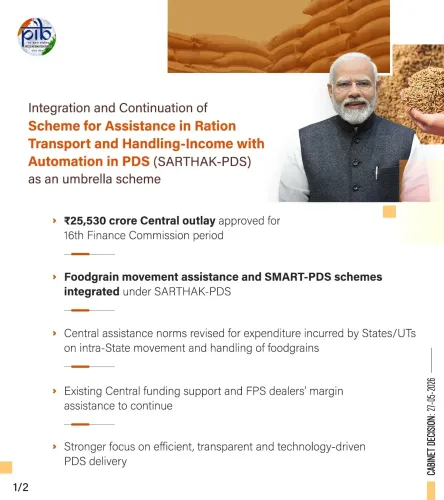
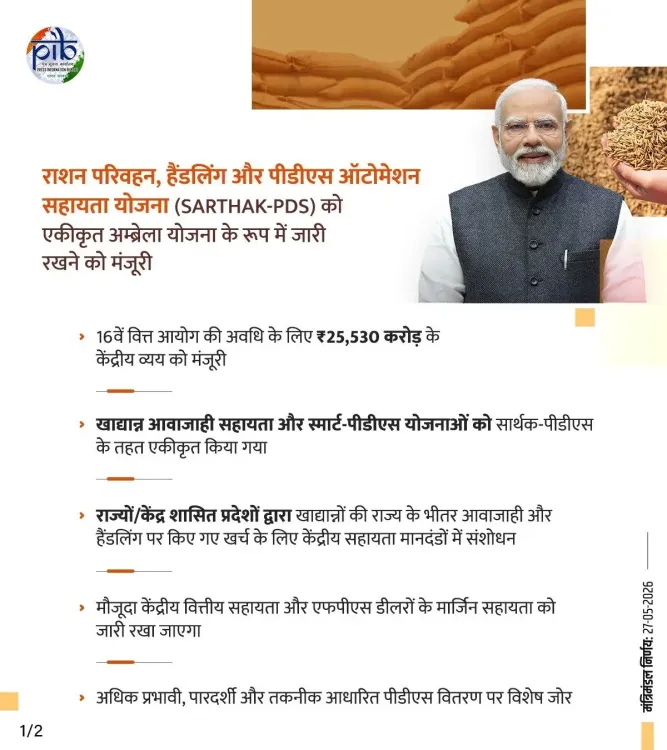
Uttarakhand Chief Minister Pushkar Singh Dhami on 27 May 2026 hailed the Union Cabinet's approval of a ₹25,530 crore PDS revamp, saying it will strengthen food security, improve ration-shop infrastructure, and deliver transparent grain distribution to crores of poor families through technology-enabled reforms.
Key Takeaways
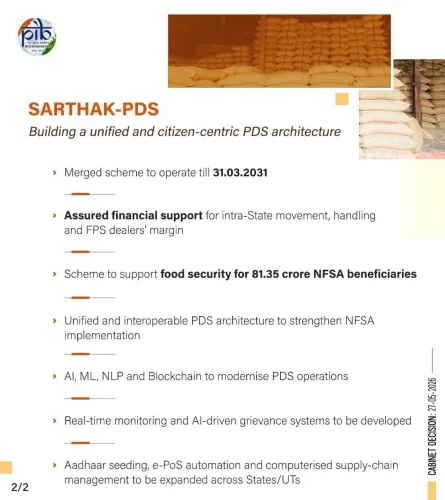
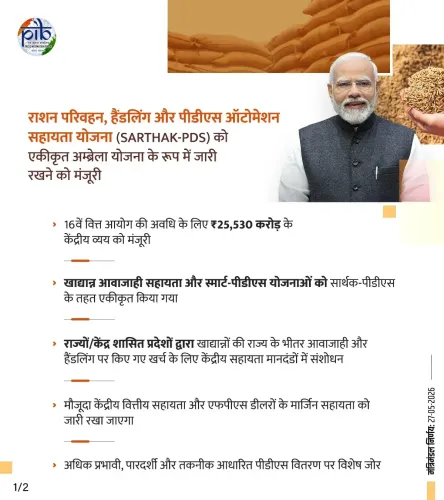
The Union Cabinet approved a revamped PDS scheme worth ₹25,530 crore on 27 May 2026 .
CM Pushkar Singh Dhami credited the decision to PM Narendra Modi's leadership and called it a milestone for food security.
The scheme aims to make the Public Distribution System more transparent, effective, and technologically modern.
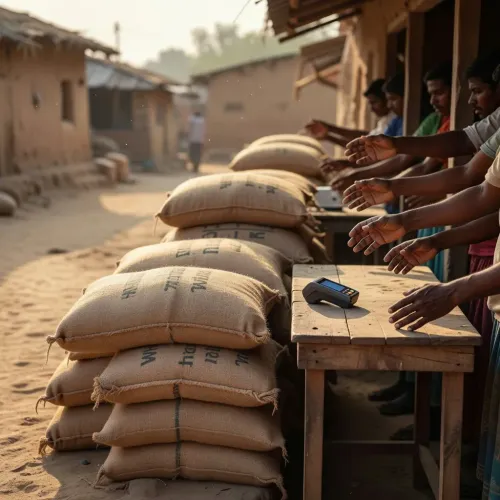
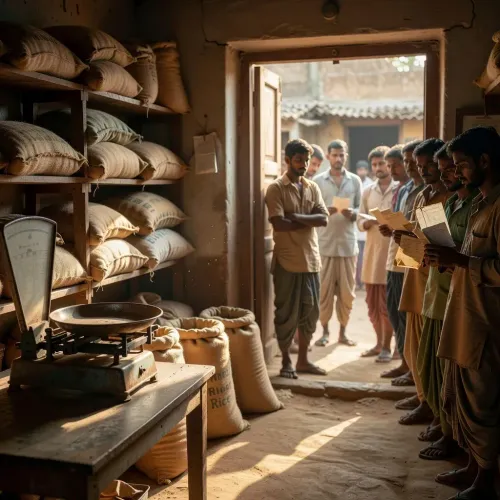
Fair price shops are set to receive new infrastructure support and better resources under the revamped framework.
The decision builds on India's National Food Security Act 2013 and over a decade of PDS computerisation efforts.
State-level implementation guidelines and fund-release schedules from the Department of Food and Public Distribution are awaited.
Uttarakhand Chief Minister Pushkar Singh Dhami on Wednesday, 27 May 2026 welcomed the Union Cabinet's approval of a revamped Public Distribution System (PDS) scheme worth ₹25,530 crore, calling it a landmark step toward food security and transparent grain delivery for crores of poor and needy families across India.
Context
Posting on X, CM Dhami credited the decision to Prime Minister Narendra Modi's 'capable and visionary leadership' (kusal evam doordarshi netritva). He described the cabinet approval as 'atyanth mahatvapurn aur jankalyanakari nirnay' — an extremely important and public-welfare decision — for millions of poor households. The post linked to an official government press release confirming the cabinet action.
In his statement, Dhami said the decision would prove to be a 'milestone' (mil ka patthar) in ensuring food security, transparent distribution, and modern facilities for citizens. He also underlined that ration shops would receive new strength and better resources under the revamped scheme.
Policy Backdrop
India's Public Distribution System is the world's largest food security network, operating under the National Food Security Act (NFSA) of 2013, which legally entitles priority households — roughly two-thirds of the population — to subsidised grain. The system covers hundreds of millions of beneficiaries through a network of fair price shops nationwide.
Successive central governments have pushed end-to-end computerisation of PDS since 2012–13, introducing digitised beneficiary lists, Aadhaar seeding, and supply-chain tracking to curb leakage and ensure timely delivery. The latest ₹25,530 crore outlay signals a further push toward technology-enabled modernisation of the network.
The scheme aligns with the principle of Antyodaya — a foundational welfare philosophy aimed at uplifting the person standing in the last row of society — which Dhami explicitly invoked in his post, noting that the central government 'continuously works to deliver development and facilities to the last person in society.'
Stakeholders and Impact
The primary beneficiaries are priority households and Antyodaya Anna Yojana cardholders — among the poorest segments of the population — who depend on fair price shops for subsidised foodgrains such as rice and wheat. Improved logistics and technology upgrades are expected to reduce diversion and ensure eligible beneficiaries receive their entitlements on time.
Fair price shop owners stand to benefit from better infrastructure and resources promised under the revamped scheme. State governments, including Uttarakhand, will be responsible for ground-level implementation once the Department of Food and Public Distribution notifies detailed guidelines and releases funds.
What's Next
Attention will now turn to the rollout timeline: state-level implementation guidelines and fund-release schedules are awaited from the Department of Food and Public Distribution. How quickly states operationalise the technology upgrades and infrastructure improvements at fair price shops will determine whether the scheme's transparency and efficiency goals are realised on the ground.
With Uttarakhand's own BJP government signalling strong support, the state is likely to be an early mover in aligning its PDS infrastructure with the new central framework — a development that could serve as a model for other hill states with dispersed, hard-to-reach beneficiary populations.
Point of View
530 crore PDS outlay fits a well-established pattern of the Modi government using large, technology-linked welfare announcements to reinforce its 'last-mile delivery' narrative ahead of electoral cycles. By invoking Antyodaya, both the Centre and state BJP leaders like Dhami are consciously tying the decision to a moral framework that transcends transactional politics — positioning the party as the inheritor of Deendayal Upadhyaya's philosophy. For Dhami, amplifying a central cabinet decision also serves a dual purpose: it aligns Uttarakhand's governance optics with New Delhi's welfare agenda while signalling administrative readiness to implement the scheme. The real test, however, will be whether the technology upgrades translate into measurable leakage reduction at the fair price shop level, where past digitisation drives have yielded uneven results across states.
NationPress
10 Oct 2026
Frequently Asked Questions
What is the ₹25,530 crore PDS scheme approved by the Union Cabinet?
The Union Cabinet approved a ₹25,530 crore scheme to revamp India's Public Distribution System, aimed at making food grain delivery more transparent, technology-driven, and efficient for crores of poor and eligible households across the country.
What did Uttarakhand CM Pushkar Singh Dhami say about the PDS cabinet decision?
CM Dhami welcomed the cabinet approval on 27 May 2026, calling it an extremely important and public-welfare decision that would prove to be a milestone in food security, transparent distribution, and modernisation of ration shops.
What is the Antyodaya principle mentioned in CM Dhami's post?
Antyodaya means 'upliftment of the last person' and is a foundational welfare philosophy in Indian policy. Dhami invoked it to emphasise the scheme's focus on reaching the poorest and most marginalised citizens.
How does the new PDS scheme relate to the National Food Security Act?
The National Food Security Act of 2013 provides the legal framework entitling roughly two-thirds of India's population to subsidised grain. The new ₹25,530 crore scheme builds on this by modernising the delivery infrastructure and improving transparency within the existing PDS network.
When will the revamped PDS scheme be implemented at the state level?
Implementation timelines depend on the Department of Food and Public Distribution notifying detailed guidelines and releasing funds to states. State governments, including Uttarakhand, will then align their fair price shop networks with the new framework.