CM Bhajan Lal Hails Rs 25,530 Cr Sarthak-PDS Scheme
Synopsis
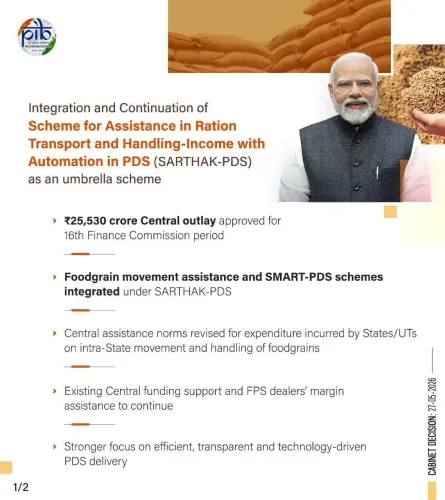
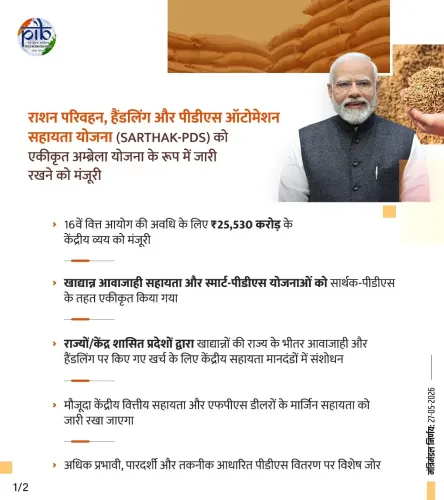
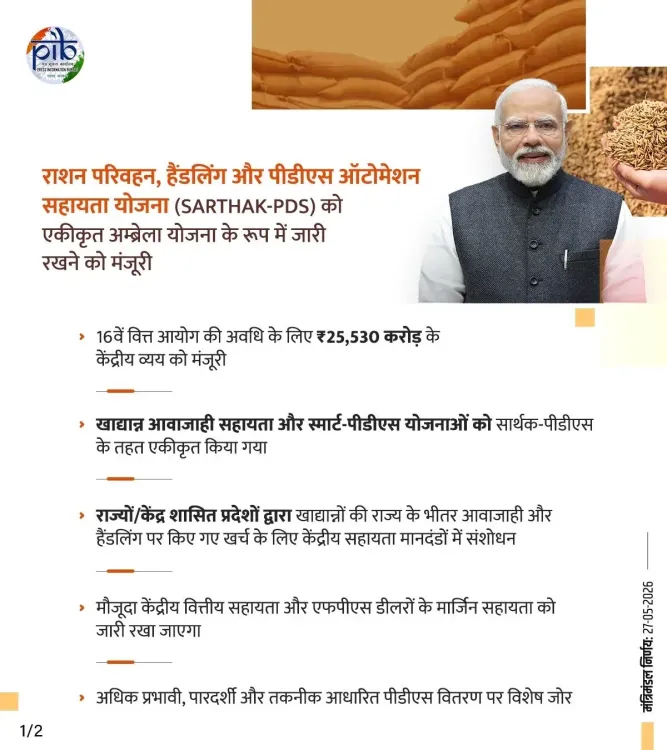
The Union Cabinet, chaired by PM Modi, approved the ₹25,530 crore Sarthak-PDS scheme to use AI and modern technology to plug leakages and ensure transparent, uninterrupted ration delivery to eligible beneficiaries. Rajasthan CM Bhajan Lal Sharma hailed the move as a landmark step in India's food security system.
Key Takeaways
The Union Cabinet chaired by PM Narendra Modi approved the 'Sarthak-PDS' scheme on 27 May 2026 .
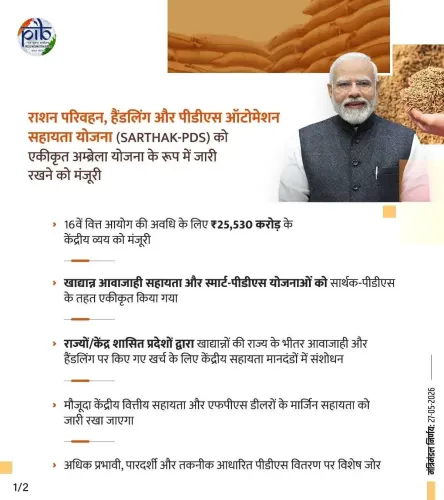
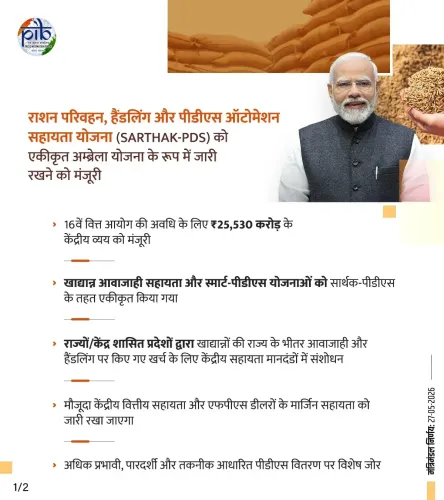
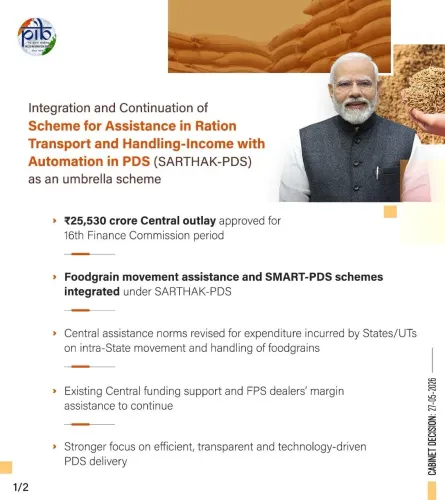
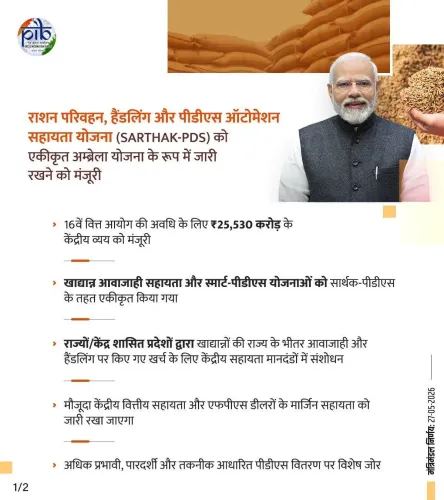
The scheme carries an outlay of ₹25,530 crore aimed at overhauling India's ration distribution network.
AI and modern technology will be deployed to stop leakages and ensure eligible persons receive subsidised foodgrains without interruption.
The scheme is framed around the Antyodaya philosophy of uplifting the poorest households covered under the National Food Security Act.
The approval builds on earlier PDS reforms including Aadhaar-linked biometric authentication and the One Nation One Ration Card portability initiative.
Rajasthan CM Bhajan Lal Sharma publicly welcomed the decision and expressed gratitude to the Prime Minister.
Rajasthan Chief Minister Bhajan Lal Sharma on Wednesday, 27 May 2026, welcomed the Union Cabinet's approval of the 'Sarthak-PDS' scheme, calling it a 'epoch-making step' in the country's food security architecture. The cabinet, chaired by Prime Minister Narendra Modi, cleared the scheme with an outlay of ₹25,530 crore. Sharma expressed gratitude to the Prime Minister for what he described as a decision dedicated to Antyodaya — the principle of uplifting the last person in the social order.
Context
In his post, Sharma stated that the scheme would bring 'transparency in the ration distribution system' and that 'the use of AI and modern technology will stop leakage and ensure uninterrupted supply of ration to eligible persons.' The announcement marks the latest in a series of technology-linked reforms to India's Public Distribution System (PDS), which operates under the National Food Security Act, 2013 and covers hundreds of millions of beneficiaries across the country.
The PDS has historically been plagued by diversion of subsidised foodgrains away from intended beneficiaries. Earlier reform efforts — including Aadhaar-linked biometric authentication from 2014 onward and the One Nation One Ration Card portability initiative rolled out between 2019 and 2021 — had already begun narrowing those gaps, but leakage remained a persistent concern.
Policy Backdrop
The Sarthak-PDS scheme, as described by Sharma, appears to deepen that reform trajectory by embedding artificial intelligence into the supply chain and distribution monitoring layer. This aligns with the central government's broader push to extend digital infrastructure — including electronic Point of Sale (e-PoS) devices at fair-price shops — into real-time oversight of grain movement.
The Antyodaya Anna Yojana, which provides heavily subsidised foodgrains to the poorest families, sits at the philosophical core of the new scheme's stated intent. By invoking Antyodaya in his post, Sharma framed the cabinet decision as a continuation of a welfare philosophy that traces back decades in Indian public policy.
Stakeholders and Impact
The primary beneficiaries are priority households and Antyodaya families enrolled under the National Food Security Act — a population running into hundreds of millions across urban and rural India. State food and civil supplies departments, which manage last-mile delivery through fair-price shops, will be central to implementation.
For Rajasthan, a large state with a significant rural and Below Poverty Line population, a technology-upgraded PDS could meaningfully reduce diversion at the district and block level. State governments will, however, need to align their existing infrastructure — including e-PoS networks and beneficiary databases — with whatever technical standards the Department of Food and Public Distribution notifies under the scheme.
What's Next
Attention will now shift to the rollout timeline, the specific AI tools and data protocols to be deployed, and how the ₹25,530 crore outlay will be phased across states. Integration with existing Aadhaar-seeded ration card databases and e-PoS infrastructure will determine how quickly the transparency gains materialise on the ground.
State-level uptake and the speed of technology onboarding at fair-price shops will be the key variables to watch as the scheme moves from cabinet approval to field implementation.
Point of View
And it signals that the central government views AI-driven supply chain monitoring as the next frontier in welfare delivery reform. By publicly endorsing the scheme, CM Bhajan Lal Sharma reinforces BJP's unified messaging on technology-linked governance — a theme that has defined the party's welfare narrative since the rollout of direct benefit transfers. The invocation of Antyodaya is politically deliberate, anchoring a large-ticket technology spend in a morally resonant, grassroots-facing idiom that appeals to the party's core rural constituency. The real test will be state-level execution, where bureaucratic capacity and e-PoS infrastructure gaps have historically slowed similar reform ambitions.
NationPress
21 Oct 2026
Frequently Asked Questions
What is the Sarthak-PDS scheme?
The Sarthak-PDS scheme is a central government initiative approved by the Union Cabinet with an outlay of ₹25,530 crore to modernise India's Public Distribution System using AI and modern technology to reduce leakages and ensure transparent ration delivery to eligible households.
How much money has been allocated to the Sarthak-PDS scheme?
The Union Cabinet approved ₹25,530 crore for the Sarthak-PDS scheme, as stated by Rajasthan Chief Minister Bhajan Lal Sharma in his post welcoming the cabinet decision.
How will AI be used in India's ration distribution system?
Under the Sarthak-PDS scheme, AI and modern technology are intended to monitor the supply chain, detect and stop leakages, and ensure that subsidised foodgrains reach only eligible beneficiaries without diversion.
What is Antyodaya and why is it linked to the Sarthak-PDS scheme?
Antyodaya is a welfare philosophy meaning 'upliftment of the last person,' institutionalised in India through the Antyodaya Anna Yojana which provides heavily subsidised foodgrains to the poorest families. CM Sharma described the Sarthak-PDS scheme as dedicated to this principle.
What earlier reforms preceded the Sarthak-PDS scheme?
Earlier PDS reforms include Aadhaar-linked biometric authentication introduced from 2014 onward and the One Nation One Ration Card portability scheme rolled out between 2019 and 2021, both aimed at reducing diversion of subsidised foodgrains.