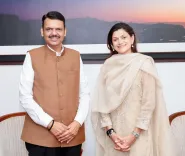
CM Rekha Gupta Hails Cabinet Nod for Sarthak-PDS Modernisation
Synopsis
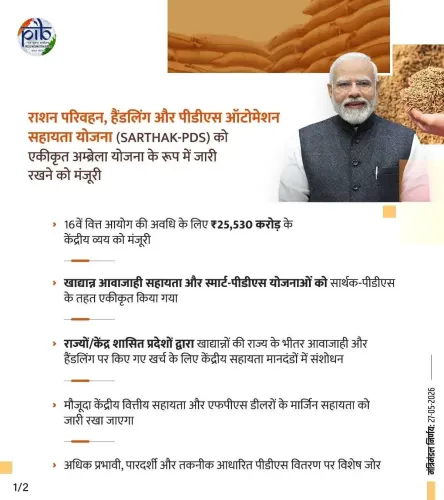
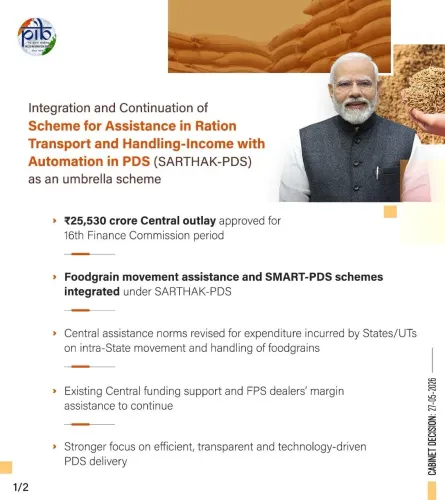
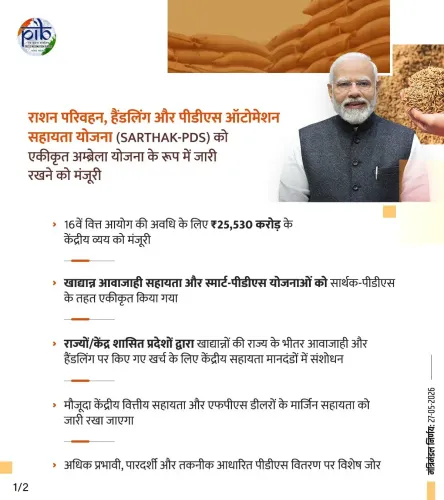
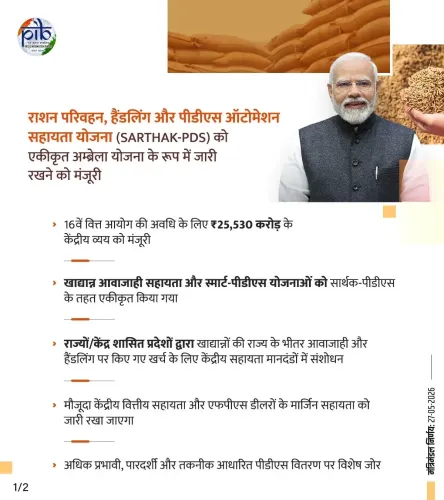
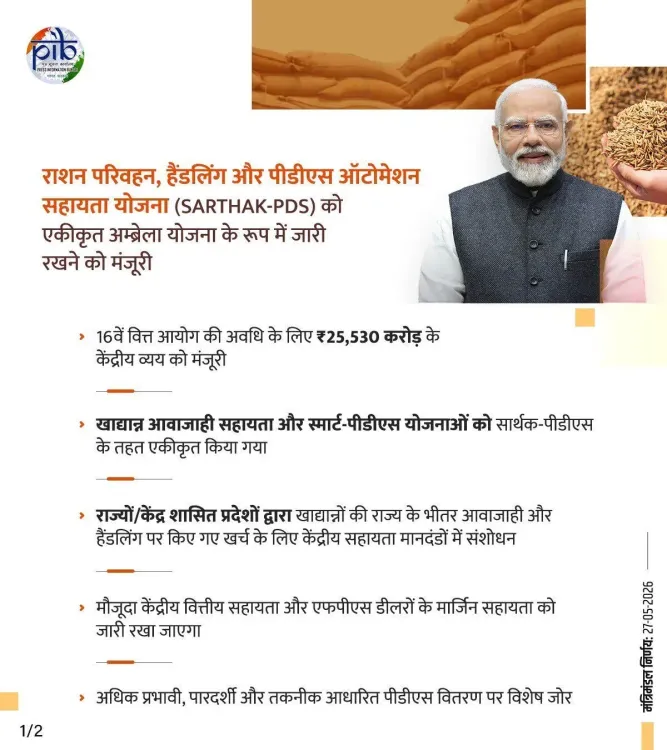
The Union Cabinet, chaired by PM Narendra Modi, approved the expansion and tech modernisation of the Sarthak-PDS scheme. Delhi CM Rekha Gupta welcomed the move, which will deploy AI, blockchain, GPS and QR codes to make subsidised food delivery leakage-free for over 80 crore beneficiaries.
Key Takeaways
The Union Cabinet chaired by PM Narendra Modi approved expansion and modernisation of the Sarthak-PDS scheme on 27 May 2026 .
The revamped system will use Artificial Intelligence, blockchain, GPS tracking , and QR codes to eliminate leakages in ration distribution.
Over 80 crore citizens covered under the National Food Security Act are set to benefit directly.
The decision includes an increase in honorarium for ration dealers and central financial support for state logistics costs .
The reform extends a decade-long trajectory that includes TPDS computerisation (2012) and One Nation One Ration Card (2021) .
Delhi CM Rekha Gupta publicly lauded the decision, calling it a visionary step dedicated to the welfare of the poor.
Delhi Chief Minister Rekha Gupta on Wednesday, 27 May 2026 welcomed a significant decision taken at the Union Cabinet meeting chaired by Prime Minister Narendra Modi, praising the approval of an expansion and technology-driven modernisation of the Sarthak-PDS scheme — a major overhaul of India's subsidised food distribution network that is set to benefit over 80 crore citizens.
Context
Gupta posted on X in Hindi, expressing gratitude to the Prime Minister for what she called a 'visionary and public-spirited decision dedicated to the welfare of the poor.' ('गरीब कल्याण को समर्पित इस दूरदर्शी एवं जनहितैषी निर्णय') Her post outlined three core pillars of the cabinet decision: technology integration, increased honorarium for ration dealers, and financial support to states for logistics costs.
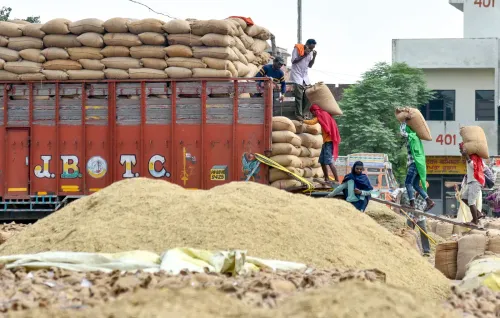
The Public Distribution System (PDS) is India's largest food security programme, operating under the National Food Security Act (NFSA) of 2013, which guarantees subsidised foodgrains to priority households across the country.
Policy Backdrop
According to Gupta's post, the revamped scheme will deploy Artificial Intelligence, blockchain, GPS tracking, and QR codes to make the ration distribution system fully transparent and leakage-free. The move builds on a decade-long trajectory of technology-enabled welfare reforms, including the End-to-End Computerisation of TPDS launched in 2012 and the nationwide rollout of One Nation One Ration Card portability from 2021.
The integration of Aadhaar and Direct Benefit Transfer mechanisms in food, fertiliser, and LPG subsidies has progressively reduced reported diversion rates in digitised states. The Sarthak-PDS modernisation extends this data-driven governance approach to the last mile of grain delivery.
The cabinet decision also includes a provision to increase the honorarium paid to ration dealers and to provide financial support to state governments for logistics expenditure — two long-standing demands from dealer associations and state food departments.
Stakeholders and Impact
The most direct beneficiaries are the more than 80 crore NFSA beneficiaries who rely on the PDS for subsidised rice, wheat, and other commodities. Leakage reduction through real-time GPS tracking of grain consignments and QR-code-based authentication at the point of sale is expected to improve actual delivery rates to eligible households.
Ration dealers — who number in the hundreds of thousands across India — stand to gain from the honorarium revision, which has not kept pace with inflation in many states. State food departments will receive additional central funding to manage the logistics of a modernised supply chain, easing a fiscal pressure that has historically led to delays in grain movement.
What's Next
Implementation will hinge on state-level rollout of QR-code scanners, GPS devices, and the underlying blockchain infrastructure at fair-price shops. The pace at which individual states integrate these systems with existing ration-card databases will determine how quickly the 80-crore beneficiary base experiences the change.
The revised dealer honorarium structure and the framework for central reimbursement of state logistics costs are expected to be detailed in follow-up notifications from the Ministry of Consumer Affairs, Food and Public Distribution. Political observers will watch whether the modernisation timeline is aligned with upcoming state assembly election cycles, given the scheme's direct reach into low-income households.
Point of View
Blockchain and GPS onto an existing entitlement framework, the Centre is attempting to convert a legacy subsidy programme into a data-driven system that is harder to game at the state level. For Delhi CM Rekha Gupta, amplifying a central cabinet decision on food security serves a dual purpose: it reinforces her alignment with the Modi government's welfare narrative while positioning the BJP in Delhi as a credible custodian of the urban poor's interests. The real test will be whether implementation timelines hold across politically diverse states, where infrastructure gaps and bureaucratic inertia have historically slowed similar reforms.
NationPress
11 Oct 2026
Frequently Asked Questions
What is the Sarthak-PDS scheme?
Sarthak-PDS is an initiative for the expansion and technology-driven modernisation of India's Public Distribution System, designed to make subsidised grain delivery fully transparent and leakage-free using tools such as AI, blockchain, GPS tracking and QR codes.
How many people will benefit from the Sarthak-PDS modernisation?
More than 80 crore citizens covered under the National Food Security Act are expected to benefit directly from the modernised ration distribution system.
What technologies will be used in the new PDS system?
The cabinet-approved plan calls for Artificial Intelligence, blockchain, GPS tracking , and QR codes to be integrated into the ration supply chain to prevent diversion and improve transparency.
What did the cabinet decide about ration dealers?
The cabinet decision includes a provision to increase the honorarium paid to ration dealers and to provide central financial support to states for logistics expenditure related to grain distribution.
Why did Delhi CM Rekha Gupta comment on a central cabinet decision?
As a BJP leader and Delhi Chief Minister , Rekha Gupta welcomed the decision on her official X account, calling it a visionary step dedicated to the welfare of the poor and expressing gratitude to Prime Minister Modi.