Yadav: Centre clears Sarthak-PDS scheme, Rs 25,530 cr outlay
Synopsis
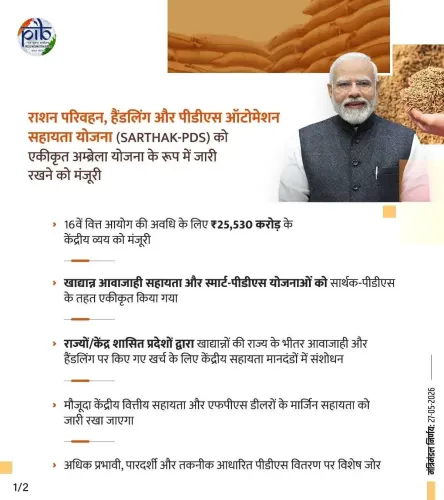
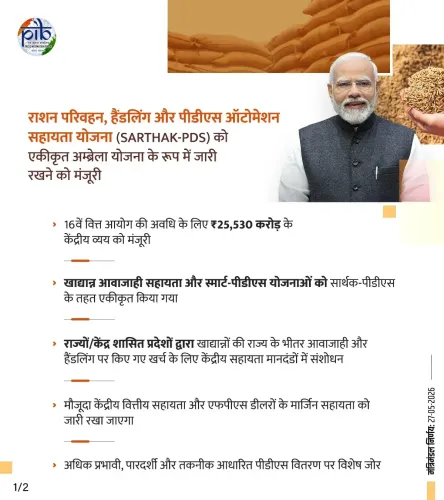
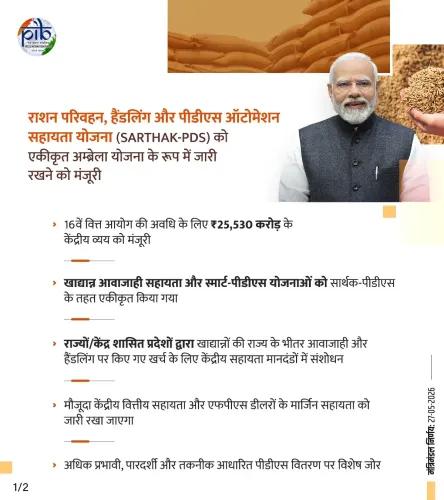
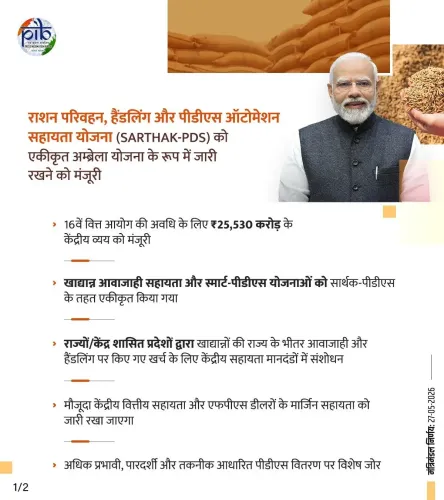
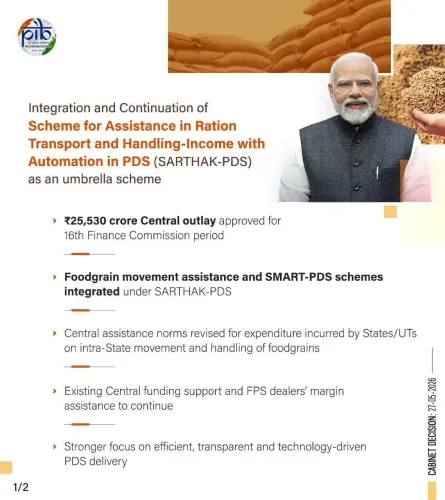
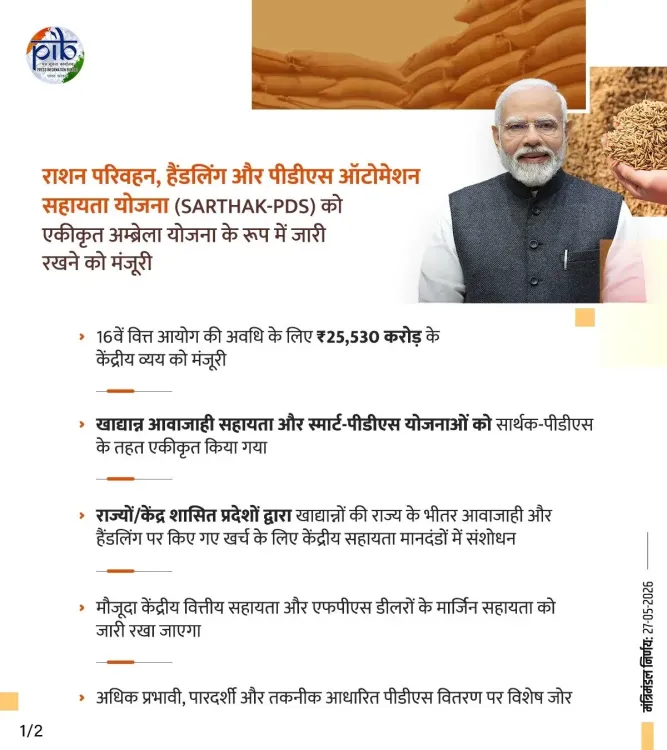
The Union Cabinet chaired by PM Modi has approved the Sarthak-PDS scheme with an Rs 25,530 crore outlay over five years. The scheme integrates ration transport, food grain distribution, and smart PDS mechanisms to strengthen last-mile food security delivery across India.
Key Takeaways
The Union Cabinet, chaired by PM Narendra Modi , approved the Sarthak-PDS scheme on 27 May 2026 .
The scheme carries a total outlay of Rs 25,530 crore to be deployed over five years .
It integrates ration transport , food grain distribution , and smart PDS mechanisms into a unified framework.
The stated goal is to ensure food security reaches the last beneficiary in the delivery chain.
The scheme builds on earlier reforms including One Nation One Ration Card and PM Garib Kalyan Anna Yojana .
State food departments and their logistics agencies are the primary implementation partners.
Union Environment Minister Bhupender Yadav on Wednesday, 27 May 2026 announced that the Union Cabinet, chaired by Prime Minister Narendra Modi, has approved the Sarthak-PDS scheme — a comprehensive overhaul of the Public Distribution System — with an outlay of Rs 25,530 crore to be spent over the next five years.
Context
Posting on X in Hindi, Yadav wrote: 'पीएम श्री नरेंद्र मोदी जी की अध्यक्षता में केंद्र सरकार ने सार्थक-पीडीएस योजना को स्वीकृति दी' — ('The central government, under the chairmanship of PM Narendra Modi, has approved the Sarthak-PDS scheme'). He added that the scheme would integrate ration transport, food grain distribution, and smart PDS mechanisms to ensure food security reaches the last person.
The announcement was accompanied by a link to an official Press Information Bureau release, signalling a formal Cabinet decision rather than a policy proposal.
Policy Backdrop
India's Public Distribution System operates under the framework of the National Food Security Act, 2013, which guarantees subsidised food grains to approximately 67 per cent of the country's population. Successive governments have pursued PDS modernisation through Aadhaar seeding, digitisation of beneficiary records, and technology-driven monitoring to reduce leakages and improve targeting.
The One Nation One Ration Card scheme, rolled out in phases from 2019 onwards, enabled inter-state portability of ration entitlements — allowing migrant workers and mobile households to access their benefits anywhere in the country. The PM Garib Kalyan Anna Yojana, launched in 2020 during the COVID-19 pandemic, further expanded free food grain distribution and was extended in subsequent years. Sarthak-PDS appears to build on this lineage by consolidating logistics, distribution tracking, and smart delivery into a single integrated architecture.
Stakeholders and Impact
The scheme's primary beneficiaries are PDS ration card holders across India — hundreds of millions of households that depend on the system for subsidised wheat, rice, and other essential commodities. State food departments and their supply-chain agencies will be key implementation partners, as the scheme involves upgrading transport and last-mile delivery infrastructure.
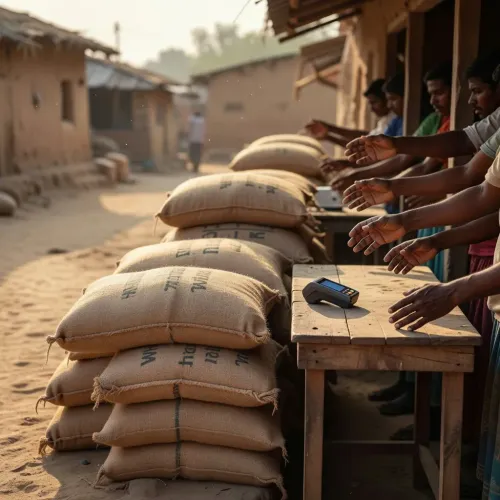
The integration of 'smart PDS' mechanisms — likely encompassing real-time tracking of grain movement, electronic point-of-sale devices at fair-price shops, and data dashboards — is aimed at closing gaps between central allocations and actual household-level delivery. If executed effectively, the Rs 25,530 crore investment could significantly reduce diversion and ghost-beneficiary fraud that have historically plagued the system.
What's Next
Attention will now shift to state-level rollout timelines and the pace of technology adoption, particularly the deployment of smart PDS dashboards and transport-tracking systems. Parliamentary scrutiny — through questions, standing-committee reviews, and Comptroller and Auditor General audits — will be the primary accountability mechanism for fund utilisation over the five-year window.
With food security remaining a politically sensitive issue ahead of multiple state assembly cycles, the pace and visibility of Sarthak-PDS implementation is likely to feature prominently in both government messaging and opposition critique in the months ahead.
Point of View
Consolidating a decade of incremental PDS reforms — Aadhaar seeding, ration portability, free grain distribution — into a single funded programme. The Rs 25,530 crore outlay signals that the Centre views last-mile delivery failure, not entitlement design, as the remaining weak link in food security. Politically, the announcement gives the BJP a concrete welfare deliverable to campaign on across states where PDS penetration and reliability are ballot-box issues. The real test will be whether state governments, which operate the fair-price shop networks, can absorb and deploy the technology upgrades at the pace the scheme envisions.
NationPress
11 Oct 2026
Frequently Asked Questions
What is the Sarthak-PDS scheme approved by the Union Cabinet?
Sarthak-PDS is a central government scheme approved on 27 May 2026 that integrates ration transport, food grain distribution, and smart PDS technology to strengthen last-mile delivery of subsidised food grains under India's Public Distribution System.
How much money has the government allocated for the Sarthak-PDS scheme?
The Union Cabinet has approved an outlay of Rs 25,530 crore for the Sarthak-PDS scheme, to be spent over the next five years.
Who announced the Sarthak-PDS scheme?
Union Environment Minister Bhupender Yadav announced the Cabinet approval on X on 27 May 2026, noting that the decision was taken under the chairmanship of Prime Minister Narendra Modi.
How is Sarthak-PDS different from One Nation One Ration Card?
One Nation One Ration Card focused on inter-state portability of ration entitlements for migrant workers. Sarthak-PDS is broader, integrating the logistics of grain transport, distribution tracking, and smart delivery technology into a single programme to improve overall system efficiency.
Which beneficiaries will be covered under the Sarthak-PDS scheme?
The scheme targets all existing PDS ration card holders — hundreds of millions of households across India who receive subsidised food grains under the National Food Security Act, 2013.