Sitharaman: India's GCC era shifts from scale to strategic leadership
Synopsis
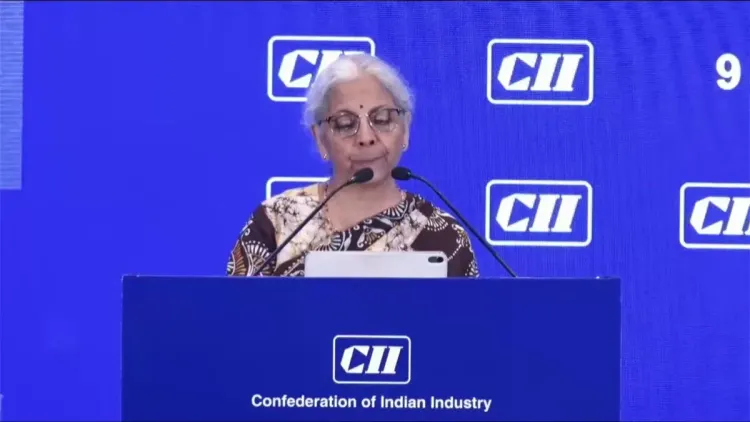
Finance Minister Nirmala Sitharaman told the CII National GCC Business Summit 2026 that India's three-decade GCC story has matured beyond scale metrics. She argued the country must now pursue strategic leadership, not just capacity, in Global Capability Centres.
Key Takeaways
Nirmala Sitharaman addressed the CII National GCC Business Summit 2026 on 9 July 2026 , reframing India's GCC narrative.
She stated that for nearly three decades , India measured GCC success by the number of centres, professionals and value of services — metrics she now considers insufficient.
The Finance Minister declared that India has 'convincingly answered' whether it can host Global Capability Centres and must now pursue strategic leadership.
India's GCC ecosystem evolved from post- 1991 liberalisation-era captive centres focused on cost arbitrage to higher-value R&D, analytics and global command functions.
The remarks have implications for MNCs , the IT and knowledge workforce , and state governments shaping GCC incentive policies.
Further remarks from the same speech are expected, flagged as a thread on the official handle.
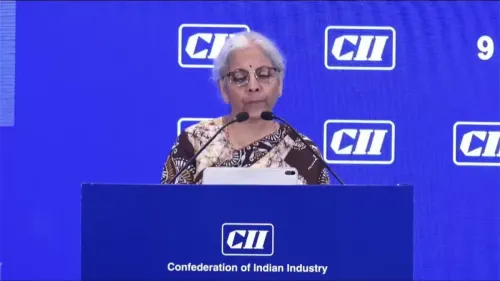
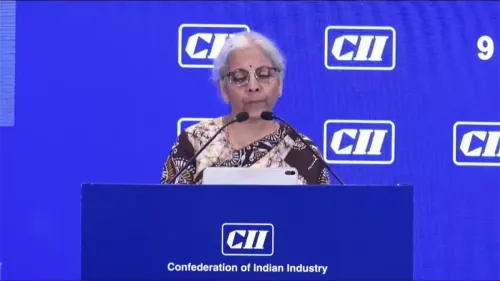
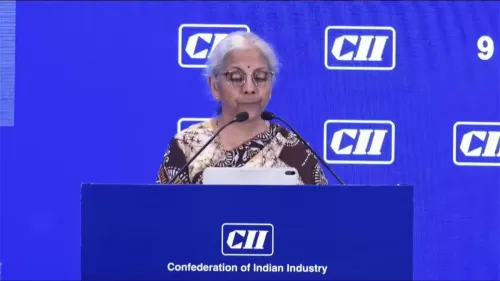
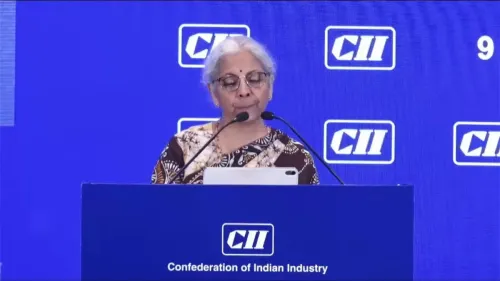
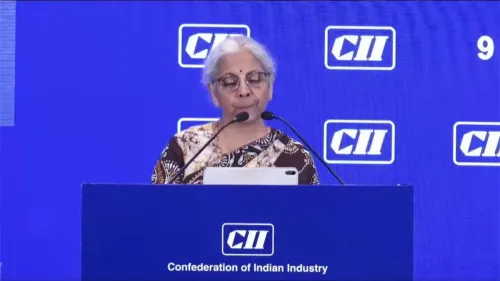
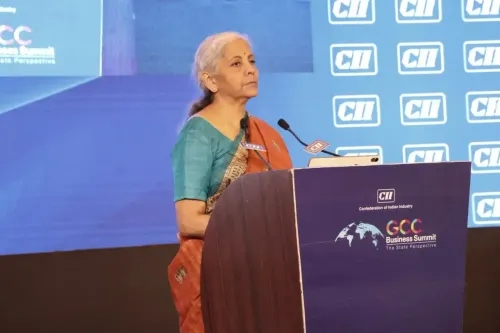
Union Finance Minister Nirmala Sitharaman on Thursday, 9 July 2026 declared that India has crossed a defining threshold in its Global Capability Centre journey — moving beyond the decades-long race to accumulate numbers toward a new phase of strategic value creation. She made the remarks at the CII National GCC Business Summit 2026, organised by the Confederation of Indian Industry.
Context
Speaking at the summit, Sitharaman argued that for nearly three decades, India measured its GCC success by the volume of centres established, professionals employed and the value of services delivered. 'Every mature ecosystem eventually reaches a point where scale alone is no longer the defining measure of success,' she said. 'I believe India has reached that point.'
Her central assertion was unambiguous: 'The question before us is no longer whether India can host Global Capability Centres. We have answered that convincingly.' The statement signals a deliberate reframing of the national conversation around GCCs — from capacity-building to strategic leadership.
Policy Backdrop
India's GCC ecosystem traces its origins to the post-1991 economic liberalisation, which opened the doors to foreign direct investment in information technology and services. Early captive centres — then called Global In-house Centres — were largely driven by labour-cost arbitrage, handling back-office and business-process functions for multinational parents.
Over the following two decades, the sector progressively absorbed higher-value work: engineering research and development, product design, advanced analytics and, more recently, global command functions. This trajectory has been supported by successive governments through FDI liberalisation, tax incentives and large-scale skills programmes, without prescribing operational models to individual firms. The CII National GCC Business Summit 2026 represents one of the most prominent industry forums where this policy direction is articulated at the ministerial level.
Stakeholders and Impact
The shift Sitharaman described carries significant implications for multinational corporations operating Indian GCCs, the knowledge and IT workforce, and state governments competing to attract high-value centre investments. For MNCs, it signals an expectation — and an opportunity — to delegate more complex, decision-influencing mandates to their Indian units rather than treating them purely as cost centres.
For professionals inside these centres, the pivot toward strategic roles could translate into higher-skilled job profiles, greater ownership of global products, and enhanced career trajectories. State governments, many of which have crafted dedicated GCC policies in recent years, are likely to recalibrate incentive structures to attract centres that promise quality of output over sheer headcount.
What's Next
The Finance Minister's address at the CII summit is the first in a series of remarks flagged as '1/n' on the official handle, suggesting that more detailed policy positions or data points from the same speech are expected to follow. Observers will watch closely for any central incentives in subsequent Union Budgets that formalise this strategic pivot, as well as industry data tracking the share of higher-value versus volume work performed inside Indian GCCs.
The broader signal from New Delhi is that India no longer wishes to be defined solely by the size of its services delivery machine — it wants a seat at the table where global strategy is made.
Point of View
Centre count, export value — to questions of strategic influence and global decision-making authority. This framing aligns with a broader governmental push to position India not just as a services delivery hub but as an innovation and leadership node in global value chains. The '1/n' thread format suggests this is a structured policy communication campaign, not a one-off remark, hinting at a coordinated messaging effort ahead of potential Budget announcements. If backed by concrete fiscal or regulatory measures, this pivot could reshape how both MNCs and state governments design their GCC strategies going forward.
NationPress
9 Jul 2026
Frequently Asked Questions
What did Nirmala Sitharaman say at the CII GCC Summit 2026?
Finance Minister Nirmala Sitharaman said India's GCC story has matured beyond measuring success by scale — number of centres, employees or service value — and that the country must now pursue strategic leadership in Global Capability Centres.
What is a Global Capability Centre (GCC) in India?
A Global Capability Centre is a captive unit set up by a multinational company in India to deliver services ranging from IT and back-office functions to advanced R&D, analytics and global product development for the parent organisation.
How many GCCs are there in India?
India hosts one of the world's largest concentrations of Global Capability Centres operated by multinational firms, a position built over nearly three decades since economic liberalisation in 1991. Precise current figures were not specified in the minister's remarks.
What is the CII National GCC Business Summit?
The CII National GCC Business Summit is a flagship industry platform organised by the Confederation of Indian Industry that brings together policymakers, MNC executives and industry leaders to discuss the direction of India's GCC ecosystem.
What does India's GCC policy shift from scale to strategy mean?
It means the government and industry are moving the benchmark for success away from how many centres exist or how many people they employ, toward the quality and strategic importance of the work performed — including global R&D, product leadership and command-centre functions.