Bihar CM Office Directs Warehouse Quality Overhaul, Lauds Online PDS
Synopsis
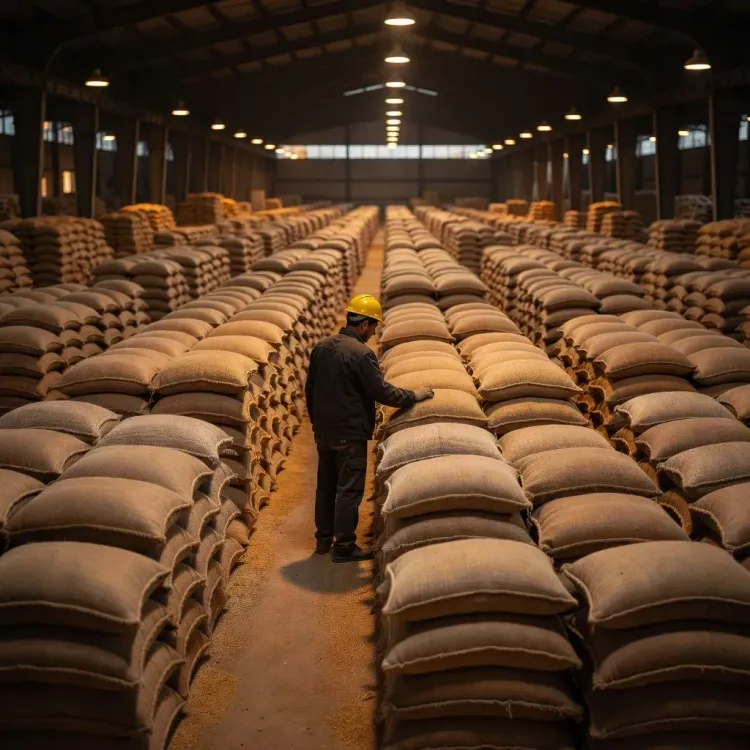
The Chief Minister's Office of Bihar on 9 July 2026 directed that all state warehouses be prioritised for quality, capacity, security, and maintenance, while commending Bihar's outstanding online PDS performance and calling for the system to be made more robust and transparent.
Key Takeaways
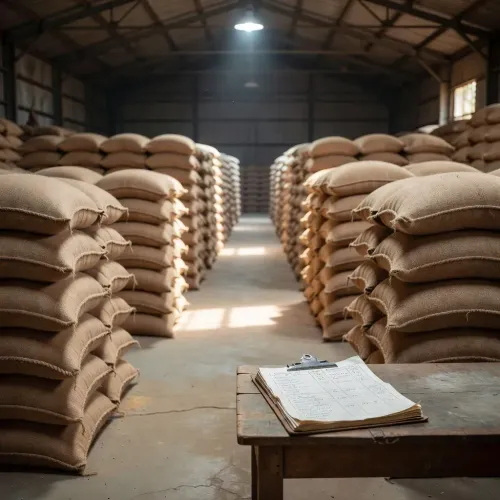
The Chief Minister's Office of Bihar issued directions on 9 July 2026 to give the highest priority to the quality, capacity, security, and maintenance of all state warehouses.
Bihar's performance in running its online Public Distribution System (PDS) was specifically commended as outstanding.
The directive calls for the online PDS to be made further robust and transparent .
Bihar began computerising its PDS in 2011–12 under the National Food Security Act framework, including Aadhaar seeding and SMS-based tracking.
The Bihar State Warehousing Corporation is the key agency responsible for food grain storage underpinning the PDS supply chain.
The move aligns with a national pattern of states adopting technology-enabled welfare delivery to curb leakage and improve last-mile food security.
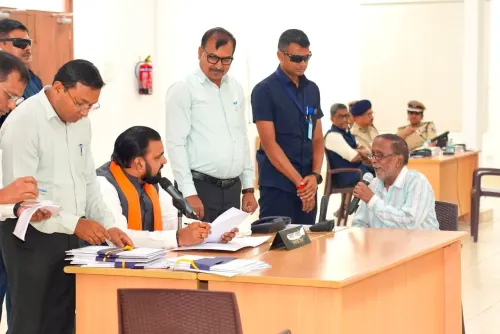
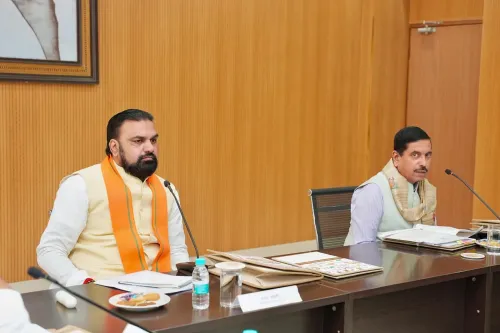
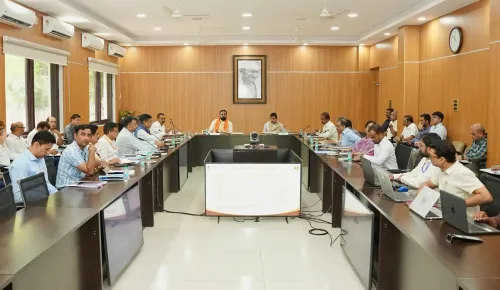
The Chief Minister's Office of Bihar on Thursday, 9 July 2026 issued directions to prioritise the quality, capacity, security, and maintenance of all state warehouses to the highest level, while also commending Bihar's outstanding performance in operating its online Public Distribution System and calling for the system to be made further robust and transparent.
Context
The post, shared from the official handle of the Chief Minister's Office, states that an official — referred to as 'he' — gave instructions to make the quality, capacity, security, and upkeep of all warehouses in the state a top priority. The original Hindi reads: 'उन्होंने राज्य के सभी वेयरहाउसों की गुणवत्ता, क्षमता, सुरक्षा एवं रखरखाव को सर्वोच्च प्राथमिकता देने के निर्देश दिए' ['He directed that the quality, capacity, security and maintenance of all warehouses in the state be given the highest priority']. The same official praised Bihar's exemplary performance in running the online PDS and stressed the need to make the system even stronger and more transparent.
Policy Backdrop
Bihar began large-scale computerisation of its Public Distribution System in 2011–12, introducing online allocation, Aadhaar seeding of ration cards, and SMS-based supply-chain tracking under the National Food Security Act framework. The Bihar State Warehousing Corporation is the nodal agency responsible for storing food grains procured under central and state schemes; the quality of its infrastructure directly determines the extent of leakage, spoilage, and diversion in the PDS supply chain. Chief Minister Nitish Kumar, who has led the state since 2005, has overseen multiple rounds of PDS reform aimed at reducing pilferage and improving last-mile delivery to beneficiaries.
Across India, multiple states have migrated from manual to technology-enabled PDS platforms since 2013, a shift that has been broadly credited with reducing diversion of subsidised grain. Bihar's reported improvements in grievance redressal and delivery efficiency place it within this national pattern of digitally-driven welfare reform.
Stakeholders and Impact
The directive has direct implications for the millions of PDS beneficiaries in Bihar who depend on subsidised grain allocations for food security. Food grain transporters and logistics contractors tied to the state warehousing network are also directly affected, as enhanced maintenance and security standards will raise operational benchmarks. Improved warehouse conditions reduce the risk of grain spoilage and theft, ensuring that entitlements reach beneficiaries intact and on time.
The emphasis on transparency in the online PDS is also significant for civil-society groups and government auditors who monitor leakage rates and beneficiary coverage. A more robust digital system would strengthen accountability at every node of the supply chain, from procurement to doorstep delivery.
What's Next
Observers will watch for the release of the next round of state-wise PDS performance rankings by the central government, which would formally benchmark Bihar's progress against other states. Any follow-up budget announcements earmarked for warehouse upgradation in Bihar will be a concrete indicator of how the government intends to back this directive with financial resources. The direction to further strengthen the online PDS also signals that additional technology or grievance-redressal features could be rolled out in the near term.
Point of View
The government is also building a political narrative around governance efficiency — a theme that has been central to Nitish Kumar's brand since the early 2000s. The dual focus on physical infrastructure (warehouse quality) and digital systems (online PDS) reflects a maturing understanding that technology alone cannot plug leakages if storage facilities are substandard. Whether this directive translates into measurable budget allocations for warehouse upgradation will be the real test of intent.
NationPress
8 Oct 2026
Frequently Asked Questions
What did the Bihar CM's Office direct regarding state warehouses?
The Chief Minister's Office of Bihar directed on 9 July 2026 that the quality, capacity, security, and maintenance of all state warehouses be given the highest priority, aiming to improve food grain storage standards across the state.
How is Bihar's online Public Distribution System performing?
The Chief Minister's Office commended Bihar's outstanding performance in operating its online PDS, citing it as a model to be made even more robust and transparent. Bihar began digitising its PDS in 2011–12, introducing online allocation and Aadhaar-linked ration cards.
What is the Bihar State Warehousing Corporation?
The Bihar State Warehousing Corporation is the state agency responsible for storing food grains procured under central and state schemes. Its infrastructure quality directly affects leakage, spoilage, and the efficiency of PDS delivery to beneficiaries.
Why is warehouse quality important for the PDS in Bihar?
Warehouse quality is critical because poor storage conditions lead to grain spoilage and theft, which reduce the quantity and quality of subsidised food that reaches PDS beneficiaries. Better-maintained warehouses help ensure entitlements are delivered intact.
What is India's National Food Security Act and how does it relate to Bihar's PDS?
The National Food Security Act provides the legal framework under which subsidised food grains are distributed to eligible households across India. Bihar has used this framework since 2011–12 to computerise its PDS, seeding ration cards with Aadhaar and introducing SMS-based supply-chain tracking to reduce diversion.