Sitharaman: India Now Sets Up One GCC Per Day
Synopsis
Union Finance Minister Nirmala Sitharaman told the CII National GCC Business Summit 2026 that India now sets up one Global Capability Centre every day — up from one per week in 2024 — and hosts more than half the world's GCCs, with over half of new centres being AI-first.
Key Takeaways
India is now establishing one new GCC every day , accelerating from one per week in 2024 .
India hosts more than half of all Global Capability Centres worldwide.
More than half of new GCCs being set up are AI-first .
Engineering Research and Development (ERD) is one of the fastest-growing capability areas within India's GCC ecosystem.
New GCCs are increasingly handling AI, Cybersecurity, Product Architecture, Financial Innovation and enterprise-wide transformation — a marked shift from earlier back-office roles.
Finance Minister Sitharaman made the remarks at the CII National GCC Business Summit, 2026 on 9 July 2026 .
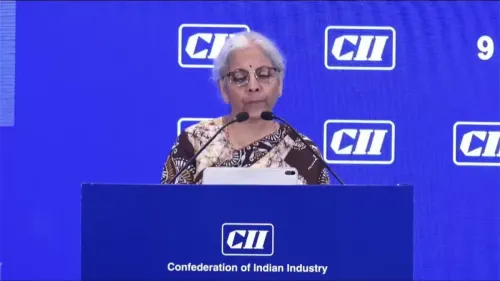
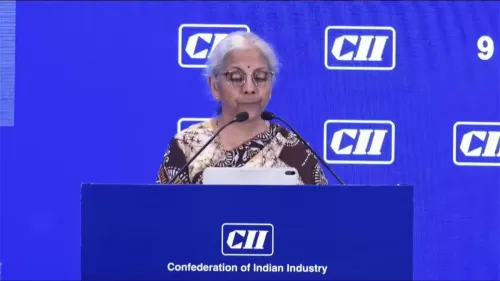
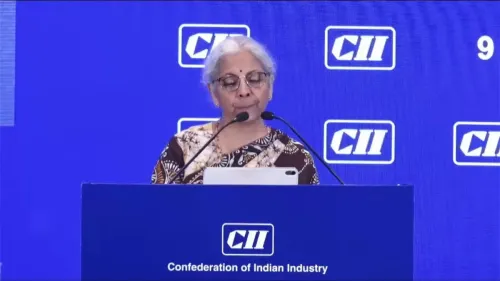
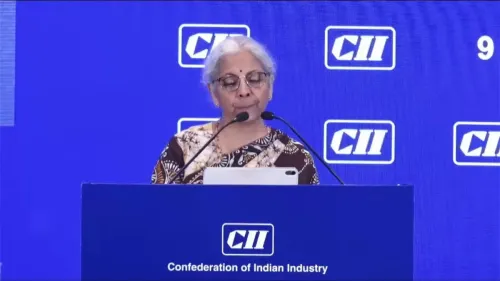
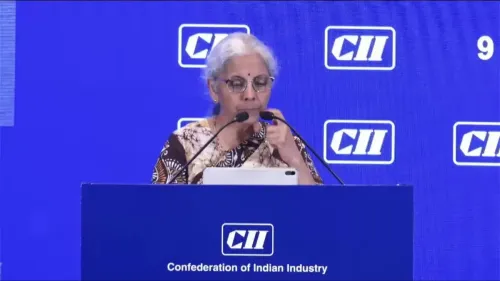
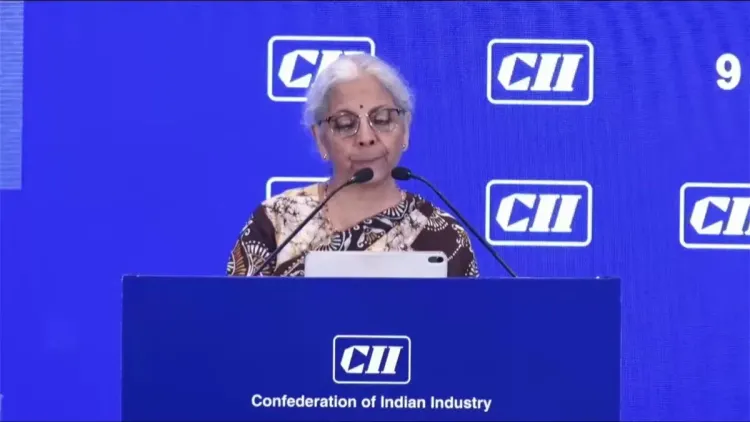
Union Finance Minister Nirmala Sitharaman on Thursday, 9 July 2026, said India is now establishing one new Global Capability Centre (GCC) every day, up from one per week in 2024, and that the country hosts more than half of all GCCs worldwide. She made the remarks while addressing the CII National GCC Business Summit, 2026, in her capacity as the country's top economic policymaker.
Context
Speaking at the summit organised by the Confederation of Indian Industry (CII), Sitharaman highlighted a sharp acceleration in GCC formation, noting that India's share of the global GCC footprint now exceeds 50 per cent. 'Few countries in modern economic history have built an innovation ecosystem of this scale and sophistication in such a short period,' she said.
She also drew a distinction between the GCCs of the past and those being established today, arguing that the newer centres are fundamentally different in their mandate and strategic importance to parent corporations.
Policy Backdrop
India's GCC trajectory stretches back to the Software Technology Parks of India (STPI) scheme launched in 1991, which provided early infrastructure and fiscal incentives that attracted multinational IT and R&D operations. The Digital India programme, initiated in 2015, further deepened digital infrastructure and skills pipelines, enabling GCCs to take on progressively higher-value functions.
The current wave, Sitharaman noted, is defined by capabilities in Artificial Intelligence (AI), Engineering Research and Development (ERD), Cybersecurity, Digital Platforms, Product Architecture, Financial Innovation, and Enterprise-wide Transformation. She underlined that more than half of new GCCs are now AI-first, and that Engineering Research and Development has emerged as one of the fastest-growing capability areas within the sector.
This shift from back-office and IT support functions — which characterised GCC activity in the 1990s and 2000s — to strategic global hubs for product development and innovation reflects both consistent policy openness to foreign direct investment and a sustained supply of engineering talent.
Stakeholders and Impact
The expansion directly benefits multinational corporations seeking to diversify technology operations amid global geopolitical supply-chain realignments, as well as India's large technology workforce. Industry bodies such as CII have positioned GCCs as a critical pillar of India's ambition to move up the global value chain beyond services exports.
The growing emphasis on AI and ERD within GCCs also has implications for domestic talent development, as demand rises for advanced engineering, data science, and cybersecurity professionals across metro and tier-2 cities alike.
What's Next
Attention will now turn to whether the government follows up with targeted policy measures — including potential incentives in the next Union Budget — to sustain and deepen the GCC momentum, particularly in areas such as semiconductor design and advanced AI research. The trajectory of the IndiaAI Mission and any new R&D-linked fiscal frameworks will be closely watched by industry and investors as indicators of whether policy intent translates into structural support for the next generation of capability centres.
Point of View
Innovation-led growth. By foregrounding AI-first mandates and engineering R&D, she is framing GCCs as proof points of India's readiness to compete at the frontier of the global technology economy — a narrative that also serves domestic political messaging around economic transformation. The acceleration from one GCC per week to one per day, if sustained, would represent a structural shift in how multinationals allocate strategic functions globally. The key policy test ahead is whether fiscal and regulatory frameworks keep pace with the ambition she has articulated.
NationPress
9 Jul 2026
Frequently Asked Questions
What is a GCC and why is India important for them?
A Global Capability Centre (GCC) is an offshore or nearshore unit set up by a multinational corporation to handle strategic functions such as technology, R&D, finance and operations. India is the world's leading GCC destination due to its large pool of engineering and technology talent, competitive costs, and decades of policy support starting with the Software Technology Parks of India scheme in 1991.
How many GCCs does India have in 2026?
Finance Minister Nirmala Sitharaman stated at the CII National GCC Business Summit 2026 that India hosts more than half of all GCCs worldwide and is now adding one new GCC every day, up from one per week in 2024. Precise total figures were not cited in the speech.
What did Nirmala Sitharaman say at the CII GCC Summit 2026?
Sitharaman said India's GCC formation rate has risen to one per day from one per week in 2024, that India hosts over half the world's GCCs, and that more than half of new centres are AI-first. She also highlighted Engineering Research and Development as one of the fastest-growing capability areas.
What functions are new GCCs in India focused on?
According to Sitharaman's remarks, new GCCs being established in India are increasingly focused on Artificial Intelligence, Engineering Research and Development, Cybersecurity, Digital Platforms, Product Architecture, Financial Innovation and enterprise-wide transformation — a significant shift from the back-office and IT support roles that defined earlier centres.
What government policies support GCC growth in India?
India's GCC ecosystem has been supported by the Software Technology Parks of India scheme launched in 1991 and the Digital India programme initiated in 2015, which expanded digital infrastructure and skills. The government's IndiaAI Mission and potential R&D-linked incentives in future Union Budgets are expected to further shape the sector's trajectory.