Pralhad Joshi Reviews PDS, Solar Schemes in Bihar
Synopsis
Union Minister Pralhad Joshi met Bihar's Chief Minister and officials in Patna on July 9 to review PDS delivery, consumer protection, and renewable energy schemes including PM Surya Ghar and PM-KUSUM, urging faster rooftop solar adoption and positioning Bihar for PM-KUSUM 2.0.
Key Takeaways
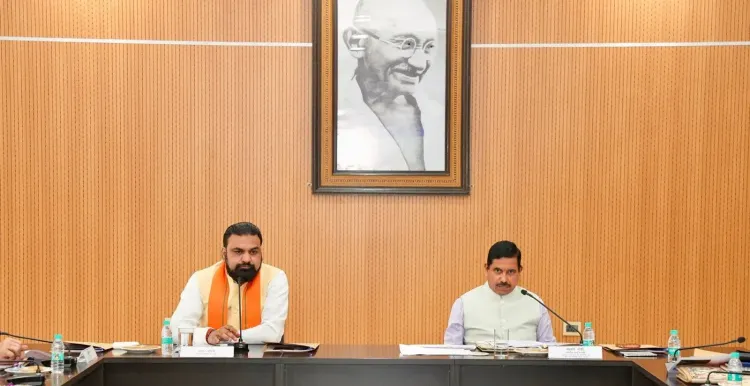
Union Consumer Affairs Minister Pralhad Joshi held review meetings in Patna on July 9, 2026 with Bihar's Chief Minister, senior officials, and District Magistrates.
The review covered Public Distribution System implementation, with emphasis on transparency in beneficiary delivery and consumer protection.
Joshi urged Bihar to adopt the utility-led aggregation model under PM Surya Ghar Muft Bijli Yojana and directed every District Magistrate to lead rollout in their district.
The minister asked the state to accelerate PM-KUSUM implementation to prepare for the upcoming PM-KUSUM 2.0 launch.
Joshi assured Bihar of the Centre's full support for state development priorities and public welfare initiatives.
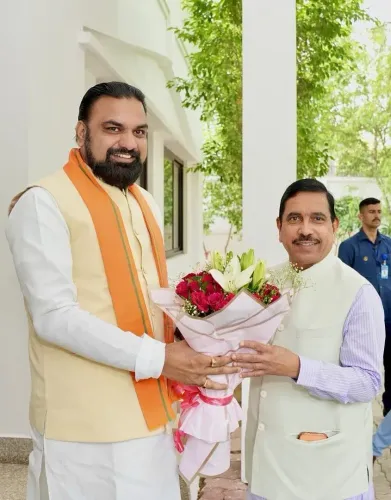
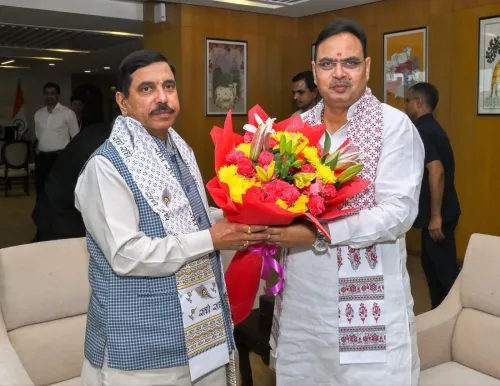
Union Consumer Affairs Minister Pralhad Joshi held high-level review meetings with Bihar's Chief Minister and senior state officials in Patna on Thursday, July 9, 2026, assessing the ground-level delivery of food security, consumer protection, and renewable energy programmes across the state.
Context
The meetings brought together Ashok Chaudhary, Shailesh Kumar, senior state officials, and District Magistrates from across Bihar, with the DMs joining virtually. Joshi reviewed the implementation of the Public Distribution System (PDS) — the national food security programme that delivers subsidised food grains through fair price shops — and consumer protection initiatives active in the state.
The minister emphasised the need to enhance transparency in beneficiary delivery and to strengthen safeguards for consumer interests. Bihar, with its large rural population, is among the states with a significant share of PDS-dependent households.
Policy Backdrop
On the energy side, Joshi reviewed Bihar's renewable energy roadmap with a particular focus on the PM Surya Ghar Muft Bijli Yojana, the Centre's flagship rooftop solar scheme that provides subsidised installations and free electricity to eligible households. He urged the state to adopt the utility-led aggregation model prescribed under the scheme and called on every District Magistrate to personally drive its rollout in their district.
Joshi also reviewed the status of PM-KUSUM — the Pradhan Mantri Kisan Urja Suraksha evam Utthaan Mahabhiyan — launched in 2019 to promote solar-powered irrigation and decentralised renewable energy for farmers. He asked Bihar to accelerate its PM-KUSUM implementation so the state is 'well positioned to benefit from PM-KUSUM 2.0 when it is launched,' according to his post on X.
Stakeholders and Impact
The review directly concerns PDS beneficiaries, Bihar's farming community, and district-level administrations tasked with on-ground delivery. The utility-led aggregation model under PM Surya Ghar is designed to streamline rooftop solar adoption by routing installations through state power utilities, reducing friction for individual households.
For farmers, PM-KUSUM offers solar pump installations that reduce dependence on grid electricity and diesel, cutting input costs. An accelerated state-level push could improve Bihar's readiness to absorb expanded benefits under a future PM-KUSUM 2.0 iteration.
Joshi assured the Bihar government of the Centre's full support in advancing the state's development priorities and implementing key public welfare initiatives, signalling continued federal coordination on scheme delivery.
What's Next
Attention will now turn to whether Bihar formally adopts the utility-led aggregation model for PM Surya Ghar and the pace at which District Magistrates mobilise implementation at the district level. Progress on rooftop solar installations and PM-KUSUM saturation in the state will be key metrics to watch.
Any formal announcement of guidelines or a launch timeline for PM-KUSUM 2.0 at the national level would directly affect the urgency of Bihar's preparatory groundwork, making the current review a forward-looking exercise in cooperative federalism.
Point of View
A tactic the Centre has increasingly favoured. The forward reference to PM-KUSUM 2.0 also suggests the Union government is preparing states for a phased upgrade, using current reviews to build implementation muscle ahead of a formal rollout.
NationPress
8 Oct 2026
Frequently Asked Questions
What did Pralhad Joshi review in Bihar on July 9 2026?
Pralhad Joshi reviewed the implementation of the Public Distribution System, consumer protection initiatives, and Bihar's renewable energy roadmap — including PM Surya Ghar rooftop solar and PM-KUSUM — during meetings in Patna with the Chief Minister and District Magistrates.
What is PM Surya Ghar Muft Bijli Yojana?
PM Surya Ghar Muft Bijli Yojana is a central government scheme that provides subsidised rooftop solar installations and free electricity to eligible households, with the utility-led aggregation model designed to streamline adoption through state power utilities.
What is PM-KUSUM and what is PM-KUSUM 2.0?
PM-KUSUM, launched in 2019, supports solar-powered irrigation and decentralised renewable energy for farmers. PM-KUSUM 2.0 is an anticipated upgraded version of the scheme; Joshi urged Bihar to accelerate current implementation to be ready when it is launched.
Why did Pralhad Joshi ask District Magistrates to lead PM Surya Ghar rollout?
Joshi called on every District Magistrate in Bihar to personally drive PM Surya Ghar implementation in their district, placing direct accountability at the collector level to accelerate rooftop solar adoption on the ground.
What assurance did the Centre give Bihar at the Patna review meeting?
Union Minister Pralhad Joshi assured the Bihar government of the Centre's full support in advancing the state's development priorities and implementing key public welfare initiatives across food security and renewable energy sectors.