CM Samrat Choudhary joins BJP's EVM-vs-ballot attack on Congress
Synopsis
Bihar Chief Minister Samrat Choudhary amplified Amit Shah's challenge to Rahul Gandhi on 13 October 2026, arguing that Congress has been rejected by voters under both EVM and ballot-paper systems — reigniting the long-running EVM integrity debate.
Key Takeaways
Bihar CM Samrat Choudhary posted on X on 13 October 2026 backing Amit Shah's challenge to Rahul Gandhi over EVM credibility.
The post argued that Congress has been rejected by voters whether elections use EVMs or ballot papers .
EVMs were first piloted in 1982 and deployed universally for Lok Sabha elections by 2004 .
The Supreme Court of India upheld EVM use with VVPAT in multiple judgments between 2013 and 2019 .
The BJP has consistently used Congress's ballot-paper losses to counter EVM-rigging allegations since 2014 .
As Bihar's chief minister, Choudhary's amplification signals the party's intent to keep this narrative active in the current political cycle.
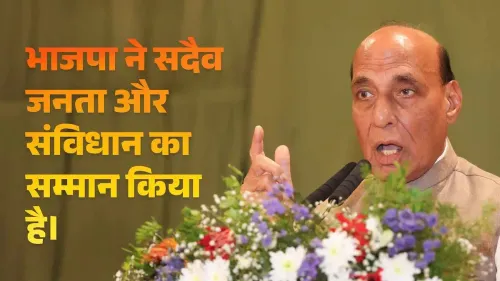
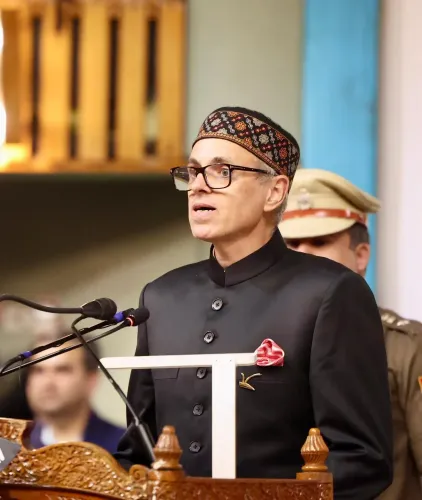
Whether votes are counted by machine or paper, Bihar Chief Minister Samrat Choudhary argued on Tuesday, 13 October 2026, the verdict has been the same: the public has repeatedly rejected the Congress. In a pointed post on X, Choudhary amplified a challenge posed by Union Home Minister Amit Shah to Congress leader Rahul Gandhi, demanding an answer to why the party's electoral fortunes have not improved even when ballots replace electronic machines.
The post, tagged #ShahExposesRahul, carried a video clip of Shah's remarks and asked in Hindi: 'EVM hो ya Ballot Paper, janta ne Congress ko nakara!' — 'Be it EVM or ballot paper, the public has rejected Congress!' The framing is a direct rebuttal to a line of opposition argument that has run for over a decade.
The EVM debate Congress cannot escape
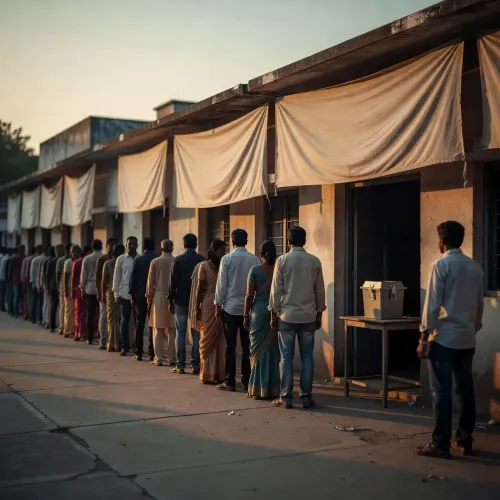
The Electronic Voting Machine controversy has simmered in Indian politics since Congress and other parties began questioning EVM integrity after the 2014 Lok Sabha defeat. The machines were first piloted in 1982 and became universal across national elections by 2004. The Supreme Court of India has upheld their use — including with Voter Verified Paper Audit Trail (VVPAT) slips — across multiple rulings between 2013 and 2019.
BJP's counter-argument is arithmetically blunt: Congress has also lost elections held under ballot-paper systems, in state after state. Shah's question, as amplified by Choudhary, essentially asks Rahul Gandhi to explain why the party's explanation should be trusted when the data cuts both ways.
Choudhary's signal from Patna
As a senior BJP leader and head of government in Bihar — one of India's most electorally consequential states — Choudhary's amplification of this message carries weight beyond a routine retweet. Bihar has been a battleground where both EVMs and political narratives are tested under intense scrutiny. His intervention signals that the BJP machinery intends to keep the 'Congress rejected by voters' frame alive in the current political cycle.
The exchange is combative, but its logic is straightforward: if the voting mechanism were truly responsible for Congress losses, ballot-paper contests should have produced different results. Choudhary is putting that question squarely back on the opposition's table — and waiting for an answer that, so far, has not come.
Point of View
It shifts the burden of proof onto Congress by pointing to losses that predate or bypass the machine altogether. The move reflects a well-worn BJP playbook — using the opposition's own argument as a trap. With state election cycles approaching, this kind of coordinated amplification from senior regional leaders suggests the party is preparing a sustained narrative offensive, not a one-off exchange. For Congress, the challenge is not just rhetorical — it must either defend its EVM position with new evidence or quietly let the argument go.
NationPress
14 Oct 2026
Frequently Asked Questions
What did Bihar CM Samrat Choudhary say about EVMs and Congress?
Choudhary argued on 13 October 2026 that voters have rejected Congress whether elections are held via EVMs or ballot papers, amplifying a challenge posed by Union Home Minister Amit Shah to Rahul Gandhi.
What is the BJP's argument against Congress's EVM complaints?
BJP leaders point out that Congress has also lost elections conducted via traditional ballot papers, not just EVM-based ones, making it difficult to attribute defeats solely to machine-related irregularities.
When were EVMs introduced in Indian elections?
Electronic Voting Machines were first piloted in India in 1982 and were deployed universally across all Lok Sabha constituencies by 2004.
Has the Supreme Court ruled on the legality of EVMs in India?
Yes. The Supreme Court of India upheld the use of EVMs, including with Voter Verified Paper Audit Trail (VVPAT) slips, in multiple judgments delivered between 2013 and 2019.
Why is Samrat Choudhary's statement on EVMs significant?
As Bihar Chief Minister and a senior BJP leader in one of India's most electorally important states, his public backing of Amit Shah's challenge signals coordinated party messaging on the EVM debate ahead of upcoming election cycles.