Sonowal launches credit risk insurance under National Shipbuilding Mission

Synopsis
Union Ports and Shipping Minister Sarbananda Sonowal has launched two credit risk insurance policies under the National Shipbuilding Mission — one for exports, one for domestic projects — aimed at giving Indian shipyards the financial confidence to build world-class vessels and compete globally.
Key Takeaways
Minister Sarbananda Sonowal announced two credit risk insurance policies on October 13, 2026 .
The policies are launched under the National Shipbuilding Mission and cover both export contracts and domestic shipbuilding projects .
The stated goal is to provide a 'vital safety net' so Indian yards can pursue orders without financial risk paralysis.
The initiative builds on the Sagarmala Project (2015), which identified shipbuilding as core to port-led development.
India faces stiff competition from South Korea and China , which dominate global shipbuilding output.
Real impact will depend on uptake by Indian shipyards and the capitalisation and competitiveness of the insurance mechanism.
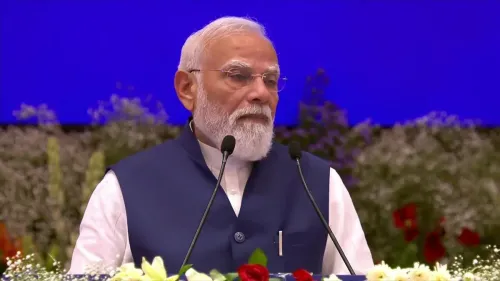
Two new credit risk insurance policies are now standing between Indian shipyards and the financial uncertainty that has long kept them from competing on the world stage. Union Ports and Shipping Minister Sarbananda Sonowal announced on Tuesday, October 13, 2026, that the government has launched the policies under the National Shipbuilding Mission — one covering exports, the other domestic projects — calling them a 'vital safety net' for Indian yards to build 'world-class vessels with total confidence.'
What the two policies actually do for Indian shipyards
Credit risk insurance is, in plain terms, a guarantee that money owed to a shipyard will not evaporate if a buyer defaults or a domestic project financing collapses. That single anxiety — the fear of a multi-year, capital-intensive build going unpaid — has historically pushed Indian yards to stay small and cautious. By underwriting that risk for both export contracts and home-market orders, the government is essentially removing the single biggest brake on order-book expansion.
The dual-track design matters. An export-focused policy signals to overseas buyers that Indian yards are backed by sovereign-level assurance, making them a more credible alternative to established players. The domestic policy simultaneously frees yards to take on large Indian Navy, Coast Guard, or commercial fleet orders without tying up their working capital in contingency reserves.
The National Shipbuilding Mission and India's longer maritime bet
The National Shipbuilding Mission sits within the Ministry of Ports, Shipping and Waterways' wider push to build an indigenous maritime manufacturing base. Its lineage traces back to the Sagarmala Project launched in 2015, which identified shipbuilding as a pillar of port-led economic development alongside logistics and coastal connectivity.
The scale of the ambition is significant. South Korea and China together account for the overwhelming majority of global shipbuilding output. India's share remains marginal despite having a coastline of roughly 7,500 km, several large public-sector yards, and a fast-growing merchant fleet that currently relies heavily on foreign-built tonnage. Bridging that gap requires not just infrastructure investment but the kind of financial architecture that risk insurance provides.
Why risk mitigation tools move the needle on 'Atmanirbhar' shipbuilding
Direct subsidies and production-linked incentives grab headlines, but risk-mitigation instruments are often what actually unlock private capital. When a lender or an investor knows the credit risk on a ship order is insured, financing terms improve and project viability improves with them. That chain reaction — from insurance to cheaper credit to more orders to larger yards to more competitive pricing — is precisely the logic behind the government's move.
Minister Sonowal framed the announcement explicitly in terms of 'domestic manufacturing,' placing it squarely in the broader self-reliance narrative that has driven policy across sectors from defence to semiconductors. The real test, as policy watchers will note, is uptake: how quickly Indian shipyards activate these policies, how robustly the insuring mechanism is capitalised, and whether the coverage terms are competitive enough to influence actual order decisions.
India's ambition to become a serious shipbuilding nation is no longer a distant aspiration — it now has a financial safety net to prove it.
Point of View
Not just intent. The dual-track design — export and domestic — also signals that India wants to serve both its own fleet-building needs and global markets simultaneously, a more ambitious posture than previous schemes. Whether it translates into measurable order-book growth for Indian yards will be the defining metric of this policy's credibility.
NationPress
13 Oct 2026
Frequently Asked Questions
What is the National Shipbuilding Mission?
The National Shipbuilding Mission is a Government of India initiative under the Ministry of Ports, Shipping and Waterways designed to strengthen indigenous shipbuilding capacity, support Indian shipyards, and reduce dependence on foreign-built vessels.
What are the two credit risk insurance policies announced by Sonowal?
Minister Sarbananda Sonowal announced two policies under the National Shipbuilding Mission: one covering credit risk on shipbuilding export contracts and another covering domestic shipbuilding projects, both aimed at protecting Indian yards from payment default risks.
How does credit risk insurance help Indian shipyards?
Credit risk insurance protects a shipyard if a buyer defaults or a project financing arrangement collapses, freeing yards to take on large, long-duration orders without tying up working capital in contingency reserves and making it easier to access cheaper project financing.
What is the Sagarmala Project and how is it related?
The Sagarmala Project was launched in 2015 to promote port-led development in India, with shipbuilding identified as a key pillar. The National Shipbuilding Mission and its new insurance policies build on the foundation that Sagarmala established for maritime sector modernisation.
Why does India need to boost its shipbuilding industry?
India has a coastline of roughly 7,500 km and a growing merchant fleet but holds a very small share of global shipbuilding output, which is dominated by South Korea and China. Expanding domestic capacity supports self-reliance, creates jobs, and reduces the foreign exchange spent on foreign-built ships.