Sonowal: India entering next maritime power phase under Modi
Synopsis
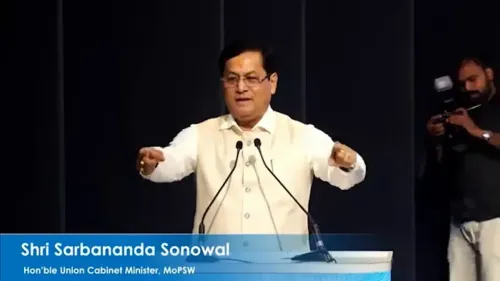
Union Minister Sarbananda Sonowal on 21 June 2026 declared India is entering its 'next phase of maritime power,' citing INS Vikrant's legacy and PM Modi's vision to integrate Shipbuilding, Ship Repair, Ship Recycling and MRO as a unified National Mission.
Key Takeaways
Union Minister Sarbananda Sonowal posted on 21 June 2026 that India is entering its 'next phase of maritime power.' INS Vikrant , commissioned in September 2022 as India's first indigenous aircraft carrier, is cited as the landmark that anchors this trajectory.
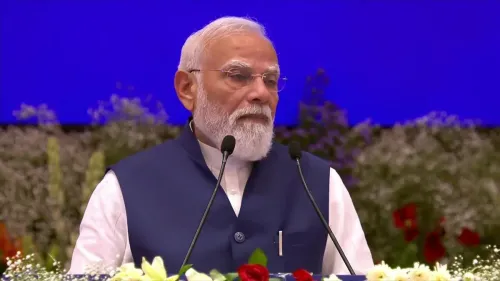
The minister described Shipbuilding, Ship Repair, Ship Recycling and MRO as being driven together as a 'vital National Mission' under PM Modi 's vision.
This framing builds on existing frameworks including Make in India (2014) , Sagarmala Project (2015) and Maritime India Vision 2030 .
The Indian Navy and domestic shipyards are the primary beneficiaries of the integrated maritime industrial push.
Formalisation of the 'National Mission' label — through budget allocations or a government notification — remains the key next step to watch.
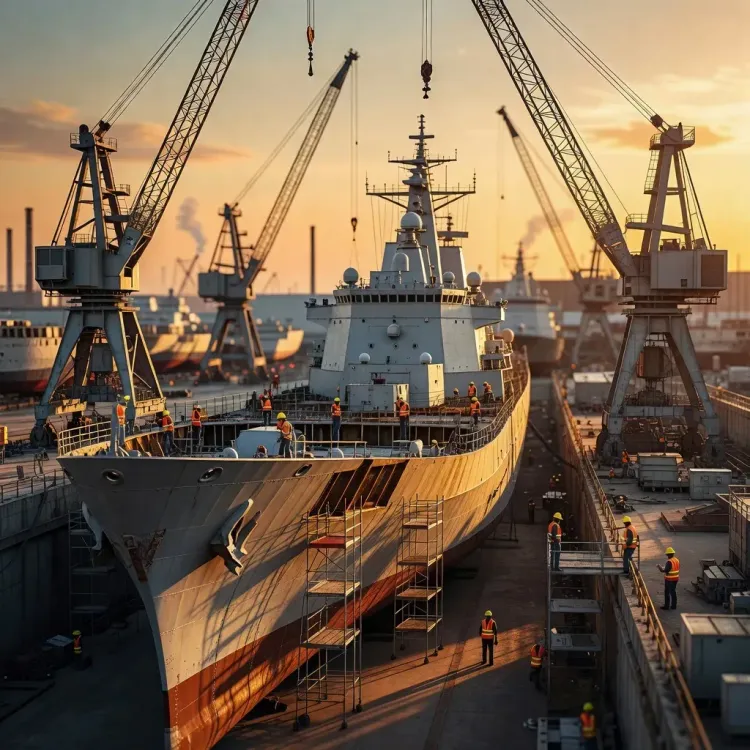
Union Minister of Ports, Shipping and Waterways Sarbananda Sonowal on Sunday, 21 June 2026, invoked the commissioning of INS Vikrant — India's first indigenously built aircraft carrier — as a symbol of the country's accelerating maritime ambitions, asserting that India is now entering 'its next phase of maritime power' under Prime Minister Narendra Modi's vision.
Context
Sonowal's post frames recent naval inductions as a continuum of the self-reliance drive that began with INS Vikrant's commissioning in September 2022 — the first aircraft carrier designed and built entirely within India. Describing the current moment as one of 'bold new energy,' the minister positioned Shipbuilding, Ship Repair, Ship Recycling and MRO (Maintenance, Repair and Overhaul) as being 'driven together as a vital National Mission.'
The framing is significant: it signals an intent to treat four historically separate maritime-industrial verticals as a single, integrated strategic priority rather than siloed policy domains.
Policy Backdrop
The statement sits within a layered policy architecture built over the past decade. The Make in India initiative, launched in 2014, first opened defence shipbuilding to domestic private players. The Sagarmala Project, rolled out in 2015, aimed to modernise ports and create an integrated ecosystem spanning shipbuilding and repair along India's coastline.
Maritime India Vision 2030, released in 2021, set explicit capacity targets for shipbuilding, repair and recycling, providing a long-range blueprint that successive ministerial communications have drawn upon. Together, these programmes constitute the policy lineage Sonowal's post implicitly references when speaking of 'PM Modi Ji's vision.'
The broader strategic rationale is India's desire to reduce dependence on foreign shipyards and assert a stronger industrial presence in the Indian Ocean Region — a geography of growing geopolitical consequence.
Stakeholders and Impact
The Indian Navy stands as the most immediate stakeholder, with indigenous vessel inductions directly expanding fleet strength and blue-water operational capacity. Domestic shipyards — both public sector undertakings and private yards — stand to benefit from a policy push that bundles new construction with the higher-margin repair, recycling and MRO segments.
For the wider maritime industry, the 'National Mission' framing, if formalised, could mean dedicated budgetary allocations, streamlined regulatory clearances and coordinated skilling programmes. Coastal communities and port-adjacent economies linked to the Sagarmala Project corridor are also potential beneficiaries of expanded maritime industrial activity.
What's Next
Attention will now turn to whether the 'National Mission' language translates into a formal government notification or a dedicated budgetary line in the next Union Budget. Progress on ship-repair clusters announced under earlier maritime policy frameworks, and the pace of further indigenous vessel inductions by the Indian Navy, will be the clearest indicators of on-ground momentum.
Implementation updates under Maritime India Vision 2030 and any new policy instruments consolidating the four verticals will be closely tracked by industry and defence analysts alike as the measure of whether this 'next phase' delivers structural change or remains aspirational.
Point of View
Stitching together four maritime-industrial verticals under a 'National Mission' umbrella to project policy coherence ahead of what may be a formal announcement. The invocation of INS Vikrant — the BJP government's most visible symbol of defence self-reliance — is not incidental; it anchors current inductions in a decade-long narrative of Atmanirbhar Bharat. By tying Shipbuilding, Repair, Recycling and MRO into a single frame, the minister is also making a bureaucratic argument for integrated governance over these sectors, which have historically been split across multiple ministries. Whether this rhetoric precedes a structural policy move or serves primarily as electoral positioning for coastal constituencies will become clear in the months ahead.
NationPress
19 Sept 2026
Frequently Asked Questions
What did Sarbananda Sonowal say about India's maritime power on 21 June 2026?
Sonowal stated that India is entering its 'next phase of maritime power,' citing the legacy of INS Vikrant and PM Modi's vision to drive Shipbuilding, Ship Repair, Ship Recycling and MRO together as a vital National Mission.
What is INS Vikrant and why is it significant?
INS Vikrant is India's first indigenously designed and built aircraft carrier, commissioned in September 2022. It is widely regarded as the most prominent symbol of India's domestic naval shipbuilding capability and the Atmanirbhar Bharat push in defence.
What is the Maritime India Vision 2030?
Maritime India Vision 2030 is a policy blueprint released in 2021 that sets capacity targets for India's shipbuilding, ship repair and recycling sectors, providing a long-range framework for maritime industrial development.
What does the proposed maritime National Mission include?
As described by Sonowal, the National Mission encompasses four verticals: Shipbuilding, Ship Repair, Ship Recycling and MRO (Maintenance, Repair and Overhaul), intended to be driven together as an integrated strategic priority.
How does the Sagarmala Project relate to India's shipbuilding ambitions?
Launched in 2015, the Sagarmala Project aims to modernise Indian ports and create an integrated ecosystem for shipbuilding, repair and coastal infrastructure, forming one of the key policy foundations underpinning India's current maritime industrial push.