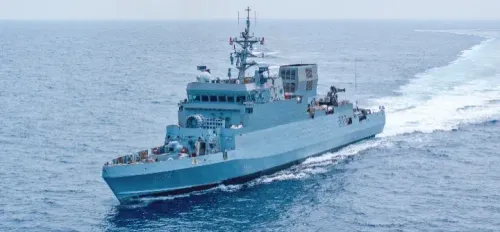
Sonowal highlights INS Agray, Dunagiri, Sanshodhak as symbols of India's shipbuilding rise

Synopsis
Union Minister Sarbananda Sonowal highlighted INS Agray, INS Dunagiri, and INS Sanshodhak as proof of India's indigenous shipbuilding capability, noting their construction engaged over 200 MSMEs using domestic steel, electronics, and machinery — framing shipbuilding as a major employment engine under Make in India and Atmanirbhar Bharat.
Key Takeaways
INS Agray , INS Dunagiri , and INS Sanshodhak were cited by Minister Sonowal as evidence of India's growing indigenous shipbuilding capability.
All three vessels were built using domestic steel, electronics, and machinery , reducing dependence on imports.
Their construction involved over 200 MSMEs , demonstrating deep supply-chain integration.
Sonowal described shipbuilding as 'a massive employment engine,' connecting defence spending to broader industrial job creation.
The vessels reflect the goals of the Make in India (2014) and Atmanirbhar Bharat (2020) programmes in the defence sector.
Future naval launches and budget provisions for shipbuilding financial assistance will be key indicators of sustained momentum.
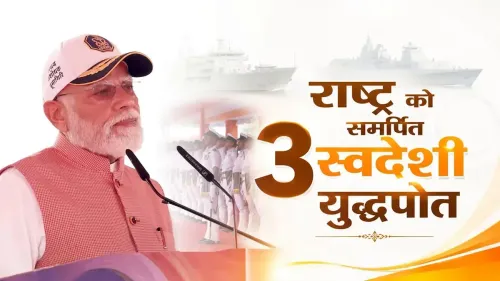
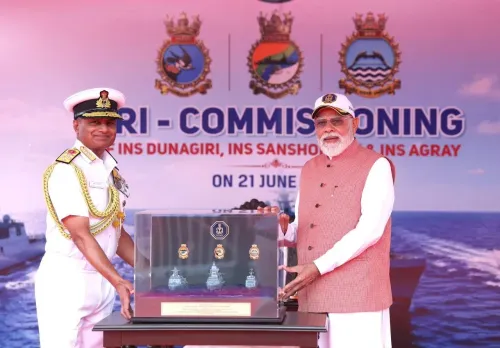
Union Minister of Ports, Shipping and Waterways Sarbananda Sonowal on Sunday, June 21, 2026, pointed to three Indian Navy vessels — INS Agray, INS Dunagiri, and INS Sanshodhak — as concrete proof of the country's expanding indigenous shipbuilding capability, noting that their construction was supported by over 200 MSMEs and relied on domestic steel, electronics, and machinery.
Context
Responding on X, Minister Sonowal described the three vessels as 'proof of India's indigenous talent and booming shipbuilding capabilities.' He underscored that the ships were 'built with domestic steel, electronics and machinery,' with more than 200 micro, small and medium enterprises contributing to their construction. 'Shipbuilding is now not an isolated industry but a massive employment engine,' he wrote.
The statement comes as the government continues to push the narrative that defence capital expenditure is not merely a strategic outlay but a driver of industrial employment across the supply chain.
Policy Backdrop
The three vessels sit at the intersection of two flagship programmes. The Make in India initiative, launched in 2014, set the framework for domestic manufacturing in defence and heavy engineering. The Atmanirbhar Bharat programme, announced in 2020, sharpened the focus by mandating indigenous content targets and reducing import dependence in defence procurement.
India has progressively raised the indigenous content threshold for naval platforms, channelling orders through both public-sector shipyards and an emerging private-sector base. Domestic procurement policies and offset obligations have been central to seeding technology absorption and component manufacturing at the MSME level.
Stakeholders and Impact
The Indian Navy is the primary end-user of these platforms, and the quality of domestically built warships directly shapes its operational readiness and long-term fleet expansion plans. For the MSME sector, naval shipbuilding contracts represent high-value, technically demanding work that upgrades manufacturing standards and creates skilled employment.
Sonowal's framing — that shipbuilding is 'a massive employment engine' — signals a deliberate effort to broaden the political constituency for defence spending beyond security circles to include small-industry advocates and labour groups. The linkage between warship construction and over 200 supplier firms illustrates how a single naval programme can generate cascading economic activity across steel fabrication, electronics assembly, and precision engineering.
What's Next
Attention will now turn to upcoming naval ship launches and keel-laying ceremonies, which will test whether the pace of indigenous construction can be sustained. Any revisions to the shipbuilding financial assistance scheme in forthcoming budget cycles or maritime policy documents will be closely watched as indicators of the government's commitment to scaling this industrial base.
With India seeking to position itself as a regional shipbuilding hub, the performance of vessels like INS Agray, INS Dunagiri, and INS Sanshodhak in active service will carry both strategic and reputational weight for the broader indigenisation agenda.
Point of View
Using three named warships as tangible proof points rather than abstract programme targets. By spotlighting over 200 MSMEs, the government signals that naval indigenisation is now a broad-based economic story, not just a strategic one — a message calibrated to resonate with small-industry constituencies ahead of any budget or policy cycle. This fits a wider pattern in which the Ports and Shipping Ministry positions itself as an enabler of the Atmanirbhar Bharat narrative, linking maritime infrastructure and defence manufacturing into a single growth arc. The framing of shipbuilding as an 'employment engine' is also a subtle counter to critics who question the civilian returns on defence capital expenditure.
NationPress
20 Sept 2026
Frequently Asked Questions
What are INS Agray, INS Dunagiri and INS Sanshodhak?
INS Agray, INS Dunagiri, and INS Sanshodhak are Indian Navy vessels highlighted by Minister Sarbananda Sonowal as examples of India's indigenous shipbuilding capability, constructed using domestic steel, electronics, and machinery.
How many MSMEs were involved in building these naval ships?
According to Minister Sonowal's post, over 200 micro, small and medium enterprises supported the construction of INS Agray, INS Dunagiri, and INS Sanshodhak.
What is India's Make in India policy in shipbuilding?
Make in India, launched in 2014, is a government initiative to boost domestic manufacturing including in defence and heavy engineering. In shipbuilding, it has encouraged the use of indigenous steel, electronics, and components in naval vessel construction.
What is Atmanirbhar Bharat's role in defence shipbuilding?
Atmanirbhar Bharat, announced in 2020, prioritises self-reliance in defence production. In the naval sector, it has translated into mandating higher indigenous content in warships and reducing dependence on imported systems and materials.
Why is Sarbananda Sonowal talking about naval ships?
As Union Minister of Ports, Shipping and Waterways, Sonowal oversees India's maritime and shipbuilding sector. His comments connect the Navy's indigenisation drive to the broader employment and industrial development goals under his ministry's mandate.