Kishan Reddy hails commissioning of INS Dunagiri, two naval vessels
Synopsis
Union Minister G. Kishan Reddy praised PM Modi's commissioning of three indigenously built naval vessels — INS Dunagiri, INS Sanshodhak and INS Agray — as a major step in India's Aatmanirbhar Bharat defence self-reliance drive, strengthening the Indian Navy's maritime security capabilities.
Key Takeaways
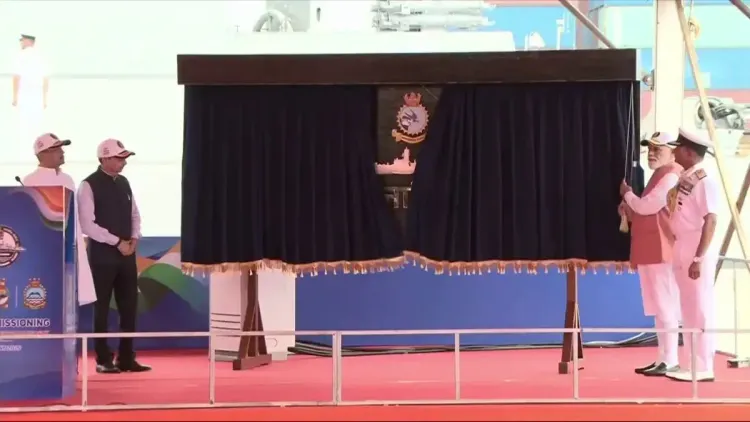
Three vessels commissioned: INS Dunagiri, INS Sanshodhak, and INS Agray were commissioned by PM Narendra Modi on 21 June 2026 .
Indigenous build: All three platforms were built domestically, reflecting India's expanding shipbuilding capacity under the Aatmanirbhar Bharat framework.
Policy lineage: The inductions follow the Revised Defence Procurement Procedure 2020 , which mandates higher indigenous content in naval acquisitions.
Milestone precedent: INS Vikrant , India's first indigenous aircraft carrier, was commissioned in September 2022 , setting the benchmark for domestic warship construction.
Strategic focus: The vessels strengthen India's maritime security architecture in the Indian Ocean Region and Indo-Pacific .
What's next: Remaining Project 17A frigates and additional patrol vessels are in the pipeline, with indigenisation targets to be reviewed in the next budget session.
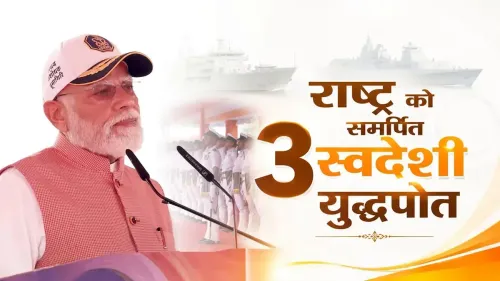
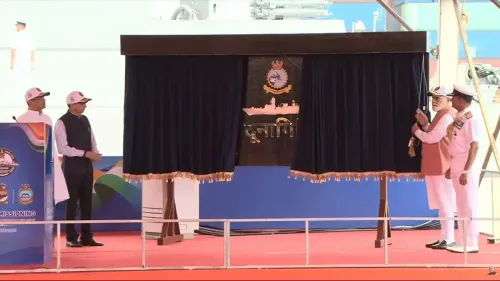
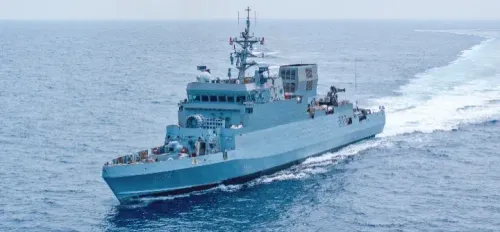
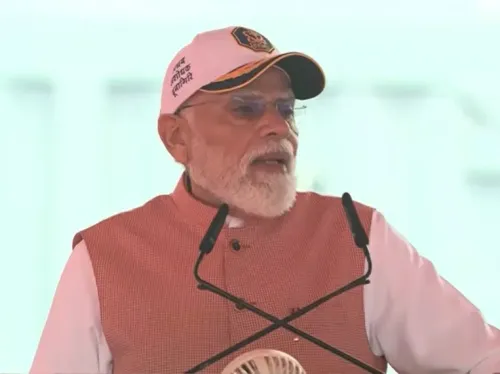
Union Coal and Mines Minister and BJP Telangana president G. Kishan Reddy on Sunday, 21 June 2026 welcomed the commissioning of three indigenously built naval platforms — INS Dunagiri, INS Sanshodhak, and INS Agray — by Prime Minister Narendra Modi, calling it a proud moment for the nation and a reflection of India's growing defence manufacturing capabilities.
Context
Kishan Reddy, in his post on X, said India's march towards Aatmanirbhar Bharat 'gains further momentum' with the commissioning of the three vessels. He described the platforms as 'indigenously built' and said they 'reflect our growing defence manufacturing capabilities and strengthen India's maritime security architecture.' The minister credited the event as 'a testament to the vision of self-reliance in defence.'
The commissioning ceremony, presided over by PM Modi, adds three new warships to the Indian Navy's fleet. The induction of multiple platforms simultaneously underscores the pace at which domestic shipyards have been delivering on naval contracts.
Policy Backdrop
The commissioning follows the trajectory set by the Aatmanirbhar Bharat Abhiyan, launched in May 2020, which set dedicated targets for domestic defence production to reduce India's historically high dependence on imported military hardware. The Revised Defence Procurement Procedure 2020 subsequently mandated higher indigenous content thresholds in capital acquisitions, pushing both public-sector and private shipyards to scale up capacity.
A landmark in this journey was the commissioning of INS Vikrant in September 2022 — India's first indigenously built aircraft carrier — which signalled that domestic yards could handle complex, large-scale warship construction. The addition of INS Dunagiri, INS Sanshodhak, and INS Agray continues that momentum across different vessel classes, from frigates to survey and patrol roles.
Successive policy reforms since 2014, including relaxed licensing norms, technology transfer frameworks, and increased R&D funding, have supported a structural shift in how India sources its naval hardware — moving from import-heavy procurement towards a 'Make in India' model in defence.
Stakeholders and Impact
The Indian Navy is the primary beneficiary, gaining platforms that address capability requirements across maritime security, hydrographic survey, and patrol operations in the Indian Ocean Region and the broader Indo-Pacific. Domestic shipyards — both public-sector and increasingly private — stand to gain from the sustained order pipeline that indigenisation policy has created.
For Telangana and the broader defence manufacturing ecosystem, the event carries political significance as well. Minister Kishan Reddy's endorsement of the commissioning reinforces the BJP's national narrative around self-reliance, particularly in a state where defence-related industries and ancillary suppliers have a presence.
What's Next
Attention will now turn to the commissioning timelines for remaining vessels under Project 17A — the stealth frigate programme — as well as additional survey and patrol vessels on order with domestic yards. Parliamentary updates on the broader defence indigenisation roadmap are expected during the next budget session, where progress metrics on the Aatmanirbhar Bharat defence targets are likely to be tabled. The pace of inductions will be a key indicator of whether India's shipbuilding capacity can meet the Navy's long-term force-level goals without reverting to large-scale imports.
Point of View
Events like this serve a dual purpose — advancing a genuine strategic objective while reinforcing the 'Aatmanirbhar Bharat' political brand ahead of electoral cycles. Kishan Reddy's public endorsement, as Telangana BJP chief, signals an attempt to localise the national defence narrative in a state the party is keen to consolidate. The broader arc points to a navy that is gradually closing the gap between force-level ambitions and domestic industrial capacity, though the pace of Project 17A deliveries will be the real stress test of that claim.
NationPress
20 Sept 2026
Frequently Asked Questions
What is INS Dunagiri and why was it commissioned in 2026?
INS Dunagiri is an indigenously built Indian Navy warship commissioned by PM Narendra Modi in June 2026 as part of India's Aatmanirbhar Bharat defence self-reliance drive, alongside INS Sanshodhak and INS Agray.
What is Aatmanirbhar Bharat in defence?
Aatmanirbhar Bharat in defence refers to India's national initiative, launched in May 2020, to reduce dependence on imported military hardware by mandating higher indigenous content in defence procurement and boosting domestic shipbuilding and manufacturing capacity.
Who is G. Kishan Reddy?
G. Kishan Reddy is the Union Minister of Coal and Mines in the Government of India and the president of the BJP's Telangana state unit. He is a senior BJP leader and Member of Parliament.
What was India's first indigenously built aircraft carrier?
INS Vikrant, commissioned in September 2022, was India's first indigenously built aircraft carrier and a landmark achievement for the country's domestic defence manufacturing programme.
What is Project 17A in the Indian Navy?
Project 17A is India's stealth guided-missile frigate programme, under which multiple warships are being built at domestic shipyards with high levels of indigenous content as part of the broader naval modernisation and self-reliance agenda.