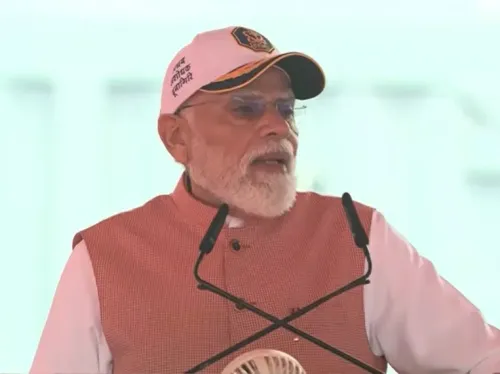
Rajnath Singh hails tri-commissioning of INS Dunagiri, Agray, Sanshodhak
Synopsis
Union Defence Minister Rajnath Singh on 21 June 2026 hailed the simultaneous commissioning of INS Dunagiri, INS Agray, and INS Sanshodhak into the Indian Navy as a defining moment in maritime capability development, calling the vessels proof of India's Aatmanirbhar Bharat resolve and readiness to secure the Indian Ocean.
Key Takeaways
INS Dunagiri , INS Agray , and INS Sanshodhak were commissioned simultaneously into the Indian Navy on 21 June 2026 .
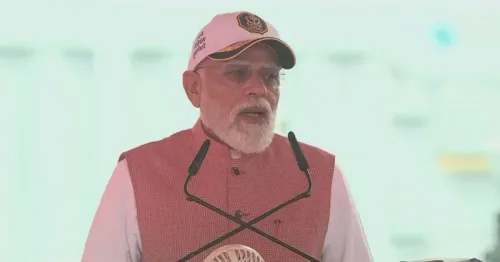
Prime Minister Narendra Modi was present at the tri-commissioning ceremony, marking its high strategic significance.
Defence Minister Rajnath Singh described the event as a 'defining moment' in India's maritime capability development.
The commissioning is framed as a direct outcome of the Aatmanirbhar Bharat indigenisation initiative launched in May 2020 .
India's naval indigenisation drive has progressed from the INS Vikrant carrier commissioning in September 2022 to multi-platform simultaneous inductions.
The next milestones to watch are remaining Project 17A frigate commissionings and the upcoming Naval Commanders Conference .
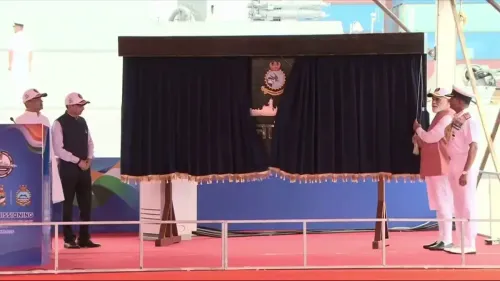
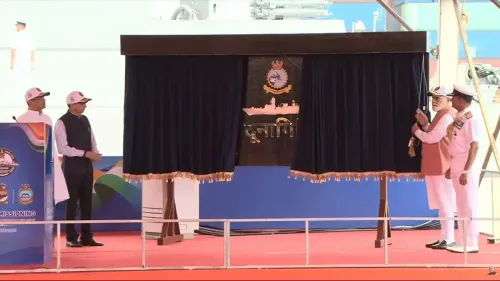
Union Defence Minister Rajnath Singh on Sunday, 21 June 2026, hailed the simultaneous commissioning of three naval platforms — INS Dunagiri, INS Agray, and INS Sanshodhak — into the Indian Navy, describing the tri-commissioning event, held in the presence of Prime Minister Narendra Modi, as a 'defining moment' in India's maritime capability development.
Context
Posting on X, Rajnath Singh wrote that the tri-commissioning of the three platforms 'is going to be a Defining Moment in India's Maritime Capability Development.' He added that the vessels 'stand ready to safeguard our national interests and ensure a secure Indian Ocean.' The event marks one of the rare occasions when three warships have been inducted into service simultaneously, underscoring the accelerating pace of India's naval expansion.
The commissioning ceremony was graced by Prime Minister Narendra Modi, whose presence signals the political and strategic weight the government assigns to indigenous naval production. The tri-commissioning is being positioned by the government as a visible dividend of the Aatmanirbhar Bharat self-reliance initiative.
Policy Backdrop
The Aatmanirbhar Bharat Abhiyan, announced in May 2020, set explicit targets for boosting domestic defence production and reducing India's historically high dependence on imported military hardware. The Revised Defence Procurement Procedure 2020 further prioritised indigenous platforms and raised foreign direct investment limits in the defence sector to attract technology and capital into domestic shipyards.
India's indigenisation drive in naval platforms has been building steadily. The commissioning of indigenous aircraft carrier INS Vikrant in September 2022 was widely regarded as a watershed moment, demonstrating that Indian shipyards could deliver capital warships. The tri-commissioning of INS Dunagiri, INS Agray, and INS Sanshodhak continues that trajectory, extending self-reliance from carriers to frigates and specialised vessels. Rajnath Singh described the platforms as 'state-of-the-art' and a 'testament to our robust defence manufacturing ecosystem.'
Stakeholders and Impact
The primary beneficiary is the Indian Navy, which has been pursuing a long-term fleet expansion plan to assert strategic presence across the Indian Ocean Region. Domestic shipyards, which bear the manufacturing responsibility for these platforms under indigenisation mandates, stand to gain sustained order pipelines as the government pushes further inductions.
For the broader defence industrial base, the event reinforces confidence that India's production ecosystem can deliver complex, multi-platform programmes on schedule. The tri-commissioning also sends a signal to regional partners and rivals alike about India's growing capacity to project naval power and secure critical sea lanes without relying on foreign-built hulls.
What's Next
Attention now turns to the commissioning of the remaining vessels under Project 17A — the stealth frigate programme of which INS Dunagiri is a part — as the Navy works towards completing its planned fleet strength. Outcomes of the next Naval Commanders Conference are also being watched for fresh directives on capability roadmaps and theatre-level maritime strategy.
With the Indian Ocean Region growing more contested, the pace at which India commissions and operationalises new platforms will be a key indicator of its ability to sustain strategic autonomy at sea. The tri-commissioning of 21 June 2026 sets a benchmark that the government will likely seek to replicate as more indigenous programmes mature.
Point of View
Not merely a procedural induction. It signals that the government views indigenous naval production as a flagship deliverable of the Aatmanirbhar Bharat narrative ahead of a period of heightened competition in the Indian Ocean Region. For Rajnath Singh, who has consistently championed defence indigenisation, the event consolidates his ministerial record on a front where tangible hardware — rather than policy announcements — speaks loudest. The broader pattern suggests India is shifting from episodic commissioning milestones to a sustained, institutionalised rhythm of naval inductions, which, if maintained, could meaningfully alter the regional maritime balance within the decade.
NationPress
20 Sept 2026
Frequently Asked Questions
What is the tri-commissioning of INS Dunagiri, INS Agray and INS Sanshodhak?
The tri-commissioning refers to the simultaneous induction of three naval platforms — INS Dunagiri, INS Agray, and INS Sanshodhak — into the Indian Navy on 21 June 2026, in the presence of Prime Minister Narendra Modi.
What is INS Dunagiri?
INS Dunagiri is one of the stealth frigates being built under Project 17A, India's programme to develop advanced indigenous guided-missile frigates for the Indian Navy.
How does this commissioning relate to Aatmanirbhar Bharat?
Aatmanirbhar Bharat, launched in May 2020, aims to boost domestic defence manufacturing. The commissioning of indigenously built warships like INS Dunagiri, INS Agray, and INS Sanshodhak is a direct outcome of that policy push.
Why was PM Modi present at the commissioning ceremony?
Prime Minister Narendra Modi attended the tri-commissioning ceremony, underscoring the government's emphasis on indigenous defence production as a national priority and a flagship achievement of the Aatmanirbhar Bharat initiative.
What comes next after this naval commissioning?
The remaining vessels under Project 17A are expected to be commissioned in coming years. The Naval Commanders Conference is also being watched for updated guidance on India's maritime capability roadmap.